

If your dragon fruit suddenly stalls, yellows, or the fruits scar over right before harvest, it’s usually not “bad luck” – it’s pests. In my own garden, I’ve learned that a few tiny insects can undo an entire season of growth if I’m not paying attention.
In this guide, I’ll walk you through 5 simple, repeatable steps to protect your pitahaya from the most common pests: thrips, aphids, mealybugs, scale, and leaf-footed bugs. You’ll see what to look for, how to treat problems quickly, and how to keep your dragon fruit healthy so pests are less interested in it in the first place.
Think of this as a practical, no-drama plan: observe, confirm, treat gently, support beneficial insects, and adjust your care. By the end, you’ll have a clear checklist you can run through every time you water or move your dragon fruit.
Step 1: Understand Why Dragon Fruit Attracts Pests
Stress Signals That Invite Trouble
Even though dragon fruit is a tough cactus, it sends out “help wanted” signals to pests when it’s stressed. For detailed guidance on identifying and managing common pests, see the University of Florida Extension resource. I see more infestations when plants are struggling rather than when they’re thriving.
- Dry, dusty stems: Dusty, dehydrated tissue is a magnet for sap-feeding insects like thrips, aphids, and scale.
- Constantly soggy mix: Overwatered containers weaken roots and slow growth, making it easy for pests to establish.
- Sudden environment changes: Moving your plant indoors, outdoors, or between rooms can shock it and open the door to new pests.
- Excess nitrogen fertilizer: Very soft, lush growth is like candy for mealybugs, aphids, and other sap suckers. Learn more about why and when to avoid fertilizer in your garden.
When you focus on reducing stress, you make your dragon fruit a less appealing target. That’s the quiet foundation of any good pest management plan.
How Pests Find Your Dragon Fruit
Pests rarely show up out of nowhere. They usually hitchhike or simply walk or fly over from nearby plants.
- From neighboring pots: Houseplants, patio containers, or garden beds can host aphids, thrips, and mealybugs that wander to your cactus.
- Through open windows and doors: Thrips and leaf-footed bugs are strong fliers and easily move between plants outdoors.
- On new purchases or cuttings: A new plant or a gifted cutting can bring in hidden mealybugs or scale.
- In weeds under the plant: Weedy areas provide shelter and alternate food sources for thrips, aphids, and leaf-footed bugs.
Once I understood that my dragon fruit was part of a whole garden ecosystem, it became much easier to predict where pests might come from and cut them off early.
A Quick Story From My Own Dragon Fruit
One season I moved a big pot of dragon fruit into a new, sunnier corner of my patio. Within two weeks, the stems were dusty, and the plant looked tired – I shrugged and ignored it.
A month later I noticed sticky residue and a faint black film on some stems. By then aphids and mealybugs had taken over. It took weeks of careful cleaning, pruning, and spraying to get that plant back on track. Now, I check for pests every time I shift a container or change my watering routine.
Step 2: Spot Early Warning Signs On Stems, Flowers, And Fruit
General Red Flags To Watch For
Early detection is your biggest advantage. For a comprehensive scientific overview of insect pests and diseases affecting dragon fruit, see this research article. Most dragon fruit pests are small, but the damage they cause is not subtle once you know what to look for.
- Sticky, shiny residue: Honeydew from aphids, scale, or mealybugs that can lead to black sooty mold.
- Scars, pits, or corky patches on fruit: Often caused by thrips or leaf-footed bug feeding.
- Distorted flowers or buds: Thrips love to hide in petals and can twist and scar them as they feed.
- Clusters of tiny insects on stems or under bracts: A sign of sap-feeders settling in.
- Yellowing or stunted new growth: Root stress plus active pests draining sap from tender tissue.
Make it a habit to slowly inspect your dragon fruit when you water. A 30-second look now can save you from a full-blown infestation later.
Thrips: Tiny Flower And Fruit Scarrers
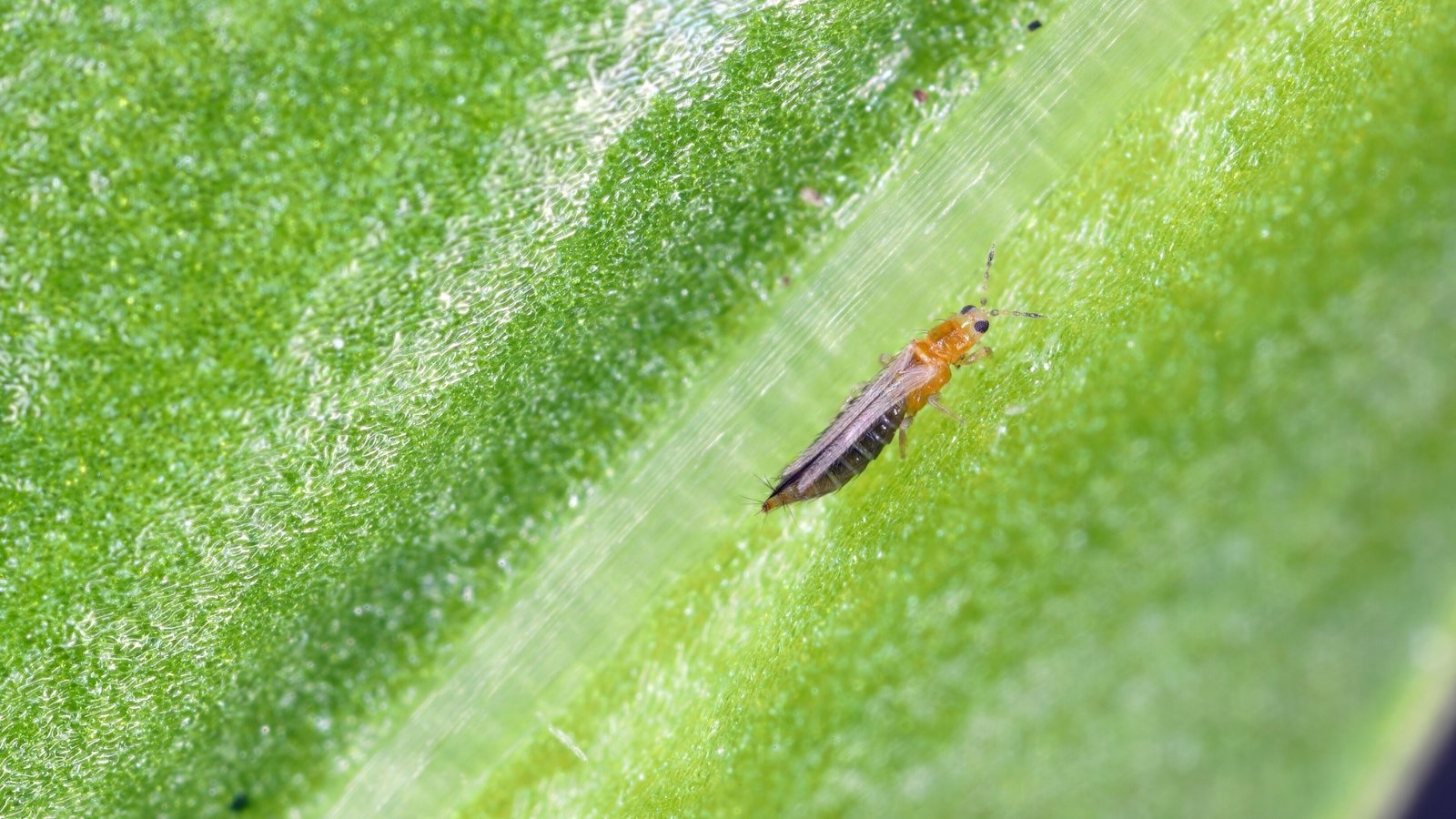
Thrips are slender, fast-moving insects with fringed wings and piercing mouthparts. They often range in color from pale yellow to dark brown or black, and they love dragon fruit blooms and young fruits.
- Where they hide: Deep inside flowers, under bracts around developing fruit, and sometimes along tender stem segments.
- What you’ll see: Silvery, scarred patches, deformed flowers, and small black specks of waste on petals or fruit.
- Simple detection trick: Gently shake a flower or stem over a white sheet of paper and watch for tiny insects dropping onto it.
Thrips can also carry plant viruses, so even a small population is worth taking seriously when you find them actively feeding.
Aphids: Sticky Honeydew And Sooty Mold
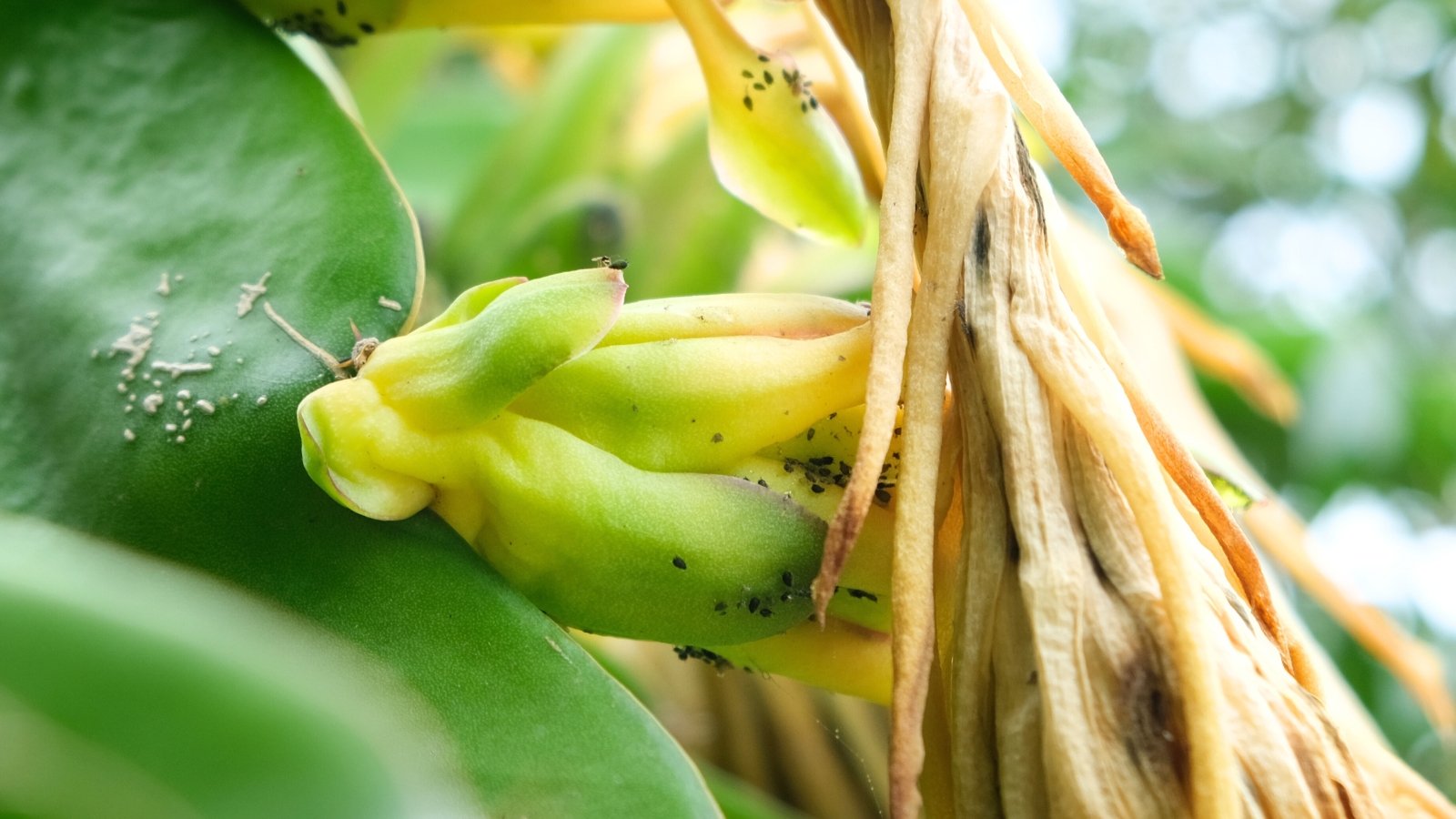
Aphids are soft-bodied, pear-shaped insects in shades of green, yellow, pink, brown, or black. They reproduce incredibly fast and can cover flowers and stems in just a few days.
- Where they hide: Along tender stems, under bracts, on buds, and on spent flowers that are drying out.
- What you’ll see: Sticky honeydew, trailing ants, and eventually a black, sooty mold growing on the residue.
- Plant impact: Yellowing tissue, curling or stunted new growth, and a generally stressed plant.
Whenever I see ants racing up and down a dragon fruit stem, I immediately check for aphids. Ants love honeydew and often protect aphids from predators.
Step 3: Control Sap-Sucking Pests Before They Explode
Mealybugs: Cottony Clumps In Stem Crevices

Mealybugs are classic sap-feeders with waxy, white, cotton-like bodies. They move slowly but reproduce quickly, and they love the protected crevices on dragon fruit stems and around flower bracts.
- Early signs: Tiny white flecks along the ribs of the stem or tucked under bracts near buds and flowers.
- Advanced infestations: Thick cottony masses, sticky honeydew, and black mold developing on nearby surfaces.
- Why they show up: Over-fertilized, very tender growth and inconsistent watering during hot weather.
The earlier you catch mealybugs, the easier they are to manage. For practical, step-by-step tips on controlling mealybugs and other pests, see this illustrated dragon fruit pest guide. Large, established populations take real persistence to eliminate.
How I Treat Mealybugs On A Single Dragon Fruit
On a single plant, you can be very hands-on and precise, which is often more effective than blasting everything with chemicals.
- Blast with water first: Use a firm stream from a hose or sink sprayer to knock off as many mealybugs as possible from stems and buds.
- Follow with alcohol swabs: Dip a cotton swab in isopropyl alcohol and dab or wipe any remaining clusters; learn more about safely using rubbing alcohol on plants.
- Prune badly infested sections: If a segment is heavily covered, cut it off and dispose of it in the trash, not the compost.
- Finish with horticultural soap or oil: Spray all sides of the stems, focusing on crevices; repeat every 7–10 days until you no longer see live insects.
Beneficial insects like ladybugs, lacewing larvae, and spiders will also help you out if you avoid broad-spectrum insecticides that might kill them.
Scale: Stuck-On Bumps And Sooty Mold
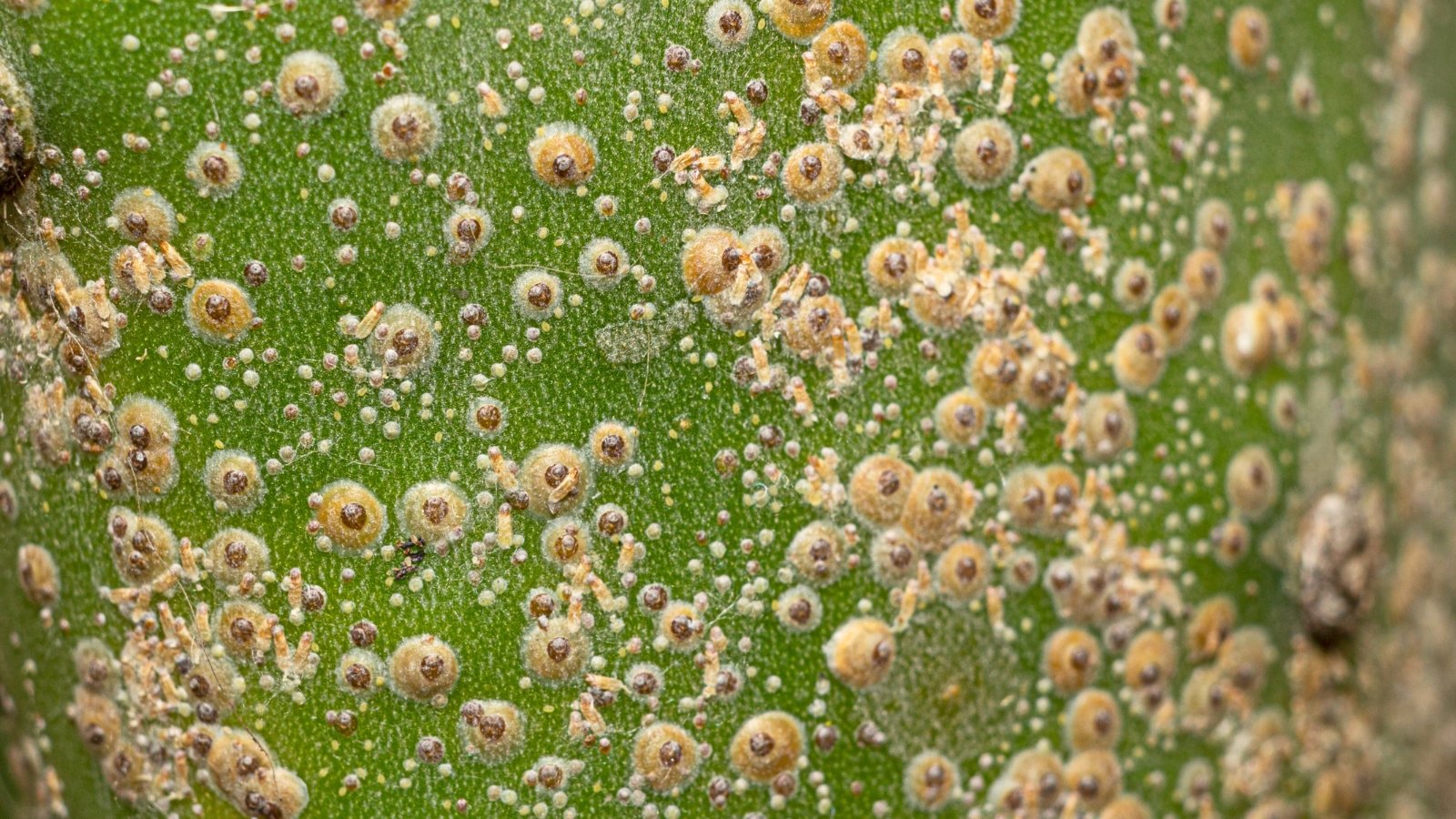
Scale insects look less like bugs and more like little shells or scabs stuck to your dragon fruit stems. They can be gray, brown, black, or even silvery, and adults barely move once they settle in.
- Where they sit: Along the ribs and edges of stems, beneath buds and blooms, and on sheltered sides of the plant.
- Damage pattern: Yellowing patches, general decline, honeydew buildup, and sooty mold growing on the sticky residue.
- Why they love dusty plants: Dry, gritty surfaces with little rainfall or rinsing give them a stable place to attach.
Scale is easier to control in the nymph stage, when the young crawlers are moving around and more exposed. Adults are well-protected by their hard covering.
My Go-To Scale Management Routine
For light scale infestations on a single dragon fruit, a gentle, mechanical approach works surprisingly well.
- 1. Remove the worst damage: If a section is severely weakened or covered, prune it off and discard it.
- 2. Scrub adults off by hand: Use a cotton swab dipped in rubbing alcohol or a soft toothbrush with soapy water to dislodge adults from the stem.
- 3. Target the mobile nymphs: Spray with insecticidal soap or horticultural oil, making sure to hit all sides of the stems where crawlers might be hiding.
- 4. Rinse dust regularly: As part of your normal care, rinse stems with clean water to keep them dust-free and less inviting.
Always choose castile or insecticidal soaps rather than household dish soap, which can damage plant tissues over time.
Step 4: Deal With Leaf-Footed Bugs Without Losing Your Fruit

Identifying Leaf-Footed Bugs Correctly
Leaf-footed bugs (Leptoglossus spp.) are larger, shield-shaped insects that buzz loudly when they fly. They often appear brown, gray, or black with a lighter band across the back and distinctive flattened, leaf-like hind legs.
- Eggs: Golden brown, laid in a single row or chain along stems, fruits, or even nearby weeds.
- Nymphs: Smaller, often bright orange to light brown, wingless, and clustered together as they feed.
- Adults: Fully winged, mobile, and capable of moving quickly between plants in your garden.
They pierce both stems and fruits, leaving puncture marks that can let diseases into the plant and cause fruit deformation or early drop.
Don’t Confuse Them With Assassin Bugs
Leaf-footed bugs can resemble assassin bugs, which are actually beneficial predators in the garden. Both have long bodies and prominent beaks, but assassin bugs usually lack the “leafy” hind legs.
- Leaf-footed bugs: Leaf-like hind legs, often found feeding in groups on fruits and soft stems.
- Assassin bugs: More slender, strong curved proboscis, usually found hunting other insects rather than in clusters on fruit.
Take a moment to observe before you act. I always double-check so I’m not accidentally removing one of my best natural pest-control allies.
Gentle, Effective Leaf-Footed Bug Control
Because leaf-footed bugs are relatively large, you don’t always need to spray to manage them. In fact, physical removal is often faster and safer for your garden ecosystem.
- 1. Hand-pick when possible: Knock nymphs and adults into a bucket of soapy water; go out early in the morning when they’re sluggish.
- 2. Remove egg chains: Inspect stems and fruits for rows of golden eggs and scrape them off into soapy water or squash them.
- 3. Support natural enemies: Tachinid flies and parasitic wasps attack leaf-footed bugs and their eggs, while spiders and birds help reduce numbers.
- 4. Use neem or oils on nymphs: Neem and horticultural oils can be effective on the wingless young, but are harder to use on fast-flying adults.
Remove weeds nearby, harvest fruits promptly, and monitor regularly during fruiting. Also, watch for invasive pests like snails; you can spot and manage invasive snails early.
Broad-spectrum insecticides often kill beneficial insects more than the actual target pests, so I reserve sprays as a last resort and use them very strategically.
Step 5: Create A Long-Term Pest-Resistant Dragon Fruit Plan
The Simple Steps I Follow Every Season
To keep everything organized, I frame my dragon fruit care around these five repeating steps. When I stick to them, pest problems stay small and manageable.
- Reduce plant stress: Provide bright light, a well-draining mix, consistent but not excessive watering, and avoid over-fertilizing with nitrogen.
- Scout regularly: Inspect stems, bracts, flowers, and young fruits weekly for scars, sticky residue, or clusters of insects.
- Identify the pest: Look closely (or use a magnifier) to determine if you’re dealing with thrips, aphids, mealybugs, scale, or leaf-footed bugs.
- Choose the gentlest effective treatment: Start with water sprays, hand removal, alcohol swabs, and insecticidal soaps or oils before considering stronger products.
- Support beneficial insects and biodiversity: Grow flowering plants nearby, avoid unnecessary pesticides, and let natural predators share some of the workload.
These steps apply whether your dragon fruit lives in a small balcony pot or in a row of plants in the ground in a warm climate.
Quick Pest And Treatment Cheat Sheet
Use this simple table as a reference when you spot something odd on your dragon fruit. I like to screenshot or print something like this and keep it handy.
| Pest | Key Signs | Primary Actions | Prevention Tips |
|---|---|---|---|
| Thrips | Scarred or deformed flowers and young fruit, tiny fast-moving insects, specks of black waste | Rinse flowers and stems, encourage predatory insects, use neem or horticultural oils if thrips are still present | Keep area weed-free, avoid dusty conditions, check blooms regularly during flowering |
| Aphids | Clusters of soft-bodied insects, sticky honeydew, ants and black sooty mold | Strong water spray, insecticidal soap, diatomaceous earth on soil surface, support ladybugs and lacewings | Water consistently, avoid drought stress, manage ants that farm aphids |
| Leaf-Footed Bugs | Buzzing adults, leaf-like hind legs, punctured fruits, golden egg chains on stems | Hand-pick into soapy water, remove eggs, encourage parasitic wasps and tachinid flies, targeted neem on nymphs | Remove weeds nearby, harvest fruits promptly, monitor regularly during fruiting |
| Mealybugs | White cottony clusters in crevices, honeydew, sooty mold | Water blast, alcohol swabs, prune heavily infested segments, follow with horticultural soap or oil | Avoid excess nitrogen, keep stems clean and well-lit, quarantine new plants and cuttings |
| Scale | Stuck-on bumps or shells, yellowing tissue, honeydew and black mold | Prune worst sections, scrub adults off, use soaps or oils on crawlers, rinse dust frequently | Maintain even moisture, prevent heavy dust buildup, inspect beneath buds and along ribs |
Your 5-Step Dragon Fruit Pest Checklist
Here’s a fast checklist you can run through once a week or whenever you move or repot your dragon fruit.
- Check overall health: Look for firm, turgid stems with good color and no major yellowing or collapse.
- Scan for residues and scars: Search for sticky honeydew, sooty mold, puncture marks, and corky scars on fruits.
- Inspect hides and crevices: Lift bracts, examine under blooms, and look closely at stem ribs for clusters of insects or bumps.
- Take immediate action: Use water, alcohol swabs, hand removal, or targeted soap/oil sprays as soon as you spot pests.
- Adjust care and environment: Improve light, drainage, and watering habits, and add flowering plants nearby to attract beneficial insects.
If you consistently run through this checklist, you’ll almost never be surprised by a major infestation again.
Wrapping Up: A Smart, Observant Gardener Wins
Protecting dragon fruit from pests isn’t about having a shelf full of chemicals. It’s about observing closely, acting early, and supporting the natural balance around your plants.
When you match good cultural care with gentle, well-timed treatments, your dragon fruit can handle the occasional visitor without losing vigor or fruit quality. Over time, you’ll start recognizing patterns and stopping problems before they seriously affect your harvest.
If you found this helpful, I’d love for you to visit Plant Care Dairy, share your own dragon fruit pest stories, and drop your questions or tips in the comments. Your experience might be exactly what another grower needs to finally keep their pitahaya pest-free.
Disclaimer: This article is for educational and informational purposes only and is not a substitute for professional horticultural, agricultural, or pest-control advice. Always follow product labels and local regulations when using any treatment, and consult a qualified professional if you are unsure about diagnosing or managing pests on your plants.