

Let’s cut through the coffee-fueled confusion. Coffee grounds can be useful in many houseplant situations, but indoor cacti are a special case. In this guide, I’ll clarify when grounds help, when they hurt, and the exact way to use them so you don’t end up with soggy soil and an unhappy cactus.
By the end, you’ll know the best timing, the right amounts, mixing tips that keep drainage fast, and a simple checklist you can follow every time you’re tempted to sprinkle.
I’ll be honest: I’ve learned these lessons the hard way. Years ago, I top-dressed a little coffee on a cactus and invited a cloud of gnats to brunch. Since then, I only use a tiny amount—and only at repotting—when it truly benefits the plant.
Why Coffee Grounds Tempt Us—And Why Cacti Are Different
A Small Nutrient Boost, Not A Full Fertilizer
Used coffee grounds hold a modest nitrogen boost plus a few micronutrients. That’s handy in a nutrient-poor potting mix. If you want a detailed overview of which cacti respond well to coffee grounds, check this guide on which cacti plants like coffee-ground fertilizer. But they’re not a complete fertilizer, and the nutrient release is slow.
- What they add: A bit of nitrogen with trace minerals that can gently support growth.
- What they don’t add: A balanced N-P-K feed. You’ll still need a cactus-appropriate fertilizer during the active season.
- Why it matters: Indoor cacti grow slowly; more isn’t better. Over-feeding can stretch growth and weaken the plant.
Structure And Drainage: The Double-Edged Sword
Many plant parents like grounds because they can improve soil texture when blended well. The catch? Coffee grounds also hold moisture. For typical tropical houseplants, a bit of extra moisture is often welcome. For cacti, it’s a risk.
- Potential perk: In a gritty mix, a pinch of grounds can help bind particles and add a little organic matter.
- Real risk: Too much can slow drying and lead to root rot, especially in low-light rooms or plastic pots.
- Bottom line: If your plant prefers to dry quickly, keep coffee amounts small and well-distributed—or skip entirely.
Why Indoor Cacti Need To Dry Out Completely
Unlike many foliage plants, most indoor cacti want to dry fully between waterings. Their roots are adapted for brief moisture pulses, not constant dampness. For a practical example of a cactus that thrives with careful watering and fast-draining soil, see our guide on growing a Rainbow Hedgehog Cactus. Anything that causes lingering moisture—like heavy organic additives—can spell trouble.
- Dry-down is protective: It prevents pathogens from thriving at the root line.
- The home environment factor: Indoors, air circulation is limited and light can be lower, so wet soil lingers longer.
- Takeaway: Moisture-retentive additives belong in moderation, and only when there’s a clear reason to use them.
When Coffee Grounds Can Actually Help Indoor Cacti (The Repotting Exception)
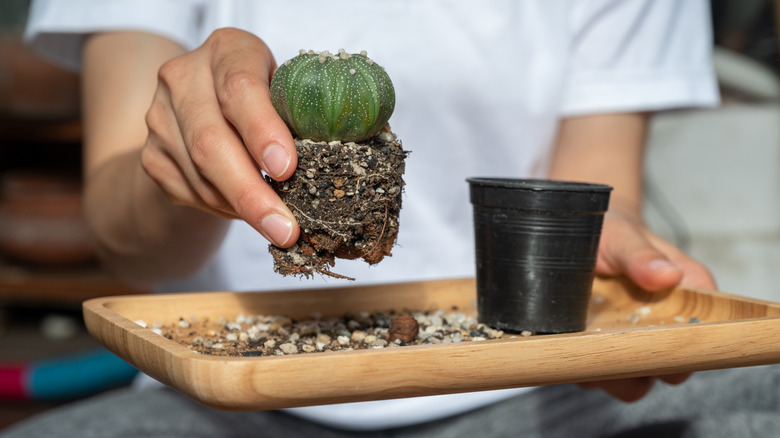
Know When To Repot: Signs Your Cactus Is Ready
Cacti often prefer to be a little pot-bound, but they still need fresh mix every few years. Repotting is the best time to consider a carefully measured pinch of grounds.
- Roots showing: Roots peeking from drainage holes or circling the surface indicate it’s time.
- Water runs straight through: Old mix can become hydrophobic; refreshing it restores even moisture during watering.
- Soil collapses: If the mix has compacted and lost structure, repot to restore aeration.
- Stalled growth: Slow or stalled growth in bright light can mean the mix is exhausted.
How A Small Amount Eases Transplant Shock
During repotting, a small, well-mixed amount of used coffee grounds can provide gentle nutrients and subtly tweak structure. This can help a plant rebound from root disturbance. For detailed seasonal care of a holiday favorite, see our tips on how to care for a Christmas cactus.
For more tips on using coffee grounds specifically with holiday or seasonal cacti like the Christmas cactus, see Martha Stewart’s guide on coffee grounds and Christmas cactus.
- Gentle nutrition: Slow-release nitrogen supports recovery without risking fertilizer burn.
- Blended, not layered: Grounds should be thoroughly mixed through the potting medium—not laid on top.
- Paired with grit: Combine with perlite, pumice, or coarse sand so drainage stays fast.
Aftercare: Hold Water For Up To Two Weeks
Post-repot, roots may have minor nicks that are vulnerable to rot. This is when restraint pays off.
- Withhold water: Wait 10–14 days before the first light watering unless your environment is extremely arid.
- Bright, indirect light: Give strong light without intense midday sun for a week while roots settle. If you struggle with indoor dryness during winter, our article on how dry winter air affects houseplants can help you adjust care routines for your cactus.
- Check dryness deeply: Before that first watering, probe the mix halfway down; it should feel bone-dry.
How To Add Coffee Grounds The Right Way And In The Right Amount

Never Top-Dress With Coffee Grounds
Putting grounds directly on the soil surface seems tidy, but it’s a magnet for pests and surface fungi.
- No sprinkling on top: Surface-applied grounds can crust, trap moisture, and attract fungus gnats.
- Mix only: If you use them at all, do it during repotting and blend evenly through the batch.
- Use only used grounds: Fresh grounds can be more acidic and harsh; stick to spent grounds that have been brewed.
How Much To Use By Pot Size
Err on the side of less. For cacti, I treat coffee grounds like a seasoning, not a main ingredient.
- Small planters (≤4–6 in / 10–15 cm): 1–3 tablespoons of used grounds per potting batch.
- Medium planters (6–8 in / 15–20 cm): About 2–4 tablespoons per batch.
- Large planters (≥10 in / 25+ cm): A small handful (roughly 1/4 cup), max.
- Prep tip: Let grounds dry fully on a tray for a day before mixing to reduce clumping and odors.
Mix For Drainage, Not Moisture
Start with a cactus mix and make it even grittier. Then add your tiny portion of grounds and test how fast it drains.
- Grit first: Aim for roughly 50–70% mineral components (pumice, perlite, coarse sand, lava rock).
- Organic second: Keep peat/coconut coir and composted bark to 30–50% total organic content.
- Coffee last: Blend your small amount through the whole batch so no wet pockets form.
- Drain test: Water a handful in a mesh sieve: it should drain in seconds, not minutes.
Good Alternatives If You’d Rather Skip Coffee
Not feeling the risk? You can still pamper your cactus at repot time. If you’re exploring which indoor plants in general benefit from coffee grounds, this article offers a helpful breakdown: What indoor plants like coffee grounds.
- Worm castings: A tablespoon or two per small pot adds gentle nutrients without much moisture retention.
- Slow-release cactus fertilizer: Low-nitrogen, timed-release prills provide steady, measured nutrition.
- Quality compost, sifted: In tiny amounts within a gritty blend, it’s safer than a heavy organic mix.
Troubleshooting Coffee-Grounds Mistakes
Signs You Used Too Much
If you suspect overdoing it, watch the plant and the potting mix closely.
- Soil stays damp too long: It’s still wet three to five days after watering.
- Musty smell: A sour or earthy odor suggests low oxygen in the root zone.
- Pale, soft pads or stems: Tissue may soften or yellow from root stress.
- Algae or crusting: A green film or crust signals constant surface moisture.
Pests, Mold, And Foul Smells
Surface-applied grounds are a feast for gnats and fungi. Act quickly if you see issues.
- Fungus gnats: Remove any exposed grounds, allow soil to dry deeply, and use yellow sticky traps.
- Surface mold: Scrape off the top inch of mix and replace with fresh, dry, gritty medium.
- Airflow boost: A small fan or better spacing helps the top layer dry faster.
Rescue Plan For Soggy Soil
If the mix is waterlogged or roots seem stressed, reset the pot quickly.
- Unpot and inspect: Gently remove the plant; trim mushy, brown roots with sterilized snips.
- Dust with sulfur or cinnamon (optional): Lightly dust cuts to discourage pathogens.
- Repot in grittier mix: Increase mineral content and skip coffee altogether this time.
- Dry start: Do not water for 10–14 days; then water once and wait for a full dry-down.
Smarter Feeding And Potting For Indoor Cacti
Better Fertilizer Routines
Because coffee grounds aren’t a full fertilizer, rely on a cactus-safe program during the growing season.
- Low-nitrogen liquid feed: Use a diluted, low-N formula monthly in spring/summer; skip fall/winter.
- Slow-release option: For a set-and-forget approach, apply a light sprinkle of a cactus-specific slow-release once per season.
- Less is more: Cacti grow slowly; strong fertilizer rates can cause weak, stretched growth.
Build A Fast-Draining Mix
Good soil structure is your real superpower with cacti. Coffee grounds, if used at all, are a tiny supporting actor.
- Go gritty: Mix at least half minerals (pumice, perlite, lava rock, coarse sand) for rapid drainage.
- Keep organics lean: Use only enough peat/coir and bark to bind particles and hold brief moisture.
- Terracotta helps: Clay pots wick moisture and speed the dry-down cycle.
Watering Rhythm, Light, And Containers
With great light and the right container, overwatering becomes much less likely.
- Bright light: Aim for bright, direct morning sun indoors or the brightest window you have.
- Full dry-down: Water thoroughly, then wait until the mix is completely dry before watering again.
- Right pot size: Upsize only when roots demand it; oversized pots stay wet longer.
Quick Checklist And Summary Table
The 8-Step Coffee-Grounds Check
- Confirm the need: Are you repotting now? If not, skip the coffee.
- Use only used grounds: Fresh grounds are a no-go for cacti.
- Dry the grounds: Spread thin and air-dry 24 hours to reduce clumping and odor.
- Measure lightly: 1–3 tbsp for small pots; a small handful max for large pots.
- Mix thoroughly: Blend through a gritty cactus medium; never top-dress.
- Test drainage: Water should run through in seconds, not minutes.
- Plant gently: Backfill without compacting; keep the crown above the soil line.
- Withhold water: Wait 10–14 days post-repot, then resume a full dry-down cycle.
At-A-Glance Summary
| Scenario | What To Do | What To Avoid |
|---|---|---|
| Routine care (not repotting) | Skip coffee; rely on gritty mix and proper watering | Top-dressing with grounds |
| Repotting a root-bound cactus | Mix a tiny amount of used, dried grounds into the fresh medium | Heavy amounts or uneven pockets |
| Choosing a potting blend | 50–70% mineral grit; 30–50% organic; coffee in pinches | Moisture-heavy, peat-dominant mixes |
| After repotting | Hold water 10–14 days; bright, indirect light | Immediate watering or deep shade |
| Fertilizing | Low-nitrogen cactus feed during active growth | Relying on coffee as your main fertilizer |
| Problem signs | Soil test, improve airflow, repot grittier if needed | Ignoring damp, musty soil and gnat outbreaks |
The Smart-Gardening Mindset
Indoor cacti reward restraint. Use coffee grounds, if at all, only at repotting and in tiny amounts mixed through a very gritty medium. Prioritize drainage, patient watering, and strong light, and your plants will thrive without the drama.
Have questions or a tip of your own? Share it with the community at Plant Care Dairy—I’d love to hear what’s working in your home.
Disclaimer: The information in this article is for educational purposes only. Always consider your specific species, indoor climate, and potting materials. Test any new amendment in small amounts first. Used grounds only; avoid fresh grounds. When in doubt, skip coffee and choose a proven cactus fertilizer and a grittier mix.