
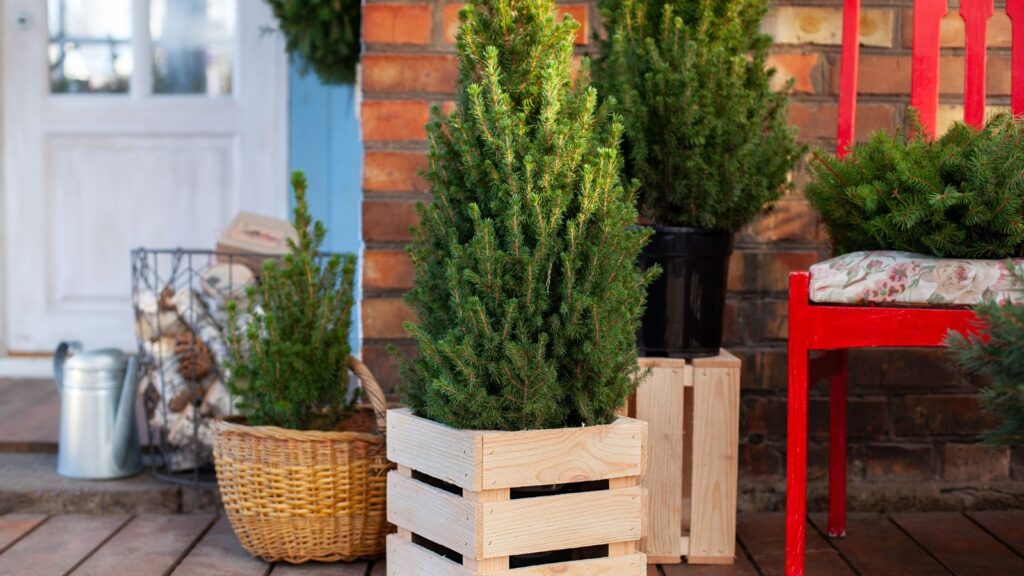
If first impressions matter, your porch is doing a lot of the talking. This guide cuts through the confusion and shows you exactly which mini evergreens to use, where to place them, and how to care for them so your entry looks lush every month of the year.
By the end, you’ll know how to match light and climate to the right plant, pick the right potting mix and container size, and avoid the classic mistakes that lead to sad, twiggy shrubs in winter.
Quick personal note: I’ve tested more porch plants than I can count. The containers that actually lasted through all four seasons weren’t the flashy annuals—they were compact evergreens with steady color, tidy habits, and almost zero drama. That’s the energy we’re going for here.
Why Year‑Round Porch Evergreens Matter
First Impressions That Don’t Fade
Porch containers are the handshake for your home. Seasonal annuals pop, but mini evergreens bring the structure that holds displays together 365 days a year. They give you that “pulled‑together” look even when the rest of the garden is hibernating.
Small Size, Big Payoff
Unlike full-sized trees that outgrow containers, mini and dwarf evergreens are intentionally compact. They grow slowly, keep tight proportions, and can live happily in pots for years with minimal upkeep.
Design That Works in Every Season
Evergreens anchor porches in winter and act as a backdrop for spring blooms, summer spillers, and fall foliage. Mini evergreens also make excellent alternatives to traditional seasonal decor—learn more in is a potted Christmas tree right for your home?. Mix textures—needles with glossy leaves—and layer color (blue, chartreuse, deep green) for instant polish.
Choose, Plant, and Care the Smart Way
Match Light, Zone, and Exposure
- Map Your Light: Morning sun with afternoon shade is gentler than all‑day hot sun. North‑facing porches skew shady; south‑ and west‑facing spots run bright and hot.
- Check USDA Zone: Cold matters more in containers because roots get less insulation. Pick plants rated at least one zone hardier than your garden when possible. For a wider selection of container-friendly trees suited to your zone, check out Evergreen Trees’ curated list of the best trees for pots.
- Watch Wind and Reflected Heat: Wind tunnels and heat from brick or concrete dry pots fast. Choose tougher species and water more consistently.
Potting Up, Step by Step
- Choose the Right Container: Aim for a pot 2–4 inches wider than the root ball, with large drainage holes. Late fall is perfect for repotting certain plants—see our guide on 7 houseplants you should repot in November for timing and tips.
- Use a Quality Potting Mix: A bark‑based, well‑draining mix (not garden soil) prevents soggy roots.
- Elevate the Pot: Pot feet or a plant stand keep drainage clear and reduce freeze‑thaw stress.
- Set the Plant High: Place the crown slightly above the rim so water runs off, not in.
- Backfill and Firm: Fill around the root ball, then tap the pot to settle soil without compacting.
- Water Thoroughly: Soak until water runs from the base, then let it drain fully.
- Mulch Lightly: A thin layer of fine bark keeps moisture even and roots cool.
Watering, Feeding, and Seasonal Tweaks
- Water Rhythm: In heat, check daily; water when the top inch is dry. In cool seasons, scale back but never let pots bone‑dry.
- Fertilizer: Use a slow‑release, balanced fertilizer in spring; hold off after midsummer so new growth can harden before frost.
- Winter Care: Group pots for wind protection. In very cold zones, wrap containers or shift them beside a protected wall. For step-by-step tips on shielding your containers from freezing temperatures, read how to protect potted plants from freezing.
- Pruning: Most minis rarely need it—just snip stray stems to maintain natural form.
Full Sun Winners: 3 Mini Evergreens That Love Light
1. ‘Blue Star’ Juniper (Juniperus squamata ‘Blue Star’)
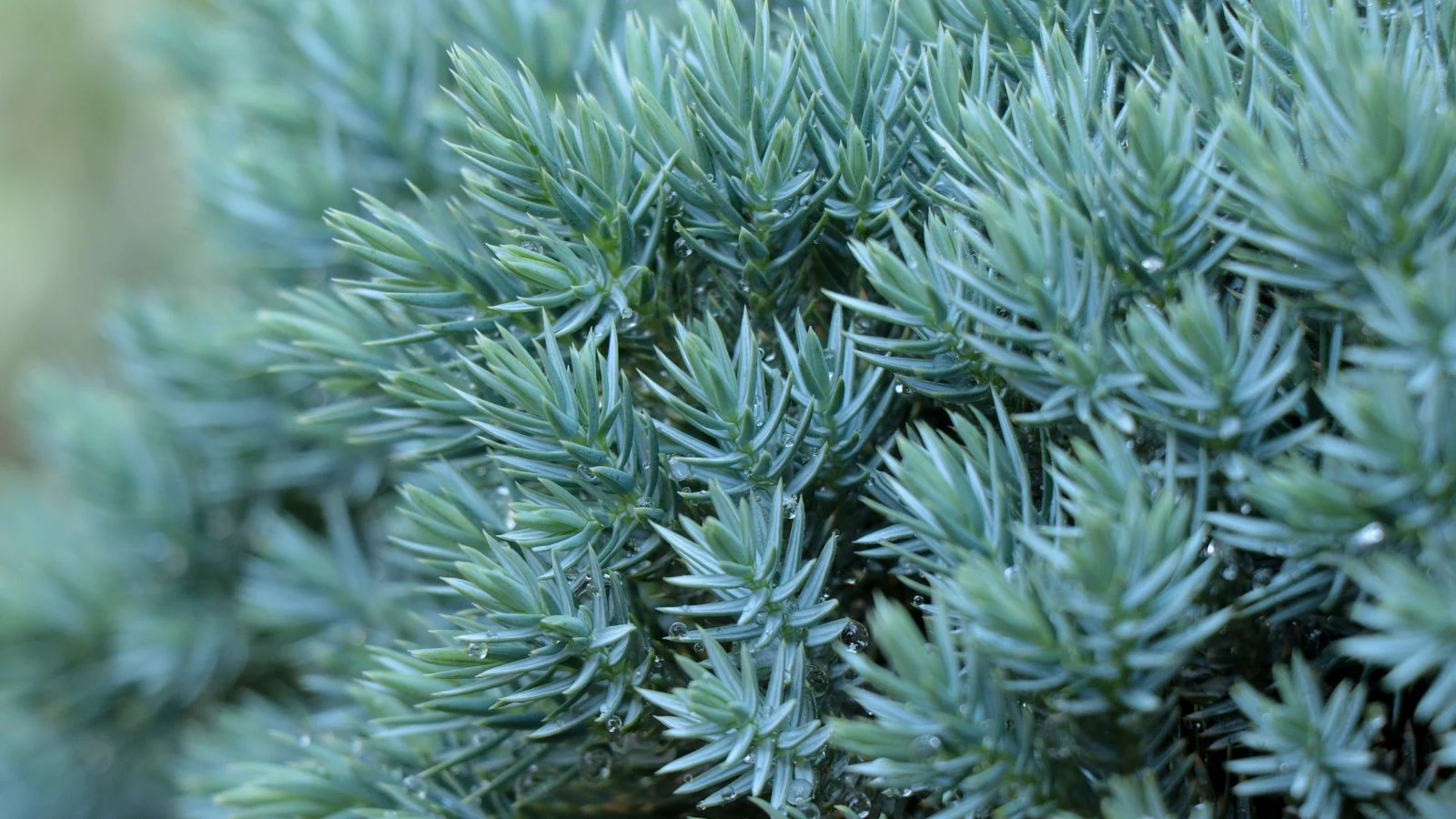
- Botanical Name: Juniperus squamata ‘Blue Star’
- Sun Requirements: Full sun
- Height: About 3’ tall and wide at maturity (slower and smaller in pots)
- Hardiness Zones: 4–9
‘Blue Star’ Juniper is your go‑to for cool, steely color. It mounds neatly and grows slowly, so it won’t bully your container companions.
Give it all the sun you can so the blue tones stay vivid and growth remains dense. It’s tough, drought‑tolerant once established, and fuss‑free. If you want even more small evergreen options for sunny porches, see Ornamental Trees’ collection of small evergreens.
2. Dwarf Mountain Pine (Pinus mugo)

- Botanical Name: Pinus mugo
- Sun Requirements: Full sun
- Height: Typically 3–5’ (stays smaller in containers)
- Hardiness Zones: 2–7
Dwarf Mountain Pine brings rugged character in a compact package. The dense, dark needles read as architectural and refined—almost bonsai‑like in simple, modern pots.
Wind, poor soil, cold snaps—this one shrugs them off. Keep drainage sharp and let the sculptural form shine.
3. ‘Minor’ Indian Hawthorn (Rhaphiolepis indica ‘Minor’)

- Botanical Name: Rhaphiolepis indica ‘Minor’
- Sun Requirements: Full sun to partial shade (best blooms in full sun)
- Height: 3–4’
- Hardiness Zones: 7–10
‘Minor’ Indian Hawthorn brings spring flowers and tidy evergreen leaves, with blue‑black berries afterward. It’s a top pick for warmer climates and bright entries.
For maximum bloom, park it in full sun. If you’re more after foliage, a bit of afternoon shade is perfectly fine.
Partial Shade Charmers: 3 Mini Evergreens for Dappled Porches
4. TATER TOT® Arborvitae (Thuja occidentalis ‘Tater Tot’)

- Botanical Name: Thuja occidentalis ‘Tater Tot’
- Sun Requirements: Full sun to partial shade
- Height: About 24” (often shorter in pots)
- Hardiness Zones: 3–8
TATER TOT® Arborvitae earns its name with a naturally rounded, plush shape. It’s one of the easiest minis to keep within bounds.
Bright green foliage holds color year‑round. Give it at least a half‑day of sun for best density, and prune lightly only if needed. For additional container-friendly shade-tolerant evergreens, check out Greenwood Nursery’s top picks for small evergreens in pots.
5. ‘Green Gem’ Boxwood (Buxus ‘Green Gem’)

- Botanical Name: Buxus ‘Green Gem’
- Sun Requirements: Partial shade to full shade (tolerates some sun)
- Height: About 3’ tall and wide
- Hardiness Zones: 4–9
‘Green Gem’ Boxwood is a classic for a reason—dense, glossy, and naturally rounded. It thrives on shaded porches where light levels shift through the seasons.
It responds well to light shearing if you love a manicured look, but its natural form is handsome with almost no pruning.
6. ‘Little Gem’ Norway Spruce (Picea abies ‘Little Gem’)
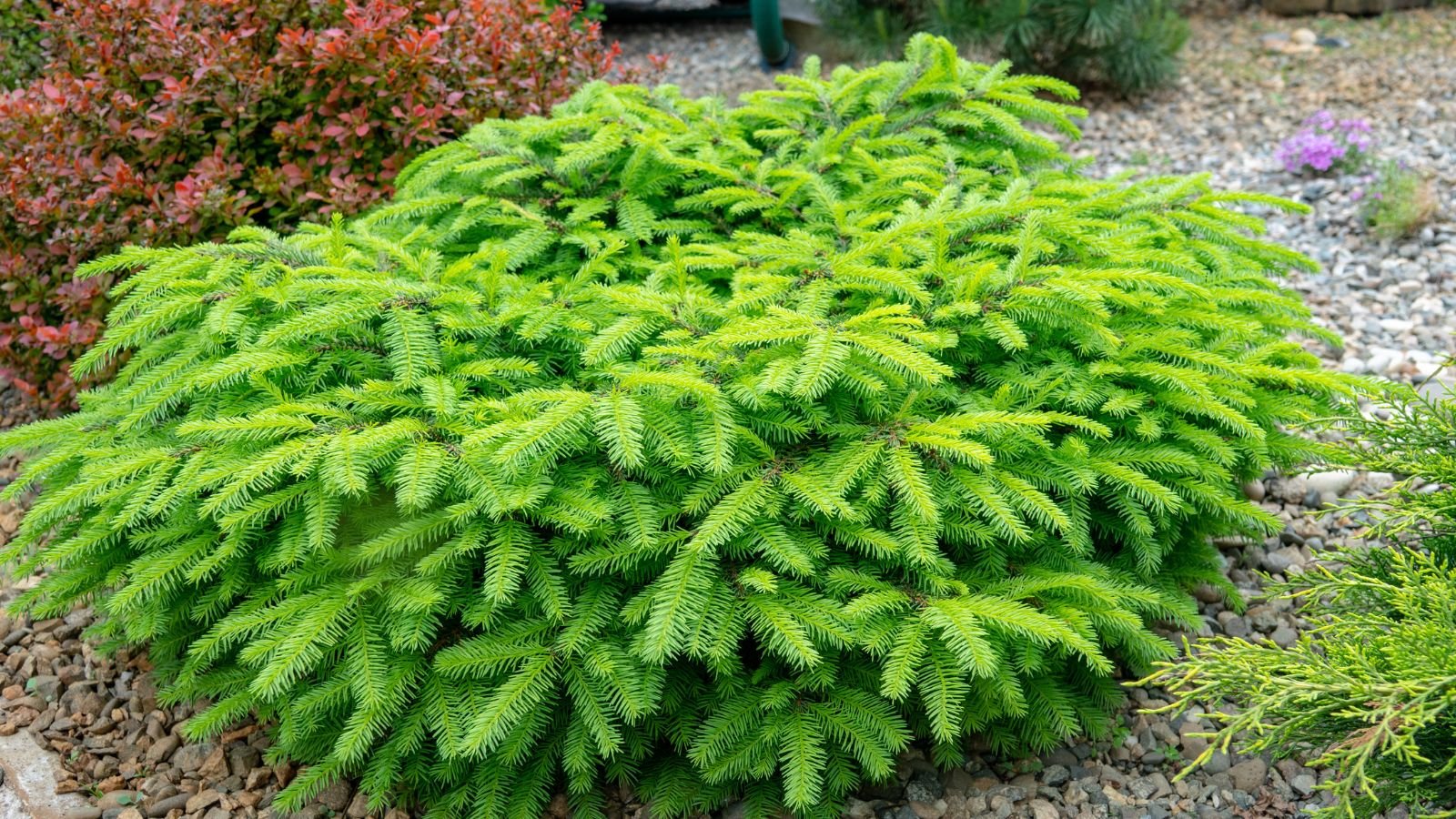
- Botanical Name: Picea abies ‘Little Gem’
- Sun Requirements: Full sun to partial shade
- Height: About 18”
- Hardiness Zones: 3–7
‘Little Gem’ Norway Spruce forms a tight, cushiony mound with short needles. New growth flushes bright green before maturing, adding subtle two‑tone contrast.
It’s happiest in cooler climates and absolutely insists on good drainage—especially in containers.
Shade & Cool‑Climate Stars: 3 Mini Evergreens That Prefer Protection
7. ‘Nana’ Dwarf Balsam Fir (Abies balsamea ‘Nana’)
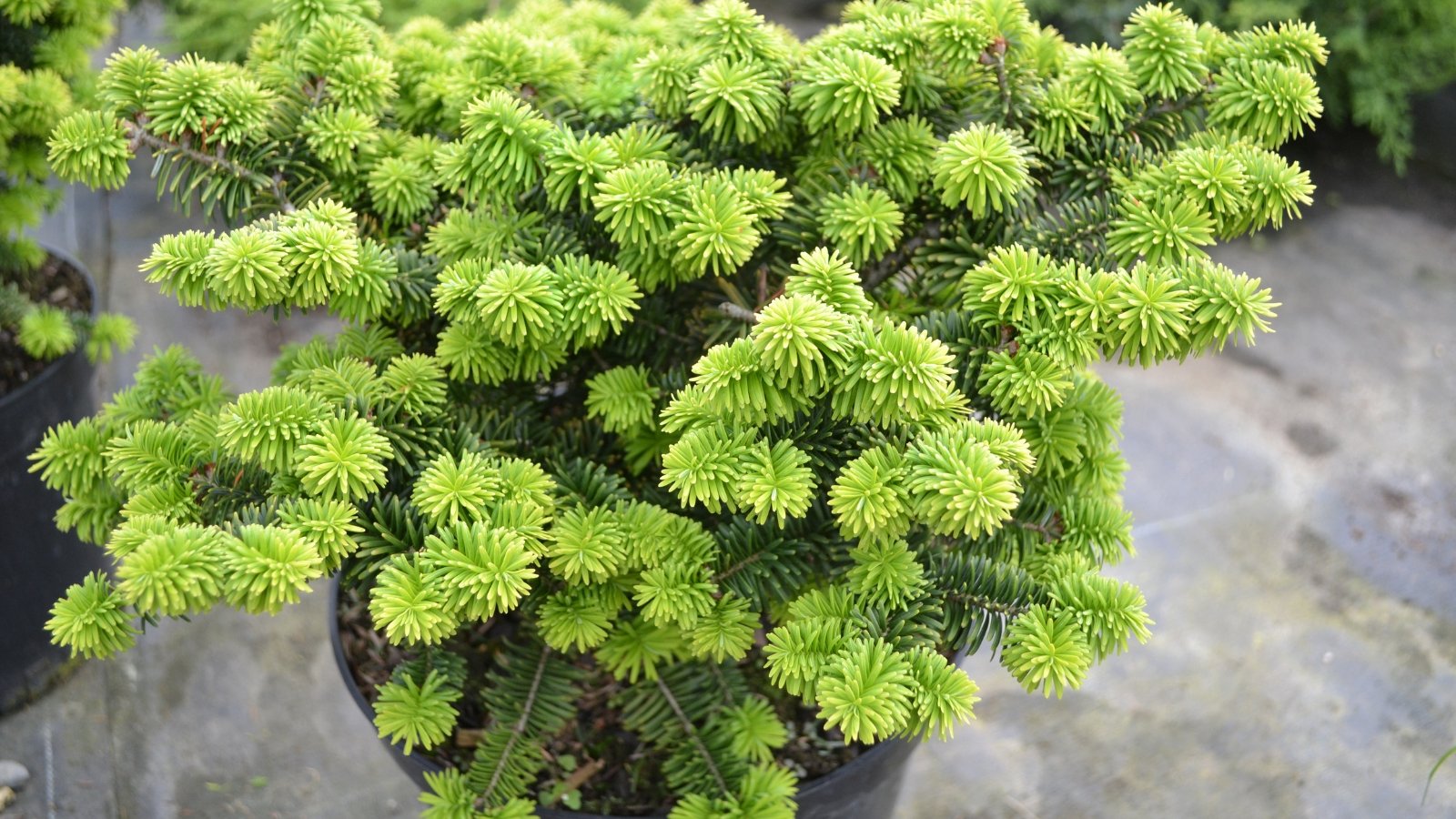
- Botanical Name: Abies balsamea ‘Nana’
- Sun Requirements: Full sun to partial shade (prefers some afternoon shade in warm climates)
- Height: Around 2’
- Hardiness Zones: 3–6
‘Nana’ Dwarf Balsam Fir is a soft, cushiony mound with that unmistakable piney fragrance when you brush by. It’s a sensory win at the front door.
Keep soil evenly moist—never waterlogged. In heat, shade it during late afternoons to reduce stress.
8. GLOW POP® Japanese Holly (Ilex crenata ‘Glow Pop’)

- Botanical Name: Ilex crenata ‘Glow Pop’
- Sun Requirements: Full sun in cool regions; morning sun and afternoon shade in warmer areas
- Height: Around 2’
- Hardiness Zones: 5–9
GLOW POP® Japanese Holly delivers a luminous transition from yellow spring growth to chartreuse, then green—like a built‑in glow effect for the porch.
Cool zones can push it into full sun; hotter zones should shield it after noon to keep foliage fresh and bright.
9. Japanese Skimmia (Skimmia japonica)
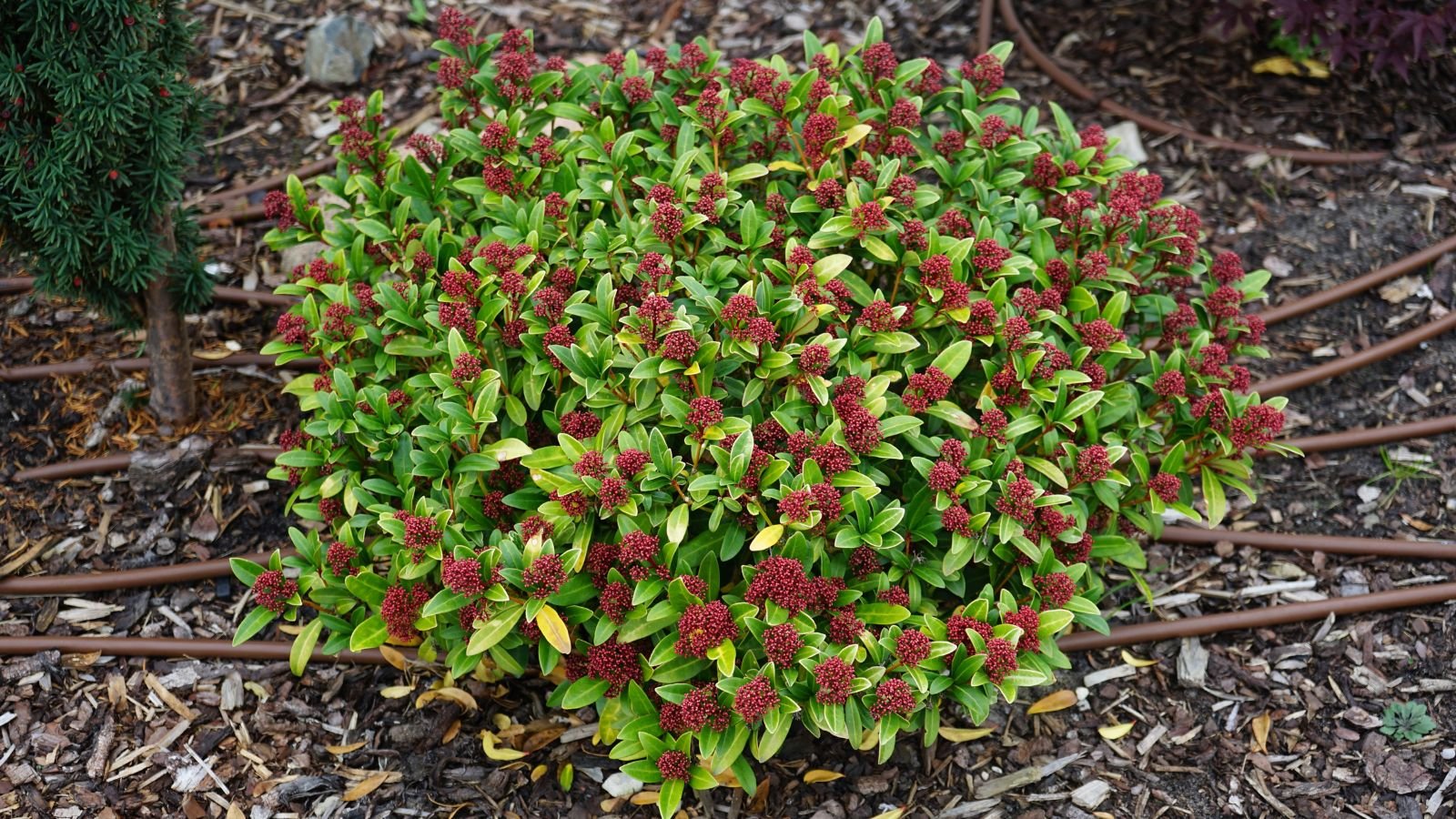
- Botanical Name: Skimmia japonica
- Sun Requirements: Partial to full shade
- Height: Up to about 5’ (more compact in containers)
- Hardiness Zones: 6–8 (some varieties manage 5 with protection)
Japanese Skimmia offers glossy, year‑round leaves, fragrant spring flowers, and showy red berries for months. It’s a standout for shaded entries.
Important: The berries are ornamental and not edible. Avoid if young children might be tempted to taste.
Troubleshooting: Keep Porch Evergreens Looking Their Best
When Leaves Bronze or Needles Yellow
- Too Much Sun/Wind: Shift to afternoon shade or add a wind break; water more consistently.
- Cold Desiccation: Group pots, wrap containers with burlap or frost cloth, and water during winter thaws.
- Poor Drainage: Repot with a lighter mix and ensure unobstructed drainage holes.
Leggy, Open Growth
- Insufficient Light: Move into brighter conditions or increase reflective light (white pots, light walls).
- Overfertilizing: Cut back to a slow‑release dose once in spring; avoid high‑nitrogen liquids.
- Wrong Variety: Swap for a cultivar that matches your light zone (see the lists above).
Watering Woes
- Chronic Dryness: Increase pot size, add mulch, and water deeply until runoff.
- Waterlogging: Elevate pots, drill extra side drainage holes (in nursery cans), and switch to a bark‑based mix.
- Salt Buildup: Flush containers monthly by watering until runoff for several minutes.
Pests and Diseases
- Scale, Spider Mites: Start with a firm spray of water; follow with horticultural soap or oil per label.
- Root Rot: Almost always drainage related—repot and reduce watering frequency.
- Winter Burn: Provide wind shelter and water during mid‑winter warm spells.
Smart Wrap‑Up, Quick Reference, and Checklist
Year‑round curb appeal isn’t about fancy tricks—it’s about matching the right plant to the right place and keeping roots happy. Start with tough, compact evergreens, use a draining mix, water consistently, and protect pots from extremes. That’s the smart gardening mindset I rely on season after season.
| Porch Condition | Best Picks | Why They Work |
|---|---|---|
| Full Sun, Heat, Wind | ‘Blue Star’ Juniper, Dwarf Mountain Pine, ‘Minor’ Indian Hawthorn | Blue tones stay vivid; pines are tough; hawthorn flowers best in sun. |
| Part Shade, Covered Porch | TATER TOT® Arborvitae, ‘Green Gem’ Boxwood, ‘Little Gem’ Norway Spruce | All keep compact forms and stay dense with a half‑day of light. |
| Shade or Cool Climates | ‘Nana’ Dwarf Balsam Fir, GLOW POP® Japanese Holly, Japanese Skimmia | Prefer protection, steady moisture, and cooler conditions. |
| Low Maintenance | TATER TOT®, ‘Blue Star’ Juniper, ‘Green Gem’ Boxwood | Slow growers, little to no pruning, tidy year‑round. |
Actionable Checklist
- 1. Measure Light: Time sun exposure on your porch for one week.
- 2. Pick Plants by Zone: Choose cultivars one zone hardier when possible.
- 3. Size the Pot: Go 2–4 inches wider than the root ball with big drainage holes.
- 4. Use the Right Mix: Bark‑based, well‑draining potting mix—never garden soil.
- 5. Plant High: Keep crowns slightly above the rim to shed water.
- 6. Water Deeply: Soak to runoff, then let excess drain; adjust by season.
- 7. Feed Lightly: One slow‑release dose in spring, then stop mid‑summer.
- 8. Protect in Extremes: Group pots, add wind breaks, or move to sheltered spots.
- 9. Prune Sparingly: Only stray stems—let the natural form do the work.
Have a favorite combo or a question about your porch light? I’d love to hear it. Drop a comment on Plant Care Dairy and tell me what you’re growing this season.
Disclaimer: This article is for educational purposes only. Always follow local guidelines, nursery advice, and product labels. Plant performance varies by microclimate, care, and container conditions.