
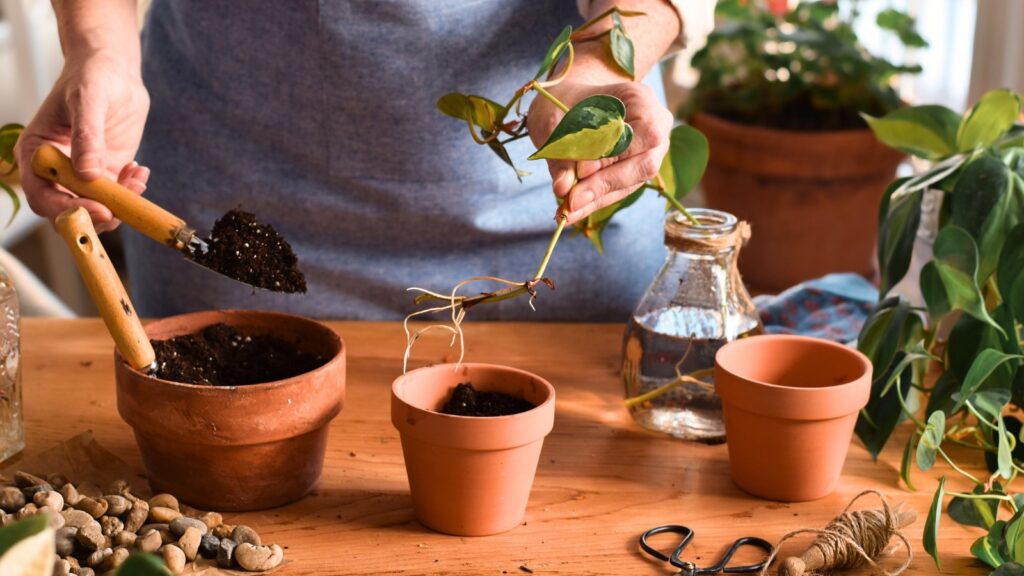
If you’ve ever stared at your favorite philodendron and thought, “I wish I had three more of you,” this guide is for you. My goal here is simple: cut through the confusion and give you clear, actionable steps that match the right method to the right plant type at the right time.
By the end, you’ll know how to identify whether you have a climbing or self-heading philodendron, when propagation works best, and exactly how to do all five methods—division, stem cuttings, offsets, mound layering, and air layering—without guesswork.
I’ll be honest: I fell in love with philodendrons after turning a single ‘Brasil’ vine into a windowsill forest. I started with one cutting, learned to time my moves in spring, and within weeks I was potting up new starts for friends. You can absolutely do the same.
What To Know Before You Propagate

Choose The Right Moment
Propagating works best during active growth, typically from spring through early fall. For more details on how to care for philodendrons during different seasons, check out this guide on growing philodendron houseplants from The Spruce. In mid to late fall, as light and temperatures drop, philodendrons slow down, and rooting takes longer.
- Best window: Late spring to early fall for faster, stronger roots. For tips on maximizing leaf size and indoor growth for your philodendrons, check out our guide on growing giant split-leaf philodendron leaves indoors.
- Okay but slower: Late fall/winter (if you must), but expect delays.
- Pro tip: Use a grow light to compensate for short days if winter propagating.
Clean Tools And A Quick Kit
Healthy, fast propagation starts with sanitized tools and the right supplies. I keep a small kit ready so I don’t cut corners.
- Essentials: Sharp pruners or a knife, isopropyl alcohol, gloves, small nursery pots, fresh potting mix suited for philodendrons, labels.
- Nice-to-haves: Clear jars for water propagation, rooting hormone, humidity dome or plastic bag, moss pole or small stakes, sphagnum or coco coir for layering.
- Sanitize first: Wipe blades with alcohol before every cut to prevent disease spread.
Pick A Healthy Parent Plant
Choose a plant that’s actively growing, free of pests, and not severely stressed. Avoid stems that are floppy from low light or desiccated from underwatering.
- Great candidates: Firm stems, vibrant leaves, visible nodes and aerial roots (on climbers).
- Avoid: Pest issues, yellowing from nutrient deficiency, or freshly repotted plants still adjusting.
The 5 Simple Methods At A Glance
- Division: Split a larger plant into multiple smaller plants during repotting.
- Stem Cuttings: Root 3–6 inch sections in water or soil—especially easy on climbers.
- Offsets: Separate baby plants from self-heading (arborescent) philodendrons.
- Mound Layering: Bury a leafless stem section of a climber so it roots in place.
- Air Layering: Wrap a wounded green stem with moist moss to encourage roots before cutting.
Determine Your Type: Climbing Vs. Self-Heading

Climbing Philodendrons
Climbers produce vines with nodes and often aerial roots that grip supports. Indoors, they thrive on moss poles and trellises. Common examples include heartleaf philodendron (Philodendron hederaceum) and red-leaf philodendron (P. erubescens). For a climber with unique texture and growth habit, see our guide on how to grow and care for Philodendron Tortum. For example, the popular Pink Princess philodendron is a climbing type with stunning variegated leaves, making it ideal for stem cuttings or mound layering.
- Propagation sweet spot: Stem cuttings and mound layering.
- Climber cue: New leaves emerge along a vine rather than from a central trunk.
Self-Heading (Arborescent) Philodendrons
Self-heading types grow upright, semi-woody stems with leaves emerging from a central axis. A classic example is P. bipinnatifidum (often called tree philodendron), with deeply lobed, fenestrated leaves. These may form aerial roots for support, not for climbing.
- Propagation sweet spot: Offsets, division, and air layering on green stems.
- Self-heading cue: No long vining habit; leaves rise from a sturdy central stem.
Why Type Matters For Propagation
- Cuttings root easiest on climbers because nodes and aerial roots are frequent.
- Offsets appear on self-heading types, giving you instant baby plants to pot up.
- Division works on both types when you can separate distinct root masses.
- Layering adapts to both: mound layering for climbers, air layering for self-heading plants.
Method 1: Division (Great When Repotting)

When Division Works Best
Division is perfect when your plant is root-bound or has multiple crowns. It’s often overlooked for philodendrons, but both climbers and self-heading types can be divided successfully.
- Do it while up-potting: You’ll already have the root ball exposed.
- Look for natural separations: Distinct root clusters linked to individual stems or vines.
Step-By-Step Division
- Prepare the space: Lay down newspaper or a tray; sanitize pruners or a knife.
- Remove the plant: Gently slide the root mass out of its pot.
- Loosen soil: Brush or tease away mix with your fingers to reveal root connections.
- Identify divisions: Aim for pieces with 1–2 sets of leaves and a healthy root clump.
- Separate: Pull apart gently; if needed, cut cleanly through roots with your sanitized tool.
- Pot up: Use a container just 1–2 inches wider than the root mass; backfill with fresh mix.
- Water in: Moisten thoroughly and let excess drain.
- Stabilize humidity: Use a dome or keep near other plants to raise ambient moisture for a week.
Aftercare And Easy Mistakes To Avoid
- Don’t oversize pots: Too much soil stays wet and risks rot.
- Don’t fertilize immediately: Wait 3–4 weeks until you see new growth.
- Do give bright, indirect light: Strong light speeds recovery and rooting.
Method 2: Stem Cuttings (Especially For Climbers)

Water Propagation: Fast And Visual
Water propagation makes progress easy to monitor. It’s my favorite way to root 3–6 inch segments of climbers like P. hederaceum. If you’d like a visual step-by-step for stem cuttings and other propagation methods, Better Homes & Gardens offers an excellent resource on how to propagate a philodendron.
- Take the cutting: Snip below a node on a green stem; avoid woody sections on self-heading types.
- Strip lower leaves: Leave one set at the top to focus energy on roots.
- Jar and change: Place in clean water and change it daily to keep bacteria down.
- Wait for roots: Let at least one substantial root form before potting.
- Pot up: Move to a small pot when roots are 1–2 inches long.
Soil Propagation: Stronger Starts
Soil propagation is slightly less “visual,” but often gives sturdier transplants from day one. If you’re propagating split-leaf philodendrons specifically, our detailed guide on how to propagate split-leaf philodendrons covers step-by-step methods and timing.
- Prep the pot: Fill a small container with airy philodendron mix; make a 2-inch-deep hole.
- Set the cutting: Insert so at least one node is buried; firm the mix gently.
- Add humidity: Use a dome or clear bag to keep humidity high.
- Light and patience: Bright, indirect light; keep slightly moist—not soggy.
Rooting Timeline And Troubleshooting
- Timeline: Many cuttings root within 1–4 weeks; climbers often root faster.
- Tug test: For soil cuttings, a gentle tug that meets resistance means roots have grabbed on.
- If leaves yellow: Too wet or not enough light; reduce watering and brighten the spot.
- If wilting persists: Raise humidity, trim the leaf mass, and confirm at least one node is buried.
Methods 3–5: Offsets And Layering
Method 3: Grow Offsets On Self-Heading Types
Self-heading philodendrons often form offsets (baby plants) at the base. Climbers don’t typically produce these, so this method is specific to arborescent types.
- Time it with repotting: When the root ball is out, you’ll easily see offsets.
- Gently separate: Use your fingers to tease them away from the main plant.
- Pot and stabilize: Plant in small pots, water thoroughly, and boost humidity for a week.
- Pro tip: If roots are intertwined, don’t force it. Let them grow a bit more and try again later.
Method 4: Mound Layering For Climbers
Climbers respond beautifully to mound layering because their nodes are primed to root wherever they contact mix.
- Choose a stem: Pick a several-inch segment with a leafless node.
- Bury the node: Lay that bare section on the soil surface and cover it lightly.
- Pin in place: Use a rock or landscaping staple so it stays put.
- Wait for roots: After roots form, uncover, sever from the mother vine, and pot up.
Method 5: Air Layering For Self-Heading Stems
Air layering coaxes roots to form before you make the final cut—excellent for thicker, green stems on self-heading philodendrons.
- Select a green stem: Avoid woody, older sections; sanitize your blade.
- Wound the stem: Make a partial cut or shallow slice just below a node.
- Wrap with moisture: Pack hydrated sphagnum moss or coco coir over the wound and enclose with plastic or an air-layering pod.
- Keep it damp: Check weekly and mist the moss if it dries.
- Root and release: In 1–2 weeks (sometimes longer), once you see new roots, cut below the rooted area and pot your new plant.
Conclusion And Smart Summary
Key Takeaways
- Identify your type first: Climbers versus self-heading plants determine which method is easiest.
- Propagate in active growth: Spring to early fall delivers faster, stronger roots.
- Division works on both types: Separate natural root clumps while repotting.
- Stem cuttings shine for climbers: Root in water or soil; change water daily if using jars.
- Use offsets for self-heading types: Gently detach babies during repotting.
- Layering expands your options: Mound layering for climbers; air layering for self-heading stems.
Quick Reference Table
| Method | Best For | When To Use | Time To Root | Key Tips |
|---|---|---|---|---|
| Division | Climbers & Self-Heading | During repotting/root-bound stages | Immediate (already rooted) | Sanitize tools; pot only 1–2″ wider |
| Stem Cuttings | Climbers (ok for green self-heading stems) | Active growth, bright indirect light | 1–4 weeks | Remove bottom leaves; change water daily |
| Offsets | Self-Heading | During repotting | Immediate (already rooted) | Gently tease; don’t force tangled roots |
| Mound Layering | Climbers | When a leafless node is available | 2–4+ weeks | Pin stem in soil; sever after roots form |
| Air Layering | Self-Heading (green stems) | Any time in active growth | 1–2+ weeks | Keep moss moist; cut below rooted area |
Your Next Step
Ready to multiply your collection? Start with the method that matches your philodendron’s type and your comfort level. If you want more hands-on guides and plant-tested tips, come hang out with us at Plant Care Dairy. Drop your questions and hard-won lessons in the comments—we love learning alongside you.
Disclaimer: This article is for educational purposes only. Always consider your unique growing conditions and consult local experts if you suspect pests, disease, or toxicity concerns. Propagation timelines vary by species, environment, and plant health.