
I’ll be honest with you—I used to think harvesting basil was just about snipping a few leaves when I needed them for pasta. But after losing more than one plant to bad timing and careless cuts, I learned that how and when you harvest makes all the difference between a basil plant that thrives all season and one that fizzles out too soon.
If you’ve ever pinched off a bunch of leaves only to see your plant turn woody, stop growing, or bolt into flowers, you’re not alone. Most gardeners make the same mistakes—cutting too much, too low, or at the wrong time of day. The truth is, basil has its own rhythm. Harvest it the right way, and you’ll have a steady supply for pesto, salads, and sauces. Harvest it the wrong way, and you’ll be staring at a bare stem wondering what went wrong.
In this guide, I’ll share not just the basic “pinch and snip” technique you see everywhere online, but also the overlooked details—like the best time of day to cut for maximum flavor, how much is too much, and the simple tricks to keep the basil bushy. My goal is to help you avoid the common pitfalls and turn your basil into the most generous plant in your garden.
What about you—have you ever had a basil plant that stopped growing right after your first big harvest?
Why Harvesting Basil the Right Way Matters
When I first started growing basil, I thought harvesting was just about grabbing a handful of leaves whenever I needed them for cooking. But I quickly learned that the way you harvest can either make the plant thrive or cut its life short. Done right, harvesting actually encourages basil to grow stronger and fuller instead of wearing it down.
- Every proper cut signals the plant to branch out, producing more leaves.
- Regular harvesting keeps it from flowering too soon, which can ruin the taste.
- You get steady, flavorful leaves for pesto, salads, and even herbal remedies all season long.
Think of harvesting less as “taking” and more as “training” the plant. When you treat it this way, your basil won’t just survive—it will reward you with more fresh leaves than you thought possible. If you enjoy growing herbs like basil, you might also want to try lemongrass—it’s another fragrant plant that thrives with the right care. Here’s a complete guide on how to grow lemongrass from seed to harvest.
When Is Basil Ready to Harvest?

A lot of people make the mistake of cutting basil too early, and the plant never really recovers. The trick is to wait until it’s strong enough to handle a good trim. A few signs tell you it’s ready:
- The plant is at least 6–8 inches tall.
- There are three or more sets of true leaves along the stem.
Season matters too. Basil does best in the warmth of late spring and summer, so that’s when harvesting keeps it producing at its peak.
And here’s a detail that makes a big difference: the time of day. The leaves are richest in oils and flavor early in the morning, before the sun gets hot. According to the team at Savvy Gardening in their guide on harvesting basil, cutting in the morning gives you the most fragrant leaves and helps the plant keep growing vigorously.
So if you want basil that’s plentiful and full of flavor, let it mature to the right size, harvest before it flowers, and always aim for morning snips—you’ll taste the difference in every dish.
Step-by-Step Guide to Harvesting Basil Correctly
When it comes to basil, a little technique goes a long way. If you just grab random leaves, you’ll weaken the plant. But if you follow a few simple steps, you’ll end up with a steady, bushy supply all season.
The Pinch-and-Snip Technique
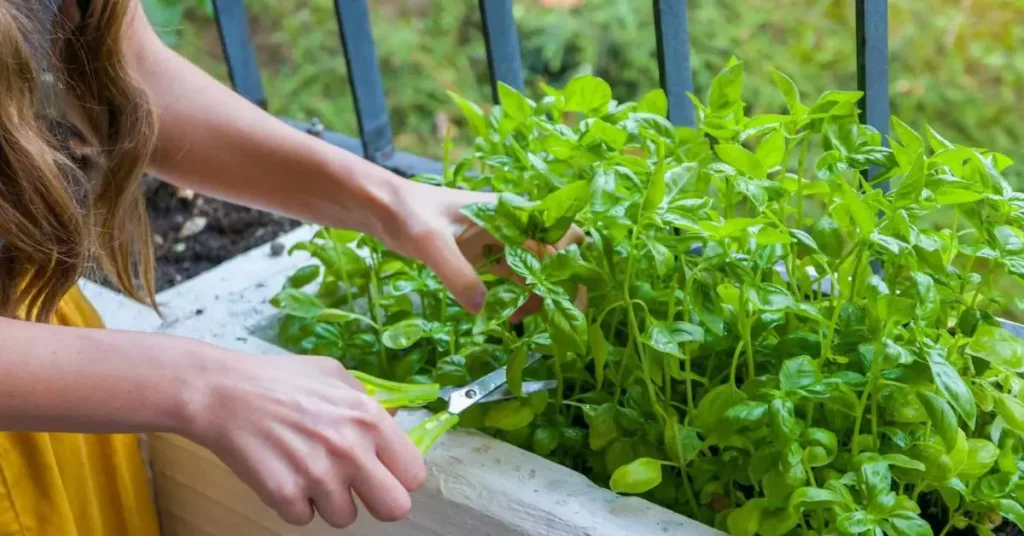
The best way to harvest basil is by cutting just above the second set of leaves on a stem. Every time you do this, the plant gets the signal to branch out, sending new shoots from the sides instead of growing tall and spindly. Think of it as showing your basil how to multiply—it’s a small cut that leads to double the growth.
Tools vs. Hands – Which Is Better?
There’s always debate over whether you should use scissors or just your fingers. I’ve done both, and here’s the honest truth:
- Snapping stems with your fingers feels natural and can keep cuts clean.
- Using scissors or pruning shears avoids tearing, which helps prevent disease.
How Often Should You Harvest?
To keep basil thriving, aim to cut it every 1–2 weeks. This rhythm stops it from getting leggy and makes sure new leaves keep coming. As The Spruce notes in their guide on how to harvest basil, regular cutting isn’t just for the kitchen—it’s the secret to keeping basil lush.
Common Mistakes That Hurt Basil Plants

I’ve seen more basil plants ruined by simple mistakes than by pests or weather. Avoid these common slip-ups, and your plant will stay strong:
- Overharvesting: Never remove more than one-third of the plant at once. Too much at a time can shock it.
- Cutting too low: Snipping below the woody stem won’t encourage regrowth—it can actually stunt the plant.
- Ignoring flowers: If you let basil flower and “bolt,” the leaves lose their flavor fast. Pinch those buds as soon as you see them.
- Leaving yellowing leaves: Old, yellow leaves drain energy from the plant. Remove them quickly so the plant can focus on new growth. While caring for basil, don’t forget that some weeds in your garden aren’t always enemies—several can actually improve soil health and plant growth. Learn more in this guide on useful weeds that boost your garden’s soil and plants.
Basil isn’t hard to keep alive, but these little errors can add up. Treat harvesting as a partnership—you take some, you give the plant room to keep giving back.
Extending the Harvest Season
One of the biggest secrets to having basil all summer—and sometimes even into winter—is knowing how to stretch out its life. Basil naturally wants to flower and go to seed, but if you stay ahead of it, you can keep it producing fresh leaves much longer.
- Pinch off flowers right away: The moment you see buds forming, nip them off. Flowers pull energy away from the leaves, and that’s when flavor starts to fade.
- Prune regularly: Don’t wait until you need basil for a recipe—make a habit of pruning every week or two. Each cut forces the plant to branch and regrow, giving you a steady supply.
- Try indoor growing hacks: If you’re not ready to say goodbye in fall, bring a pot inside. A sunny windowsill or even a simple grow light can keep basil alive through colder months.
With these habits, basil shifts from being a short-lived summer plant to a year-round kitchen companion. Another overlooked way to keep basil thriving is by supporting pollinators in your garden—they help balance the ecosystem and improve yields. Check out these easy tips to attract pollinators and boost your garden’s overall growth.
How to Store and Preserve Basil After Harvest

Having more basil than you can use right away is a good problem to have—if you know how to store it properly. The key is choosing the right method depending on whether you want it fresh for a few days or saved for months.
Short-Term Storage
- Place fresh cuttings in a glass of water, just like a bouquet, and keep them on the counter for a couple of days.
- For longer freshness, cover loosely with a plastic bag in the fridge. This slows down wilting but still keeps leaves usable.
Long-Term Preservation
- Freezing whole leaves: Wash, dry, and freeze them flat on a tray before transferring to bags. They won’t look pretty when thawed but the flavor holds.
- Make pesto and freeze in cubes: Blend with oil, garlic, and nuts, then freeze in ice cube trays for instant flavor bombs later.
- Drying leaves: A low-temperature oven or a food dehydrator works best. Dried basil loses some brightness, but it’s perfect for soups and sauces.
Research even shows that harvesting and preserving methods directly impact shelf life. A study on basil storage from NCBI notes how timing and post-harvest handling affect both freshness and nutrition, proving that good storage isn’t just about convenience—it also helps preserve quality.
By mixing short-term tricks with long-term strategies, you’ll never have to waste a single harvest, and your future self will thank you when you’re stirring summer basil into a winter stew.
Final Takeaway – A Thriving Herb Garden All Season Long
If there’s one thing I’ve learned about basil, it’s that harvesting isn’t about taking—it’s about giving your plant a reason to thrive. Every careful snip creates space for new growth, which means more leaves for you and a stronger plant in return. Instead of waiting for a big cut, make harvesting a regular habit. A few leaves for tonight’s dinner, a gentle prune each week, and your basil will reward you with a steady stream of fresh flavor all season long.
Small, frequent snips are the secret to turning one plant into a never-ending supply. With the right timing, pruning, and storage, you’ll never run short of basil—whether it’s for pesto, soups, or a simple garnish.
So, go ahead and treat your basil with confidence. The more you harvest it the right way, the more it will give back.
What about you—do you prefer to harvest little by little for daily meals, or do you like doing a big batch for freezing and pesto? Share your thoughts in the comments below.
And if you’re looking for more practical gardening tips and herb-care guides, don’t forget to visit Plant Care Dairy for expert advice you can trust.
Disclaimer: The information in this article is for general gardening guidance only. Growing conditions vary by region and climate, so results may differ. Always adapt advice to your local environment and consult trusted sources if you’re unsure.