
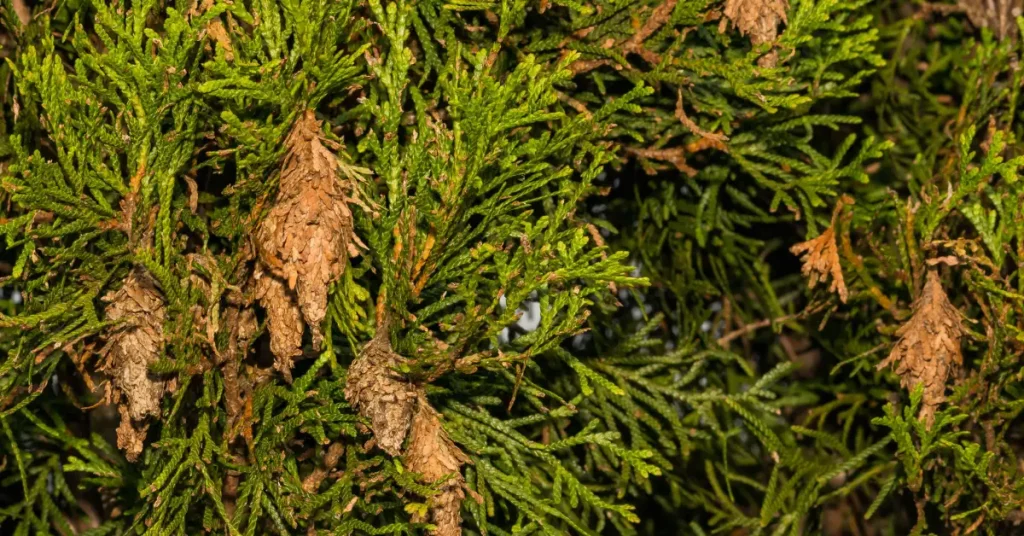
Every summer, just when my evergreens start looking their best, I notice something odd — little brown cones dangling from the branches like tiny ornaments. At first, I thought they were part of the tree. But when I tugged one open years ago, it moved. That’s when I met my first bagworm.
If you’ve ever seen your arborvitae or junipers slowly turning brown for no reason, you probably know that sinking feeling. Bagworms don’t scream for attention; they just quietly eat, hide, and multiply until your once-green hedge looks scorched. The worst part? By the time most people notice them, the damage is already spreading.
I’ve tried everything — sprays that made me cough, home remedies that did nothing, even hours of handpicking each bag one by one. It took me a few seasons to realise that getting rid of bagworms isn’t about fighting harder, it’s about working smarter — and doing it without harsh chemicals that harm everything else living in your garden.
In this guide, I’ll show you how to spot them early, break their life cycle, and use natural methods that actually work. No toxic sprays, no gimmicks — just practical, eco-friendly ways to protect the plants you’ve spent years growing.
Have you ever found those strange little “pinecone” bags on your trees and wondered what they really are?
Bagworm Biology & Vulnerabilities
If you really want to stop bagworms without chemicals, you need to understand how they live — and more importantly, when they’re weakest. Once you know their routine, getting ahead of them becomes much easier.
Life Cycle in Brief (Egg → Larva → Pupa → Adult)
Bagworms start their lives quietly — thousands of eggs packed inside last year’s bags, waiting for spring. When the weather warms, the larvae crawl out and immediately start building tiny silk cases. They feed, grow, and shed, all while dragging those bags around.
By midsummer, they’re fully grown, pupate inside, and the adult males emerge as small moths. Females, though, never leave their bags — they mate, lay eggs inside, and die there. It’s a self-contained cycle, which is why timing is everything if you want to break it.
When They’re Most Vulnerable
Their weakest phase is right after hatching — before they build strong bags. That’s the perfect window to act. A light spray of Bacillus thuringiensis (Bt) or neem oil during this stage can make a huge difference. Once the bags harden, even strong chemicals struggle to reach them.
Bag as Defence (“Portable Armour”) and Its Limits
Those tiny cones hanging from your trees aren’t just cocoons — they’re full-blown armour made of silk, bark, and leaves. It’s clever; it keeps them hidden from predators and weather. But even armour has limits. The bags don’t protect them from birds that learn to peck through or from biological sprays that reach larvae before the bags harden. Timing and consistency beat brute force every time.
Natural Enemies & Parasitoids
You’re not alone in this fight. Nature already has soldiers working for you — birds, parasitic wasps, and certain beetles feed on or lay eggs inside bagworms. Planting shrubs that attract small birds or leaving safe nesting spots nearby can naturally reduce next year’s population. Encouraging biodiversity isn’t just good for your garden — it’s smart pest control.
Monitoring & Early Detection (Before Infestation Worsens)
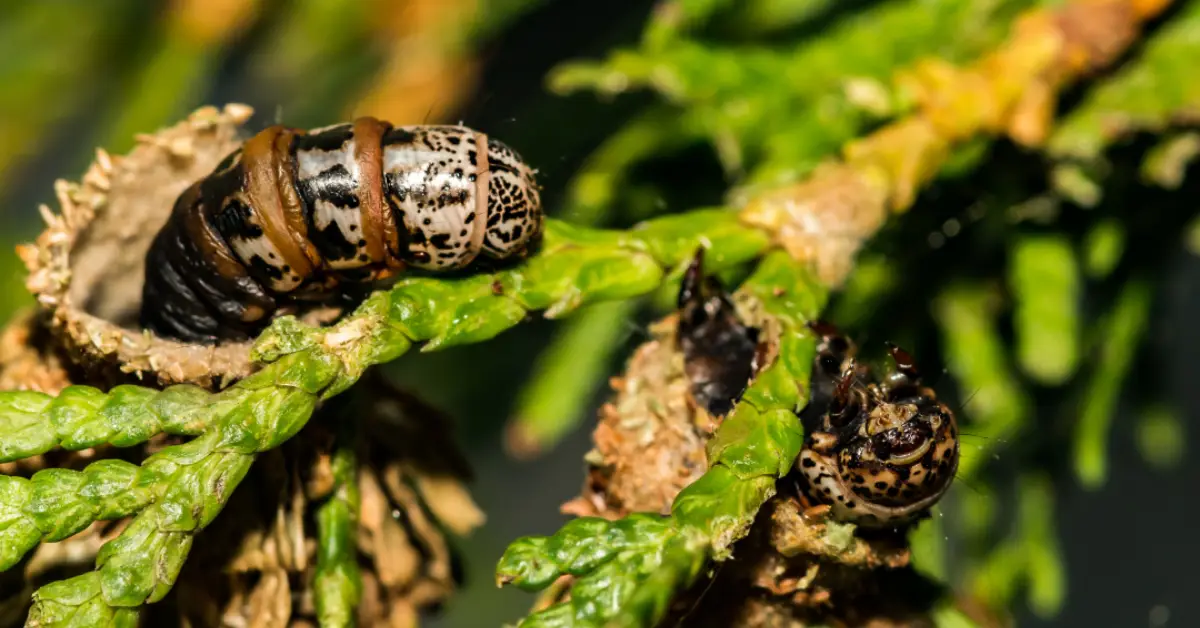
The best way to win this battle is to catch bagworms before they settle in. Once you know where and when to look, you’ll save yourself weeks of frustration later.
When & Where to Inspect Plants
Late winter to early spring is inspection season. Walk around your yard when leaves are gone and the branches are bare — it’s much easier to spot the old brown bags clinging to twigs. Remove and destroy them before the eggs hatch. As Beyond Pesticides points out, early removal can prevent thousands of new larvae from emerging each season.
How to Spot Early Instar Larvae or Small Bags
- Look for silk threads or small cone-like specks on the underside of leaves.
- Notice any fine webbing or tiny green worms crawling on evergreens.
- Check newly planted trees more often — they’re easier targets.
Using Pheromone Traps or Male Disruption
If they’re available in your area, pheromone traps can help catch male moths before they mate. These traps won’t eliminate the problem on their own, but they’ll tell you when activity peaks so you can time your treatments better.
Record Keeping & Trend Tracking
Keep a small garden journal or phone notes. Mark when you first see bags each year, which trees are hit hardest, and what method worked best. Over time, you’ll see clear patterns — and you’ll always be one step ahead next season.
If you often notice other insects building trails or nests near your plants, it might not just be bagworms — ants can also weaken roots and attract more pests. Here’s how you can get rid of garden ants without harmful chemicals using safe, soil-friendly methods.
Have you ever tried spotting bagworms early in the year? You might be surprised how many you can stop just by catching them before they hatch.
Mechanical & Cultural Methods (Zero or Low Cost)
When it comes to bagworms, sometimes the simplest methods work best. These are the things you and I can do right now — no chemicals, no gadgets, just a bit of patience and good timing.
Handpicking & Bag Removal (in Dormant Season)
Winter is your golden window. When the leaves are gone, those brown hanging cones become easy to spot. I grab a bucket of soapy water and spend a few minutes clipping or twisting each bag off by hand. It’s oddly satisfying — like spring cleaning for your trees.
Once removed, toss them straight into that soapy bucket or seal them in a bag before disposal. Never leave them on the ground; each one can hold hundreds of eggs waiting to hatch next season.
Pruning or Cutting Infested Branches
If a branch looks heavily coated with bags, don’t hesitate — prune it. But here’s the trick: don’t overdo it. Cut only about six inches below the last visible bag to ensure any hidden larvae are gone without stressing the plant. Dispose of the cuttings just like the bags — sealed or burned safely.
Mulching, Debris Removal, and Habitat Management
Bagworms often hide in nearby debris, mulch piles, or leftover clippings. Once you’ve cleared your trees, check the ground. Remove old mulch or fallen leaves, and don’t stack trimmed branches near healthy shrubs. Keeping your garden tidy makes it harder for bagworms to overwinter undetected.
Keeping your soil clean also helps prevent other stubborn garden pests. If you’ve struggled with similar infestations, check out these 5 simple DIY tricks to stop squash bugs from returning using natural solutions.
Plant Health Practices to Boost Resilience
A healthy plant can handle a lot more than a stressed one. Keep your evergreens watered during dry spells, fertilize moderately, and maintain good airflow between plants. Dense, overcrowded hedges trap humidity — exactly what pests love. When your trees are strong, even a few bagworms won’t cause lasting harm.
Biological / Natural Agents (Gentle Yet Effective)
When you’ve done the manual cleanup, it’s time to let nature help out. These gentle methods don’t just kill pests — they keep your garden balanced and safe for beneficial insects.
Bt (Bacillus thuringiensis var. kurstaki)
Bt is my first line of defense when larvae are small and active. It’s a naturally occurring bacterium that affects only caterpillars like bagworms. Mix it according to label instructions, spray it on foliage in early summer, and focus on undersides of leaves.
Neem / Neem Oil / Botanical Extracts

If you prefer something from your kitchen shelf, neem oil is your friend. Mix two tablespoons of neem oil with a gallon of water and a few drops of mild soap. Spray every 7–10 days during active feeding. Neem disrupts the larvae’s growth without harming bees or birds — a gentle, eco-safe fix that’s easy to repeat. You can find detailed guidance on this at The Spruce.
Beneficial Insects & Parasitoids
Encouraging natural predators is like building your garden’s own defense team. Wasps such as Ichneumon and Tachinid flies lay eggs inside or on bagworms, naturally reducing their numbers. Avoid broad insecticides, and plant pollinator-friendly flowers to keep these allies around all season.
Knowing which insects are friends and which are foes makes all the difference. You can explore this quick guide on how to identify common pests in your garden to recognise threats early and protect beneficial species.
Bird Attraction
Birds, especially sparrows and chickadees, love snacking on young larvae. A birdbath, a few seed feeders, and berry-producing shrubs can turn your yard into a safe hunting ground for them. Beyond Pesticides recommends this as one of the most sustainable, hands-off ways to manage pests.
Entomopathogenic Nematodes / Fungal Agents
In regions where humidity is high, beneficial nematodes and fungi can target bagworms in the soil. These microscopic organisms attack larvae naturally, without affecting roots or beneficial worms. They’re best applied in the evening when the soil is moist and temperatures are mild.
If you combine these simple steps — removing what’s visible and inviting nature to do the rest — you’ll find that your garden starts defending itself. Have you ever tried using birds or neem oil against pests? You might be surprised how effective nature’s own methods can be.
Timing Is Everything — When to Act for Best Results
When it comes to getting rid of bagworms, the when matters as much as the how. You can handpick, spray neem, or release beneficial insects — but if you miss the right window, you’ll just be chasing empty bags.
Early Instar Window (May–June or Species-Specific)
The best time to act is when the young larvae first emerge — usually from May through early June, depending on your climate. This is when the caterpillars are small, unarmoured, and most vulnerable to natural controls like Bt and neem oil. According to The Good Earth Garden Center, early-season action can stop the damage before it even begins. Once those tiny silk cases harden, even biological sprays can’t reach the larvae inside.
Avoiding Late Season When Bags Are Hardened
By late summer, those small bags turn into thick, bark-covered shells. At that stage, there’s little you can do except handpick and prune. Spraying then is a waste of effort and money — the larvae are protected, and your plants are already stressed. Think of late-season cleanup as prevention for next year, not a cure for now.
Repeated Follow-Ups / Second Pass Schedule
Even if you act early, don’t stop after one round. Bagworm eggs don’t all hatch at once — some lag behind for a week or two. I make a second pass about 10–14 days after my first treatment, especially if the weather’s been warm and humid. It’s a simple habit that saves me a full infestation later.
Seasonal Calendar / Checklist for Future Years
Keep a quick seasonal checklist:
- Late Winter (Jan–Mar): Inspect and remove old bags.
- Spring (Apr–May): Watch for early larvae on evergreens.
- Early Summer (May–June): Spray Bt or neem; introduce birds and beneficial insects.
- Mid–Late Summer (July–Aug): Follow up if needed; stop spraying once bags harden.
- Fall (Sep–Oct): Clean up debris, prune, and prepare for dormancy.
Once you follow this rhythm for a year or two, it becomes second nature. You’ll start noticing signs sooner — and dealing with bagworms will feel less like a battle and more like routine garden care. Have you tracked your pest patterns before? It’s one of the easiest ways to stay ahead without using a single harsh chemical.
Mistakes to Avoid & Limitations of Natural Methods
I’ve seen it happen too many times — gardeners who want to stay chemical-free but end up disappointed because they made a few simple timing or technique mistakes. Natural control works beautifully, but only if you respect its limits.
Waiting Too Long / Acting After Heavy Infestation
Once you see dozens of hardened bags across your trees, it’s already late in the season. By then, most larvae have sealed themselves inside, and no spray — natural or otherwise — can reach them. If you wait until fall to act, you’re basically treating next year’s problem. The key is to strike in early summer, when the larvae are still soft and exposed.
Incomplete Coverage (Undersides, Inner Foliage) — Spray Misses
It’s easy to spray the outer branches and call it done, but bagworms hide where you least expect them. Always check the undersides of branches and deep within dense shrubs. A few missed larvae are all it takes for the infestation to bounce back. When spraying neem or Bt, move slowly and coat every angle — especially the inner foliage.
Killing Beneficial Insects by Careless Spraying
Natural sprays aren’t harmless if used carelessly. Spraying neem or Bt during mid-day, when bees are active, can hurt pollinators and disrupt your garden’s ecosystem. The best time? Early morning or late evening, when helpful insects aren’t around. Think of it as working with nature, not against it.
Bagworms in Tall Trees / Unreachable Locations
For large trees or high canopies, climbing with a sprayer is risky — and rarely effective. Natural methods work best up close. In tall trees, you’ll need professional equipment or biological sprays designed for height. It’s better to call a specialist than to exhaust yourself and miss half the infestation.
Weather Limitations (Rain Wash-Off, Heat Stress)
Even the best natural spray fails if you ignore the weather. Rain can wash off Bt and neem within hours, and extreme heat can make leaves dry out before the solution sticks. Always check the forecast — aim for mild, dry days for maximum impact.
When to Bring in Pro Help

Even if you prefer to handle things naturally, there’s a point where calling in a professional is simply the smart move.
Severe Infestation (Canopy Defoliation)
If your tree looks half bare or you see sections turning brown fast, that’s serious defoliation. Bagworms can strip a tree to the point where it struggles to recover. Professionals have access to targeted biological treatments that cover large areas safely.
Tall Trees / Difficult Access
If your affected trees are too tall for ladders or backyard sprayers, let an arborist handle it. They use equipment that can evenly apply biological controls without harming the surroundings.
Certified Arborist / Biological Spray Contractors
A certified arborist understands how to combine natural solutions with precise application. They can use high-pressure sprayers for Bt or even beneficial nematodes at scale — something most homeowners can’t do safely.
Combining Low-Toxicity Chemicals (as Fallback) with Minimal Damage
Sometimes, even after multiple natural treatments, a few stubborn colonies survive. In that case, combining a low-toxicity chemical with your organic methods can help. Think of it as a reset — use it once, then go back to your eco-friendly routine to prevent recurrence.
Summary Action Plan
If you like clear plans (like I do), here’s a quick roadmap you can follow year-round to keep bagworms in check naturally.
Step-by-Step Monthly Calendar (Jan → Dec)
- January–March: Inspect bare branches and remove visible bags.
- April–May: Watch for early larvae; prepare neem or Bt solutions.
- May–June: Spray Bt or neem once every 7–10 days; attract birds and parasitoids.
- July–August: Repeat inspection and prune light infestations.
- September–October: Clean debris, compost safely, and note pest activity.
- November–December: Review notes, plan improvements for next year.
Checklist of Tasks (Inspect, Remove, Plant, Monitor)
- Inspect every few weeks during warm months.
- Remove all visible bags during winter.
- Plant bird-friendly shrubs to attract natural predators.
- Keep a short garden journal with spray dates and weather notes.
Decision Tree
- If you spot small bags early → Spray Bt or neem.
- If you see hardened bags → Remove by hand or prune branches.
- If trees are too tall → Call an arborist for a biological treatment.
- If damage keeps returning → Review timing; your first spray may have been late.
Bagworms can be stubborn, but you can outsmart them once you understand their rhythm. Have you tried any of these steps before? Share your experience or your best tip in the comments — I’d love to hear what’s worked for you.
And if you’re looking for more eco-friendly garden advice and real-life plant care stories, visit Plant Care Dairy— your garden (and the planet) will thank you for it.
Disclaimer: The information in this article is based on personal gardening experience and trusted expert sources. It’s intended for educational purposes only and should not replace professional pest control advice. Always test natural treatments on a small area first and follow local regulations for pest management.