

Have you ever wondered how plants — quiet, rooted, and without brains — know when it’s getting too hot?
I used to think it was just about sunlight or the soil drying out. But recent research shows something far more complex and fascinating: plants actually use sugar molecules to sense heat.
Yes, sugar. The same stuff we stir into our tea plays a key role inside plants, helping them detect rising temperatures and trigger survival responses. It’s like their own version of a built-in thermostat — but entirely biochemical.
Now, here’s where it gets interesting. While most headlines talk about “plants sensing heat,” few explain how. And even fewer talk about what this could mean for our gardens, crops, or a world where heatwaves are only getting worse.
In this article, I’ll break down the science in simple terms, show you exactly how sugar acts like a heat sensor, and — most importantly — why this matters for the future of food, farming, and climate resilience.
But first — let’s get inside the cell and see what sugar is really doing there.
Your Turn: Have you ever noticed your plants wilting or changing in heat? What signs do you usually spot first?
Let’s talk in the comments — because plants are talking. You just have to know what to listen for.
The Hidden Thermometer: Sugar Molecules at Work
For years, scientists believed that plants mainly responded to temperature changes through light-sensitive proteins like phytochromes, or by shifts in calcium levels inside their cells. These systems do play a role — especially in how plants time flowering or control their growth.
But here’s the twist: new research shows that sugar molecules—yes, the ones plants produce during photosynthesis—also act as internal heat sensors.
When temperatures rise, plants don’t just “feel” it. They experience a biochemical shift in how sugars behave and where they move inside cells. This shift sets off a chain reaction that helps the plant adapt quickly.
It’s not that older theories were wrong — they were just incomplete. The discovery of sugar signaling fills a major gap in our understanding. As shown in this University of California–led study on temperature sensing in plants, sugar molecules help trigger heat responses faster and more directly than expected.
How Sugar Signals Trigger Heat Responses: The Molecular Pathway
So how exactly do sugars help plants detect and respond to heat?

Here’s a simplified breakdown of what’s happening inside the plant:
- Heat rises → triggers stress
- Sugars accumulate or shift in specific parts of the cell
- This change activates a sensor protein
- That signal turns on heat-response genes
- Plant begins producing protective compounds (like heat-shock proteins)
Think of sugar as the plant’s early warning system. It’s like an internal signal flare — when sugar levels change under stress, the plant knows something’s off and responds fast.
This kind of response is especially useful during short bursts of heat — like midday spikes — where every second counts. It’s not just survival; it’s real-time biological adaptation.
And the more we understand this mechanism, the closer we get to breeding heat-resilient crops that can keep growing strong — even as the planet warms.
- Strategic use of one external link with natural anchor text
- Light bolding where emphasis helps
- Short paragraphs for easy flow
- Clear connection to evolutionary/ecological importance + practical impact
Evolution & Ecology: Why Plants Lean on Sugar for Heat Detection
This whole sugar-based heat sensing isn’t a lucky accident. It’s the result of millions of years of evolutionary pressure.
In the wild, plants can’t move. Their only option is to adapt — fast. And sugar, already central to plant metabolism, became the perfect internal messenger. It’s available, responsive to environmental shifts, and can trigger downstream defense systems almost instantly.
Think about a desert shrub facing sudden midday heat, or a tropical plant in a clearing hit by direct sun. In both cases, using sugar as a signal means the plant doesn’t need to “wait” for visible damage — it can respond before cells start wilting or dying.
Even more interesting? This mechanism isn’t just found in wild species. Domesticated crops, which have been selectively bred over centuries, still rely on similar sugar pathways — though some are more responsive than others.
That’s where things get exciting for breeders and ecologists: understanding how wild species use sugar could help reintroduce stress-resilience into modern crops.
Across the Green World: Different Plants, Same Sugar Signal?
While most of the sugar-heat research focuses on model plants like Arabidopsis, the implications go far beyond the lab.
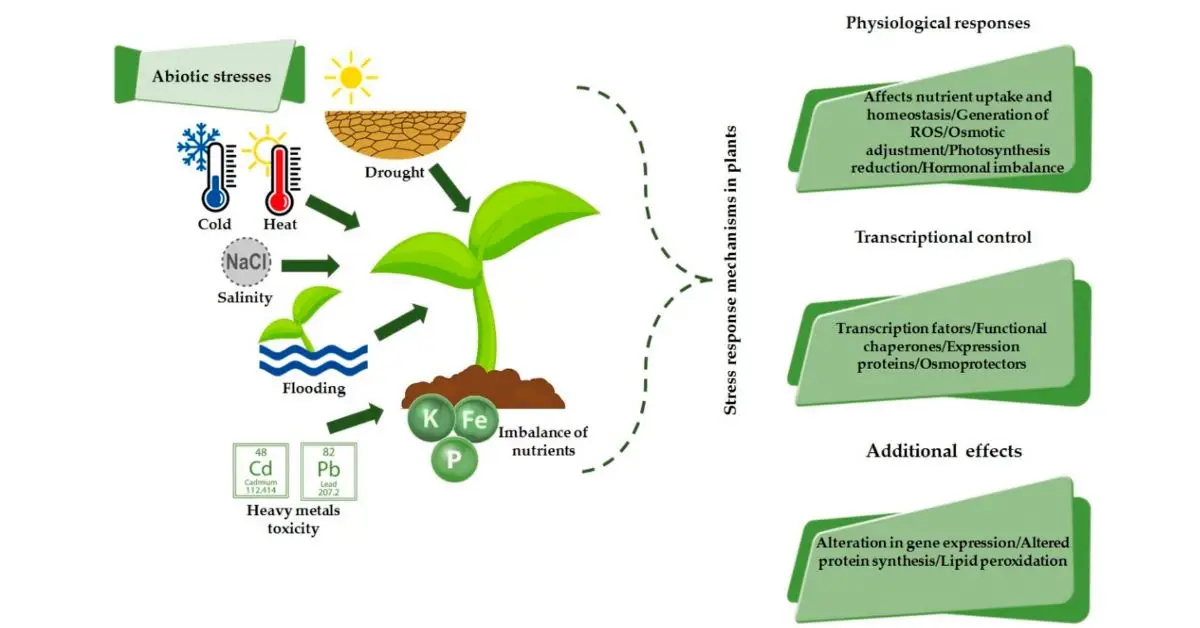
Many common crops — including wheat, maize, and rice — show similar sugar-based shifts under heat stress. But not all of them respond equally. Some are slower. Others trigger incomplete defense cascades. That variation could explain why certain varieties survive heatwaves while others fail.
One study even suggests that sugar signaling genes behave differently depending on the plant’s environment and evolutionary history. In other words, the sugar “thermometer” works, but it’s tuned differently across species.
These differences could guide future crop design. If scientists can identify which versions of these sugar sensors work best, we could start building smarter, faster-reacting plants — without relying on synthetic intervention.
For a deeper dive, see this overview of plant heat stress in agriculture from EOS Data Analytics, which explains how different species handle extreme temperatures.
Real‑World Impacts: Can This Help Growers Beat the Heat?
This isn’t just cool science—it could change how we grow food.
If sugar really acts like an early warning system inside plants, then we’ve got a powerful new tool to help crops survive rising temperatures. And with heatwaves becoming more frequent, this discovery couldn’t have come at a better time.
Researchers are already exploring how we can use this mechanism in real-world farming. Some early-stage projects are testing crop varieties that activate sugar-signal pathways faster. The goal? Create plants that don’t wait for damage—they prepare for it ahead of time.
Imagine wheat or rice that senses temperature stress within minutes, not hours, and flips on its internal defense switch. That kind of response could mean the difference between a healthy harvest and a failed one in extreme conditions. And if you’re growing indoors, these smart indoor herb-growing tips will help you manage heat and keep your plants resilient even in limited space.
It’s still early days. But if breeders can select for stronger sugar-signaling genes—or enhance them naturally—we may see a new generation of climate-smart crops that stay productive even when the heat turns brutal.
How You Might Observe Sugar‑Driven Heat Signals at Home
You don’t need a lab coat to see sugar signaling in action. If you grow plants at home—whether it’s tomatoes on a balcony or marigolds in a garden—you might already be watching these reactions without realizing it.
Next time there’s a hot afternoon, try this: observe your plants just before noon, then again in the early evening. You’ll often see slight wilting or leaf drooping during the peak heat, followed by a bounce‑back once temperatures drop.

That bounce‑back? It could be the plant’s sugar system doing its job—detecting the heat, sending the internal signal, and triggering protective responses.
Want to take it further? Join citizen science efforts or simply share your daily plant observations on social media. Snap a photo of your plant during and after heat stress. Note how quickly it recovers. Track which plants respond better than others.
Over time, those patterns might tell you something deeper—and they’ll help build a growing community of people learning how plants cope with a warming world. It turns out, plants may also respond to sound signals like classical music, not just temperature cues — another subtle way they adapt to their environment that’s easy to try at home.
Looking Ahead: Big Data, Climate Change & Smart Crops
What happens when we combine ancient plant biology with modern tech? We get answers—and possibilities.
Scientists are now looking at how to track sugar responses in real time using advanced sensors. Some are even using AI and machine learning to map how heat stress unfolds at the cellular level.
Further down the road, tools like CRISPR may let us tweak sugar-signaling pathways—either to make them more sensitive, or to activate them earlier in crops prone to heat damage.
But this isn’t just about farming. It’s part of a bigger conversation about climate resilience. As the planet heats up, we’ll need plants that can adapt just as fast as the climate is changing.
The good news? We’re no longer just reacting—we’re learning how to help plants prepare. And that could change everything from the global food supply… to your backyard garden.
Summary: Why Sugar Makes Plants So Smarter About Heat
So, what did we learn?
Plants aren’t passive. They’re actually incredibly responsive to their environment—and sugar is one of their smartest tools. It acts like an internal heat sensor, kicking off protective responses long before we’d see visible damage.
From molecular pathways to real-life applications, sugar signaling is giving scientists (and growers like you) a deeper understanding of how plants adapt—and how we might help them thrive in a warming world.
This isn’t just fascinating science. It’s practical knowledge with huge potential: from breeding heat-resilient crops to recognizing how your garden reacts to summer heat.
Want to see more insights like this? Visit Plant Care Dairy for smart, science-backed articles that connect research with real life.
And before you go — I’d love to hear from you. Have you noticed how your plants react during a heatwave? Drop a comment below and let’s talk.
Disclaimer: This article is for informational purposes only. While it references current research, it does not constitute scientific advice or agricultural guidance. Always consult with a qualified expert or agronomist before making decisions related to crop management or plant health.