

When I first noticed my peperomia stretching tall with thin stems and scattered leaves, I thought it was just “new growth.” But over time, the plant started looking weak and awkward—more like it was reaching for something it couldn’t find. If you’re staring at your own peperomia wondering why it looks so leggy, you’re not alone.
This is one of the most common struggles I hear from houseplant owners. The good news? Legginess isn’t a mystery disease—it’s your plant’s way of signaling that something in its care routine needs adjusting. Maybe it’s chasing light, maybe the soil or feeding schedule isn’t right, or maybe it just needs a little pruning to bring back that compact shape.
In this guide, I’ll walk you through the real reasons behind leggy growth and show you the fixes that actually work—tested by growers, backed by experts, and easy enough for you to start today. By the end, you’ll know how to read those stretched stems as clear signals and turn your peperomia into the lush, healthy plant you want on your shelf.
Before we dive in—have you noticed if your peperomia leans toward the window, or is it stretching in every direction? That small detail can tell us a lot.
The Root Causes of Legginess in Peperomia
If your peperomia looks more like it’s stretching for the sky than sitting in that compact, bushy form you see in photos, it’s usually not random. Leggy growth almost always points back to how we’re caring for it. I’ll break down the most common reasons so you can figure out which one matches your plant’s situation.
Insufficient Light
This is the number one reason I see peperomias getting tall and thin. These plants can tolerate lower light compared to fussier species, but “tolerate” doesn’t mean “thrive.” When the light is too weak, the plant stretches its stems toward the closest source—usually your nearest window—trying to find enough energy.
- Signs to watch for:
- Long gaps between leaves on the stem
- Smaller leaves than usual
- Plant leaning heavily toward the light
If this sounds like your peperomia, it’s not unhealthy—it’s just asking for brighter, indirect light. A spot near an east- or north-facing window works well, and if you’re in a darker apartment, a small grow light can make a huge difference.
Wrong Watering Habits

I’ve made this mistake myself: thinking more water = more growth. In reality, watering is about balance.
- Overwatering: Roots sit in soggy soil, and the plant puts out weak, stretched growth instead of sturdy leaves.
- Underwatering: Stems may not elongate as quickly, but leaves shrink and overall growth slows, leaving a scraggly look.
The sweet spot? Let the top inch of soil dry before watering again. A quick finger check works better than sticking to a strict schedule.
Getting watering right is often the trickiest part for new plant parents, but once you learn to follow a consistent rhythm, your plants bounce back quickly—our full guide on mastering the perfect watering schedule for your plants explains exactly how to do it without guesswork.
Fertiliser Mistakes
Feeding your peperomia can either help or hurt, depending on how it’s done.
- Too much nitrogen: You’ll see fast, lanky stems that can’t support themselves.
- Too little fertiliser: Leaves lose their rich green colour, and stems thin out.
A balanced houseplant fertiliser once a month in spring and summer is usually enough. Think of it like vitamins—helpful in the right dose, but harmful if overdone.
Potting and Soil Issues
Peperomias actually like being a little snug in their pots. When the container is too large or the soil too loose, roots spread without supporting compact top growth, leading to legginess.
- Use a well-draining, chunky mix (something with perlite or orchid bark).
- Choose a pot that’s just slightly bigger than the root ball—too much room encourages weak stretching.
This simple change can make a huge difference in how sturdy your plant looks.
Age and Natural Growth
Sometimes, legginess isn’t your fault at all—it’s just the plant’s natural cycle. As peperomias mature, older stems can elongate and lose their dense shape. The trick here is knowing when to prune and encourage new growth.
- Older stems getting woody or bare at the base? Time to pinch them back.
- New shoots will usually sprout from just below the cut, filling out the plant.
It’s not about “fixing” the plant—it’s about guiding it back into a healthy form.
Many growers, like those on Houseplant Journal, point out that legginess is a natural response to the plant’s environment. Once you spot which factor is off, the fixes are surprisingly simple.
Proven Fixes to Revive a Leggy Peperomia
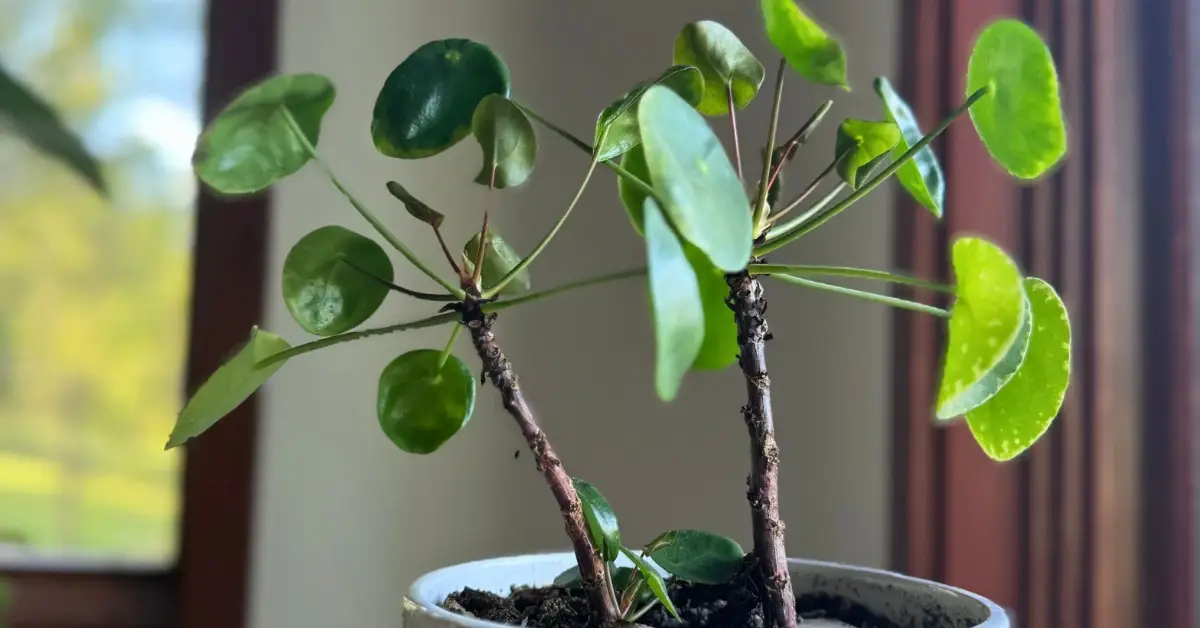
Now that you know why your peperomia is getting leggy, let’s get into the part you’ve been waiting for—the fixes. These aren’t random tips thrown together; they’re a clear action plan you can start today to bring your plant back to that compact, full look.
Adjust Lighting
Light is the biggest game-changer. Peperomias thrive in bright, indirect light—an east- or north-facing window is usually perfect.
- If your home doesn’t get much natural light, a small LED grow light can make a huge difference. Look for full-spectrum lights designed for houseplants, and keep them about 8–12 inches above the plant.
- Avoid direct midday sun; it can scorch the leaves, leaving you with brown patches instead of healthy greens.
Pruning & Pinching
One of the easiest and most effective fixes for legginess is pruning.
- Where to cut: Snip back long, bare stems just above a leaf node.
- Why it works: Cutting encourages the plant to send out new shoots, creating a fuller, bushier shape.
- Best timing: Do your pruning in spring or early summer, when the plant is in its active growth phase.
If you’re hesitant, start small—pinch just the top growth tips. You’ll usually see side shoots forming within weeks.
Repotting & Soil Upgrade
Sometimes, the problem is literally at the root. Peperomias prefer being a little root-bound, so resist the urge to move them into oversized pots.
- Use a chunky, well-draining mix with ingredients like perlite, coco coir, or orchid bark.
- Choose a pot just an inch or two larger than the root ball. Too much room lets roots sprawl without supporting strong top growth.
This tighter setup channels energy into healthier stems and leaves instead of spindly, stretched growth.
Fertiliser Balance
Feeding your peperomia is important—but more isn’t better.
- A balanced fertiliser (something like 10-10-10 or 20-20-20) once a month in spring and summer is enough.
- Skip heavy nitrogen feeds—they push out thin, weak stems that flop over.
- In fall and winter, hold back on fertiliser since the plant naturally slows down.
Think of it as giving your plant energy snacks during its active season, not stuffing it year-round. If you’re looking for a safe, natural boost that encourages greener leaves without the risk of overfeeding, check out how Epsom salts can improve plant health—a simple trick many home growers swear by.
Rotate & Reposition
Peperomias, like most houseplants, naturally lean toward their light source. That’s why you’ll often see them growing in one direction.
- Every two weeks, give your pot a quarter turn.
- This simple habit ensures even light on all sides, preventing the plant from leaning or stretching unevenly.
It’s the easiest, lowest-effort way to keep growth balanced.
Long-Term Habits for Compact, Healthy Peperomia
Quick fixes are great, but if you don’t adjust your everyday care, the legginess will creep back. Here are the long-term habits that make the difference.
Maintain Moderate Humidity
Mygreenscape
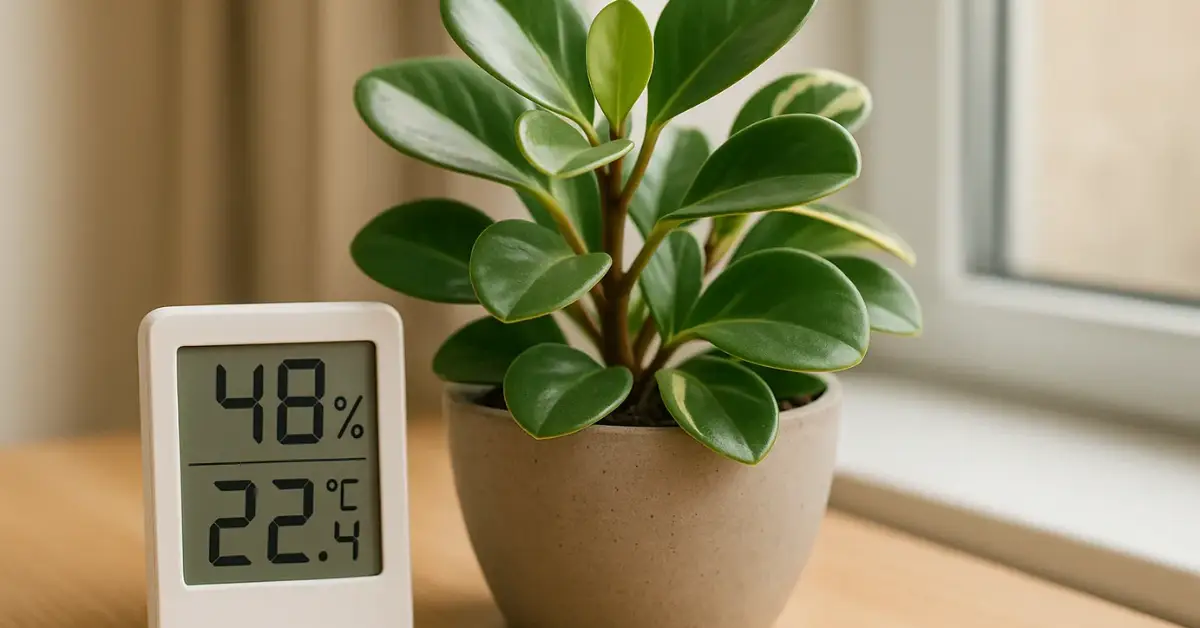
Peperomias don’t need rainforest-level humidity, but a moderate environment (around 40–50%) helps the leaves stay plump and stems stay sturdy. A small humidifier nearby or grouping plants together usually does the trick.
Follow the “Soak and Dry” Watering Rhythm
Instead of sticking to a calendar, focus on the soil.
- Let the top 1–2 inches dry out before watering.
- When you do water, soak thoroughly until water drains out the bottom, then let it dry again.
This cycle prevents weak, stretched growth from both overwatering and underwatering.
Keep Light Consistent Year-Round
Even in winter, don’t shove your peperomia into a dark corner.
- Move it closer to a window when days are shorter.
- If natural light isn’t enough, keep that grow light on hand for consistent exposure.
Consistency is what keeps the growth compact, not just “fixes” when it gets leggy.
Adjust Care Seasonally
Just like us, plants have different energy levels through the year.
- Spring/Summer: More light, water, and monthly fertiliser.
- Fall/Winter: Less water, skip fertiliser, but still keep up the light.
Following the plant’s natural rhythm prevents stress, which is often the root cause of legginess. Seasonal changes don’t just affect your houseplants indoors—they also bring shifts outdoors. For example, if you struggle with allergies, learning how to identify ragweed in your garden can make seasonal care much easier.
According to The Spruce, small shifts in light and watering routines are often enough to transform a struggling peperomia back into a compact, healthy plant. The key is building habits, not quick rescues.
Common Mistakes to Avoid When Fixing Leggy Growth
Once you start correcting legginess, it’s easy to swing too far in the other direction. I’ve seen many growers make these mistakes—not because they don’t care, but because they’re eager to “fix” things fast. Avoiding them will save you a lot of frustration.
- Cutting too much stem at once: Heavy pruning can shock the plant and slow down recovery. Start small, trim gradually, and let new shoots develop before cutting again.
- Overcompensating with too much fertiliser: Feeding extra won’t suddenly thicken stems. In fact, it often leads to weak, lanky growth that flops. Stick to a balanced monthly routine.
- Moving the plant directly into harsh sunlight: A sudden shift from shade to direct sun will scorch the leaves. Always introduce brighter light gradually, especially if using a south-facing window.
- Ignoring root health during repotting: If the roots are circling or damaged, no amount of pruning will fix the legginess. Take time to check roots when repotting and trim off anything unhealthy.
Quick Reference Care Checklist
Here’s a simple cheat sheet you can save to keep your peperomia looking compact and healthy:
- Light: Bright, indirect, 6–8 hours/day.
- Water: When the top 1–2 inches of soil are dry.
- Fertiliser: Balanced feed, once a month in spring and summer.
- Pot size: Slightly root-bound is best.
- Pruning: Pinch tips regularly to encourage bushiness.
This list is your “at-a-glance” care guide—perfect for quick checks whenever you’re unsure.
Key Takeaways for Healthy Peperomia Growth
- Legginess is a stress signal, not a disease. Your plant is asking for a change in care, not dying.
- Light, pruning, and balanced care are the three pillars of keeping peperomia compact and lush.
- Small, consistent tweaks—like rotating the pot, using a balanced fertiliser, and keeping light steady—will prevent legginess from creeping back.
Have you ever tried pruning your peperomia, or are you nervous about making that first cut? Share your experience in the comments below—I’d love to hear how you’re tackling legginess.
And for more detailed plant care tips and guides, visit Plant Care Dairy for fresh, practical advice that actually works.
Disclaimer: This guide is for general informational purposes only. Always adjust care routines based on your home environment and your plant’s specific needs.