
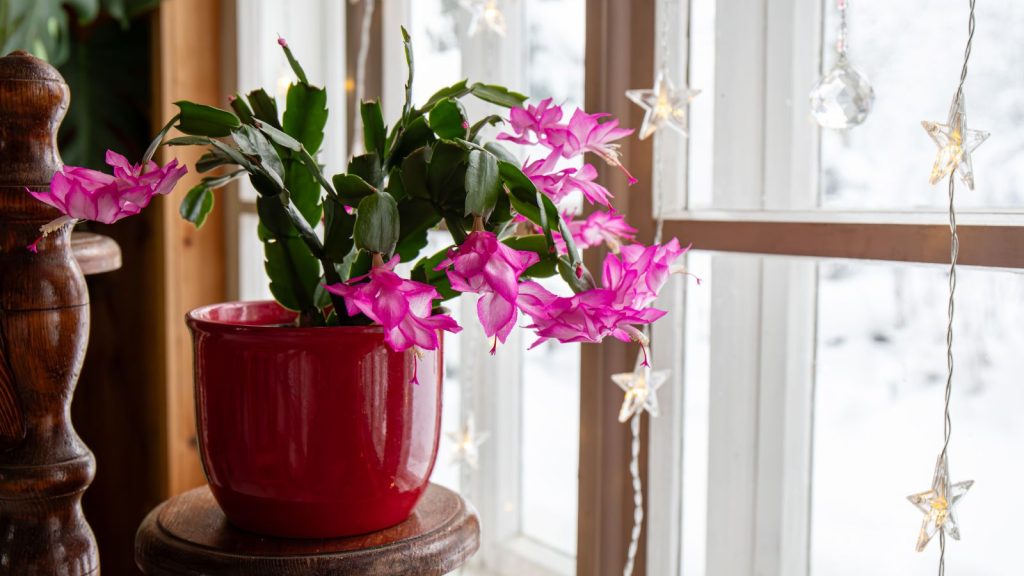
I used to think my Thanksgiving cactus was stubborn. I fed it, repotted it, and still—no blooms by the holiday. Then I learned the secret wasn’t fertilizer at all; it was consistent darkness and cool nights.
In this guide, I’ll cut through the confusion and show you exactly how to trigger buds and keep them from dropping. You’ll learn the 4-week darkness plan, smart coverage tricks, ideal daytime light, the right temperature range, and a simple watering rhythm that supports flowers instead of fighting them.
Why Darkness and Cool Nights Trigger Blooms (What to Know)
Meet the Holiday Cacti Lineup
Thanksgiving cactus (Schlumbergera truncata) kicks off the season, often flowering for several weeks in November into December. It’s followed by Christmas cactus (Schlumbergera x buckleyi) and then Easter cactus (Rhipsalidopsis gaertneri). “If you also have a Christmas cactus, these tips to get it to flower again can help extend your holiday blooms. While selecting your indoor and outdoor plants for the season, it’s helpful to know which bulbs you should avoid planting to prevent common gardening mistakes. All adapt well indoors and love a summer vacation outside.
Short Days + Cool Nights = Buds
These tropical epiphytes are day-length sensitive. For strong bud set, give them at least 12 hours of darkness nightly for about 4–6 weeks. If your nights run warm, push closer to 15 hours of darkness to compensate and keep bud development on track.
Plan Your Timeline
Start the darkness routine about six weeks before you want peak color. If you enjoy planning your plants by season, check out our guide on when to plant cherry trees and best maintenance tips to complement your holiday cactus care schedule. Aim for roughly 13 hours of darkness each night for four weeks. Once buds are set, you can stop the extra darkness and keep plants in their bright, regular spot.
The 4-Week Darkness Plan (The Thanksgiving Cactus Lighting Trick)

Set Your Nightly Window
- Target 13 hours of darkness: Do this nightly for four weeks; 12 hours is the minimum, 13–15 is better if nights are warm.
- Start six weeks early: This gives two weeks for bud development and several weeks of bloom.
- Keep the rhythm: Put your plant in the dark at about the same time each day.
Consistency Prevents Bud Drop
- Avoid light leaks: Even small amounts of ambient light can interrupt the dark period and reduce flowering.
- Stabilize temps: Pair cool nights with warmer days and keep the plant draft-free.
When to Stop the Extra Darkness
- After buds form: Return the plant to its normal bright location during the day; the dark treatment is no longer required.
- Handle gently: Avoid bumping or chilling the plant—both can cause young buds to drop.
Smart Coverage Tips to Block Evening Light
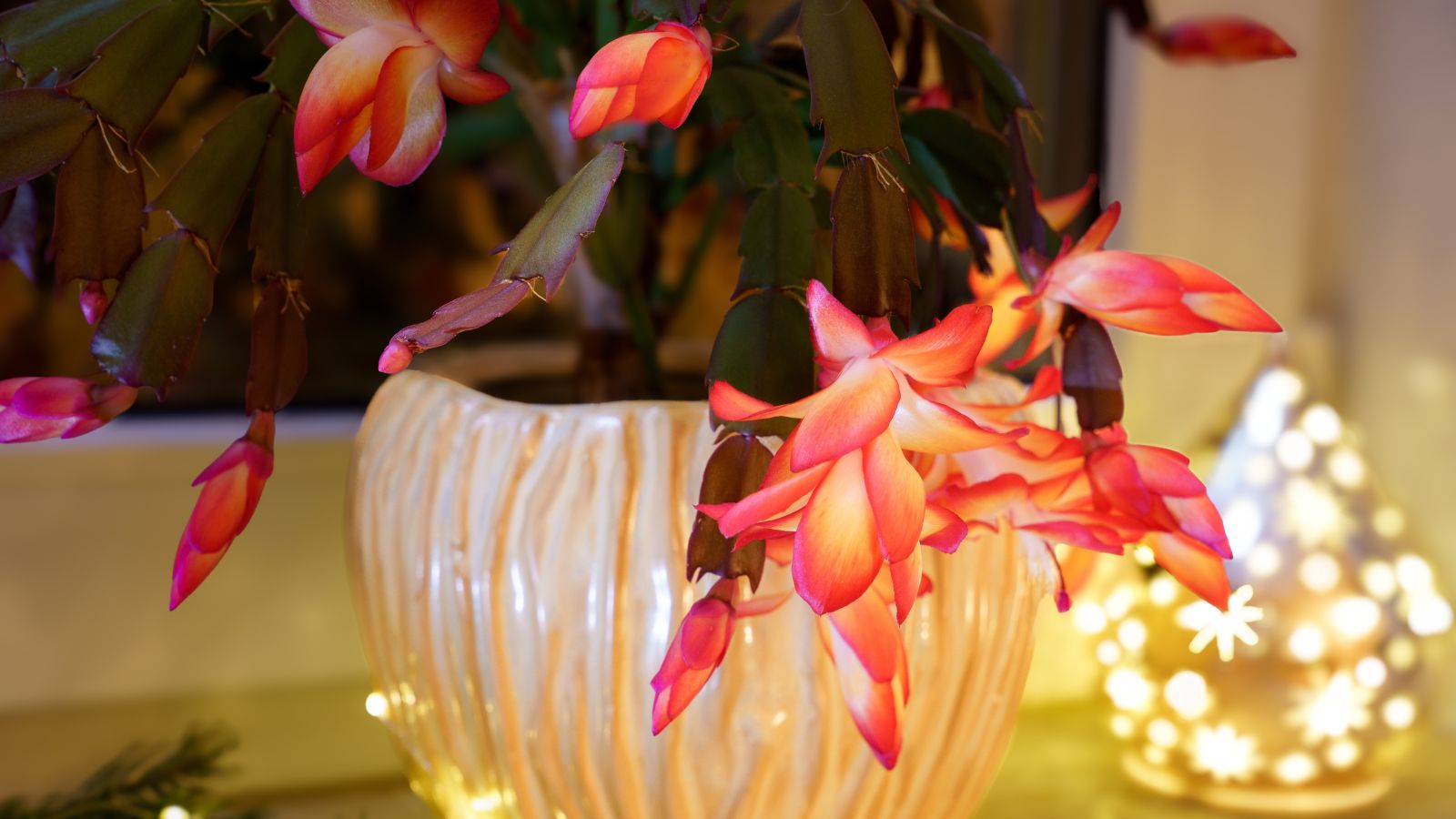
Kill the Glow Indoors
- Switch off ambient light: Turn off TVs, lamps, and overheads in the room during the dark window.
- Control spillover: Light from hallways and streetlights counts too—close doors and curtains.
Quick, Removable Covers
- Use a box or dark fabric: A cardboard box or light-blocking curtain works as a temporary cover.
- Protect stems and buds: Don’t let covers weigh down segments or rub on developing buds.
- Be predictable: Place and remove the cover at roughly the same time daily.
Closet or Pantry Commute
- Move to a dark space nightly: A closet or pantry makes a great dark chamber for about 13–15 hours.
- Return to bright light by day: Put it back in its bright spot each morning to fuel buds.
Daylight and Temperature Targets

Bright, Indirect Light by Day
- Best exposures: East windows give gentle morning sun; south windows give bright, indirect light all day.
- Diffuse harsh rays: Use a sheer curtain or pull the plant back from the glass to prevent leaf scorch.
For those looking to expand their indoor or patio garden, learning how to plant and care for hydrangeas pairs well with holiday cactus care tips.
Cool Nights, Warm Days
- Day temps: Aim for 70–80°F (21–27°C).
- Night temps: Aim for 55–60°F (10–16°C); beginning in mid-September, cool nights promote bud set.
- Frost safety: Bring plants indoors as temps dip below 50°F (10°C); brief 40s (≈4°C) are tolerated but not ideal.
If Nights Are Warm, Compensate
- Extend darkness: When nights stay above 65°F (18°C), keep daylight to 9–10 hours and give ~15 hours dark.
- Prevent bud drop: Prolonged warm nights (≈70°F/21°C+) can limit development—cool the room or use window exposure to lower night temps.
- Stay steady: Avoid big temperature swings and drafts that stress tender buds.
Watering That Supports Budding and Bloom

Before Buds: Slight Dryback
- Let the top inch dry: Check a knuckle deep; water thoroughly when dry to that depth.
- Encourage initiation: A modest reduction in watering as buds begin can support flower bud initiation.
- Right pot and mix: Use a well-draining medium and a pot with drainage; a slightly snug, root-crowded pot often helps trigger blooms.
During Bloom: Steady, Not Soggy
- Evenly moist: Keep soil evenly moist (not wet) to sustain the flower show and prevent wilting.
- Err slightly dry: Overwatering risks root rot; never let the plant sit in water.
Seasonal Frequency Guide
- Cool-season cadence: Water about every 1–2 weeks, adjusting for room temperature, pot size, and media.
- Evaluate and adapt: Faster drying in warm, bright rooms; slower in cooler, lower-light spaces.
At-a-Glance Summary Table
| Care Factor | Target | Notes |
|---|---|---|
| Dark hours (budding) | 13 hrs nightly for 4 weeks | 12 hrs minimum; 15 hrs if nights are warm |
| Start time | ~6 weeks before desired bloom | Ensures buds plus bloom window |
| Daylight | Bright, indirect | East or south window; diffuse harsh rays |
| Day temp | 70–80°F (21–27°C) | Warm days fuel buds |
| Night temp | 55–60°F (10–16°C) | Cool nights trigger bud set |
| Watering | Every 1–2 weeks (cool season) | Let top inch dry; evenly moist during bloom |
One-Page Checklist
- Set a schedule: 13 hours dark nightly for 4 weeks; start 6 weeks before the holiday.
- Block stray light: Turn off TVs/lamps; use a box or closet to guarantee darkness.
- Place by day: Bright, indirect light in an east or south window; use a sheer curtain if needed.
- Dial in temps: Days 70–80°F; nights 55–60°F. If nights are warmer, extend dark hours to ~15.
- Water wisely: Let the top inch dry, then soak through; keep evenly moist while blooming.
- Handle gently: Avoid drafts, sudden temp swings, and rough handling to prevent bud drop.
Wrap-Up: The Smart-Gardening Mindset
When I finally treated my Thanksgiving cactus like a short-day, cool-night plant, it rewarded me with weeks of saturated blooms. For a deeper dive into celebrating and caring for your Thanksgiving cactus, check out this article on giving thanks for my Thanksgiving cactus. Think repeatable routines—darkness at night, bright light by day, cool evenings, and measured watering—and the results will follow. Looking to enjoy blooms beyond the holidays? Here’s a guide on how to make your Christmas cactus bloom several times a year that complements the Thanksgiving cactus routine.
Want more practical, plant-tested tips? Explore guides and seasonal care checklists at Plant care Dairy. Have tips or questions about your cactus? Share them in the comments below—I’d love to hear from you!