
If you’ve ever wondered how to build a joyful, multi-colored display of holiday blooms without guesswork, you’re in the right place. My goal here is to cut through confusion and give you clear, actionable guidance for choosing varieties, triggering buds, and keeping every plant thriving.
By the end, you’ll know how to match the right light and timing to the right plant, identify true Christmas cactus versus look-alikes, and use simple, repeatable steps to expand your collection with confidence. I’ll also share a quick checklist, a summary table, and my favorite troubleshooting tricks.
I still remember my first holiday cactus collection: one deep fuchsia, one blushing gold, and a pale pink beauty I put next to the tree. I overwatered one, under-lit another, and then watched a third explode with blooms after I finally nailed the temperature and darkness routine. You don’t have to make the same mistakes—I’ll walk you through what actually works.
What Makes Holiday Cacti Tick
What Sets Christmas Cactus Apart
Christmas cacti are epiphytes, naturally growing on trees with airy, fast-draining debris around their roots. Indoors, they’re happiest in bright, indirect light, and most plants top out around 12 inches in height. They’re hardy outdoors in zones 10–11 but grow beautifully indoors year-round everywhere.
Because they aren’t desert cacti, most issues come from soil composition, watering technique, and bloom triggers. A loose, well-aerated mix and a disciplined watering schedule go a long way.
Bloom Calendar And Trigger Conditions
With the right conditions, Christmas cactus plants bloom right around the winter holidays. If you want step-by-step guidance on triggering Christmas cactus buds in December, this method works even for beginners. To initiate budding, keep temperatures near 60°F (16°C) starting in mid-September. Pair that with 12 hours of uninterrupted darkness nightly, and you’ll set yourself up for a stunning holiday display.
Once buds form, avoid sudden changes—no drafts, no harsh midday sun, and do not move the pot if you can help it. Consistency keeps buds from dropping.
Leaf Shape: Christmas Vs. Thanksgiving Vs. Easter
If you’re collecting, ID is half the fun. For a true Christmas cactus, look for segments that are neither serrated nor super-rounded. If the leaf edges are pointy/serrated, you’re likely looking at a Thanksgiving cactus. If the edges are very rounded, it’s usually an Easter cactus.
Hybrids can blur the rules, so don’t be surprised if a named variety’s leaves look slightly off; use bloom timing as an extra clue. To explore more varieties of holiday cacti and their bloom timing, you can visit this guide on holiday cactus types.
Classic And Fringed Beauties
Standard Christmas Cactus
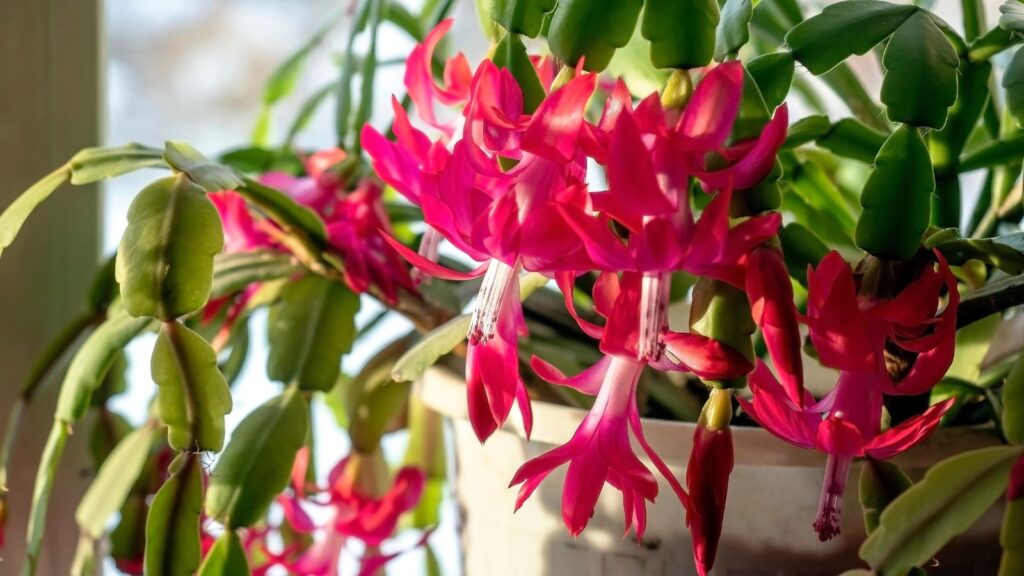
The classic Christmas cactus you’ll see at a local big-box store often features lovely fuchsia blooms. While this color appears across holiday cacti, the leaf shape helps confirm the type. For collectors, it’s the baseline plant—reliable and festive.
Place it in bright, indirect light, pair it with an American wintergreen in a nearby pot for a cheery contrast, and enjoy its dependable winter display when you meet the bud triggers above.
Ascot

Ascot dazzles with fringed, pinkish-red flowers that feel extra lush even without true double petals. It’s often confused with ‘Red Aspen,’ but ‘Ascot’ stands on its own as one of the best fringed-flower selections for collectors.
Its paler red hue and petal texture give it a standout look among classic fuchsia varieties. Place it near a bright window and rotate weekly for even growth.
Golden-Toned Showstoppers
Christmas Flame

Christmas Flame brings a warm golden blush with hints of pink that intensify toward the center. It’s a sport of the early yellow-blooming hybrid ‘Gold Charm’ and looks incredible in hanging baskets where the stems can trail gracefully.
Heads-up: many plants sold as Christmas Flame lean toward Thanksgiving cactus timing, often blooming in November. The pointy, semi-serrated leaf segments match that earlier bloom schedule. Regardless, the deep fuchsia pistils against gold-to-pink petals make it a must-add for color lovers.
Limelight Dancer
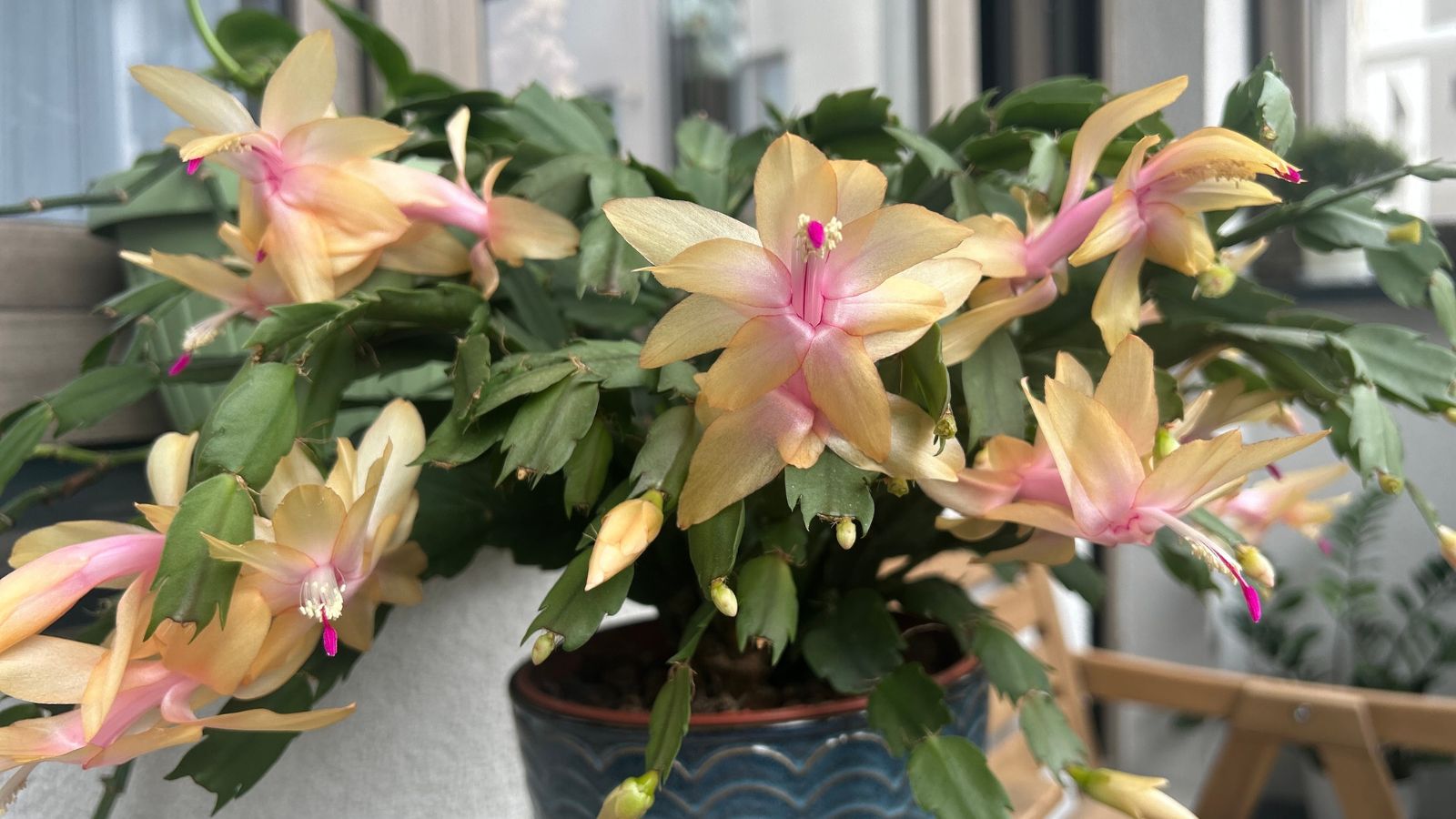
Limelight Dancer paints petals with a pale gold edge fading to a white center, offset by striking pinkish-purple pistils. Upright by habit, it’s a perfect tabletop companion—just remember to keep it away from fireplaces or heat vents.
If you like subtle, glowing tones, this is your plant. I’ve found it looks especially elegant in simple white planters (you can find affordable containers almost anywhere).
Pink-And-White Crowd-Pleasers
Cristen
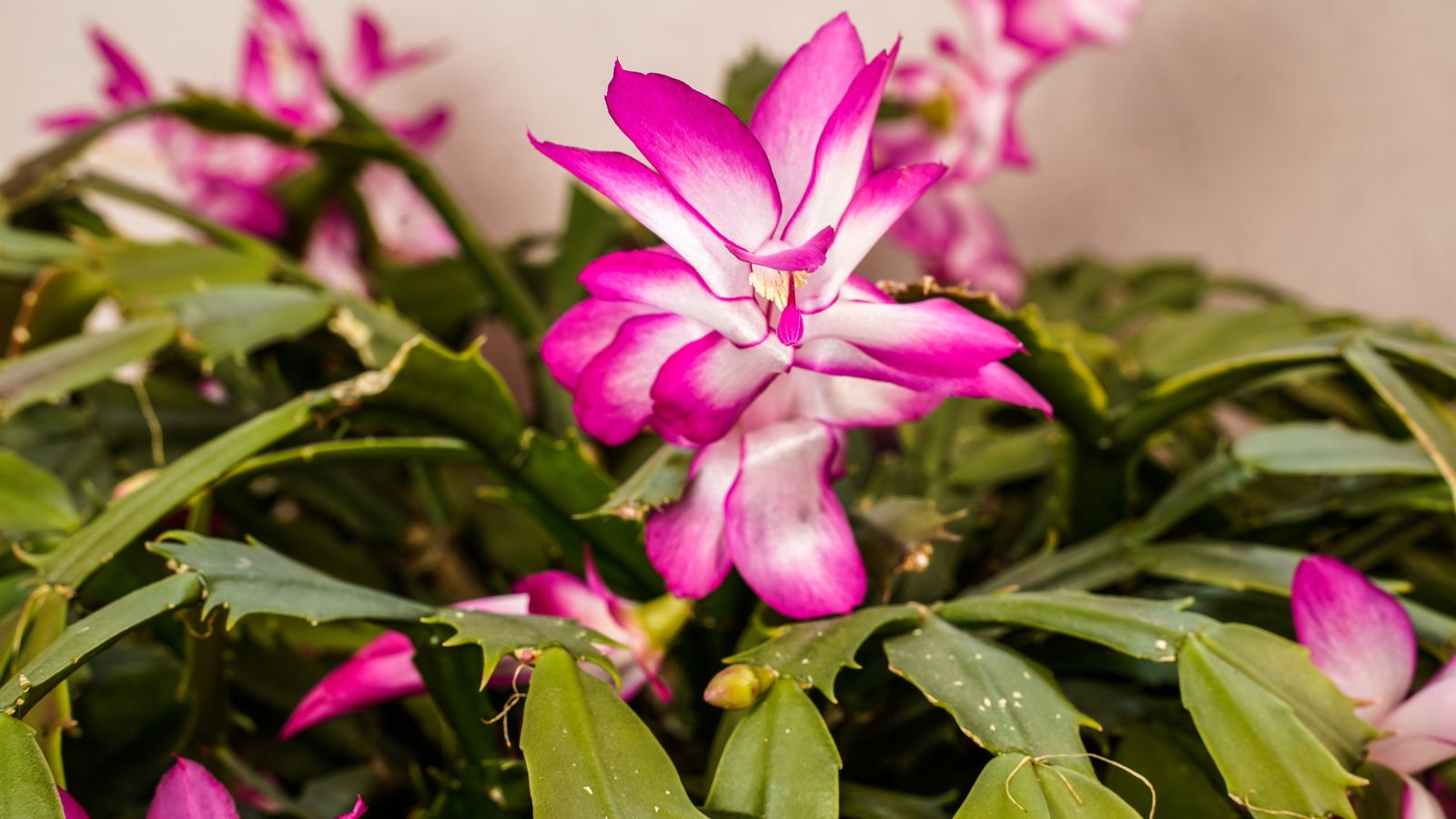
Cristen is a prolific bloomer with crisp pink-and-white flowers and a neat upright habit that suits end tables and sideboards. The petals are fairly straight-edged, echoing the straight species form but with a brighter palette.
Its deeper pink pistils sit inside a halo of pale yellow anthers, and against the ombré petals, the effect is striking—especially next to soft evergreen decor or a nearby Christmas tree.
Christmas Fantasy

Christmas Fantasy leans authentically toward Christmas timing and leaf shape, with blooms that wash a peachy, salmon-rose across each petal. It’s a subtle showstopper—soft yet unforgettable.
As an upright plant, it shines on tabletops where you can appreciate the gradients up close. Its deep pink pistils tie the whole pastel palette together beautifully.
Propagation, Display, And Gifting
After-Bloom Pruning For Shape
Once the flush of blooms fades, you can prune lightly to keep a compact shape and encourage branching. I like to remove one or two segments per stem, which tidies the silhouette without shocking the plant.
Collected varieties are easy to keep consistent with light pruning every winter; this is also the perfect time to take cuttings for gifts.
Easy Propagation Steps
I’ve had great success with a simple routine:
- Take healthy cuttings: Snip 2–3 segment cuttings with clean scissors right after blooming.
- Callus the ends: Air-dry cuttings for 24–48 hours until the ends feel slightly dry to the touch.
- Use an airy mix: Pot into a peat-free succulent or orchid blend with extra perlite and bark for drainage.
- Water lightly: Mist or moisten sparingly—just enough to settle the mix—then allow to nearly dry between sips.
- Bright, indirect light: Avoid direct sun while cuttings root; warmth and gentle light are your friends.
Roots form in a few weeks. From there, gradually increase watering, and in a few months, your new plants will be sturdy enough to gift. If you’re curious about producing seeds from your Christmas cactus flowers, you can learn how to pollinate your plants for fruit and seeds to expand your collection further.
Holiday Display Ideas
- Create color clusters: Group a gold-toned variety like Limelight Dancer with a fuchsia standard and a pale-pink Christmas Fantasy for layered color.
- Mix textures: Pair your cacti with American wintergreen for glossy green contrast and festive berries.
- Use height to your advantage: Hang trailers like Christmas Flame near eye level and keep upright varieties at tabletop height.
- Mind the microclimate: Keep plants away from fireplaces, radiators, and drafty doors; consistent conditions protect buds.
Troubleshooting And Care Refinements
Root Rot Starts In The Potting Mix
Most problems begin below the surface. Christmas cacti hate heavy, waterlogged soil. Use a loose, fast-draining mix with chunky perlite, fine bark, and a bit of coir. Pot in a container with a drainage hole and saucer you can empty.
- Symptoms to watch: Limp, translucent segments; sour smell; blackened base segments; soil that stays wet for days.
- Quick fix: Unpot, trim mushy roots, and repot in fresh, airy medium. Reduce watering until growth resumes.
Light And Watering: The Two Big Levers
- Bright, indirect light: East windows are perfect; south/west windows need a sheer curtain. Avoid harsh midday rays.
- Water by feel, not calendar: Let the top 1–2 inches of mix dry before watering thoroughly. Empty the saucer after 10–15 minutes.
- Humidity helps: 40–60% is ideal indoors; cluster plants or set a tray with pebbles and water nearby. For a comprehensive guide to Christmas cactus care, including watering, light, and soil recommendations, check out this detailed Christmas cactus care resource.
- Fertilize lightly: During active growth, use a balanced, diluted feed monthly; stop feeding while setting buds.
Getting Buds To Set (And Stay)
- Autumn routine: Around mid-September, aim for 60°F (16°C) in the evening and provide 12 hours of uninterrupted darkness nightly.
- No night interruptions: Streetlights and hall lights count; give plants a dark room or cover with a breathable dark cloth. To avoid bud drop, follow our detailed tips on keeping your Christmas cactus blooming.
- Don’t shuffle the pot: Once buds form, keep the plant put—movement and drafts can cause bud drop.
- Water evenly: Keep soil slightly moist (not soggy) while buds swell to avoid stress.
12 Bloom-Boosting Tips (Quick Reference)
- Start Cool In September: Target 60°F (16°C) nights to initiate budding.
- Guarantee 12 Hours Of Dark: Use a spare room or a breathable cover to prevent stray light.
- Keep Light Bright By Day: Bright, indirect light fuels flower production without scorching segments.
- Water Deep, Then Wait: Thoroughly hydrate, then let the top 1–2 inches dry before the next drink.
- Upgrade The Mix: Use a chunky epiphyte blend—perlite, fine bark, and coir—to defeat root rot.
- Right-Size The Pot: Slightly snug pots encourage more blooms than oversized containers.
- Pause Fertilizer During Bud Set: Too much nitrogen at the wrong time reduces flowering.
- Stabilize The Microclimate: Protect from drafts, heat blasts, and sudden relocations to prevent bud drop.
- Rotate Weekly Outside Budding: Even, compact growth comes from turning plants 90° at each watering.
- Prune After Bloom: Light pruning encourages branching and more future bloom sites.
- Propagate Smartly: Take 2–3 segment cuttings after flowering; root in airy mix for fast success.
- Match Variety To Display: Trailers in baskets, upright forms on tables—design for light and viewing angles.
Quick Summary Table
| Variety | Typical Bloom Window | Leaf Edge Cues | Flower Palette | Best Placement |
|---|---|---|---|---|
| Standard Christmas Cactus | Late Nov–Dec (holiday) | Segmented; not serrated; not super-rounded | Fuchsia | Tabletop near bright, indirect light |
| Ascot | Holiday season | Christmas-like; fringe is in the bloom | Pinkish-red, fringed | Bright window, rotate weekly |
| Christmas Flame | Often November (earlier) | Pointy, semi-serrated (often Thanksgiving-leaning) | Gold with pink highlights | Hanging basket, bright indirect |
| Cristen | Early Dec–Holiday | Straight-edged segments | Pink and white | Tabletop, near tree lights (not too close) |
| Limelight Dancer | Holiday season | Christmas-like segments | Pale gold to white center | Tabletop, away from heat vents |
| Christmas Fantasy | Holiday season | Closer to Christmas type | Peachy, salmon-rose | Tabletop, bright but indirect |
The Smart-Gardener Mindset
Think in systems: mix, moisture, light, and timing. Once you dial those in, the rest is easy. For a full guide on how to care for Christmas cacti indoors, including pruning, watering, and propagation, see 5 expert tips for thriving indoor plants. Start cool and dark in autumn, keep light bright but indirect by day, and let a breathable mix protect roots. Do that and you’ll enjoy reliable blooms—and plenty of healthy cuttings to share.
Actionable Checklist
- Confirm ID: Check leaf edges—Christmas segments aren’t serrated or super-rounded.
- Set The Stage In September: Aim for 60°F (16°C) nights plus 12 hours darkness to initiate buds.
- Keep Daylight Bright: East window or filtered south/west exposure works best.
- Use A Chunky Mix: Perlite + fine bark + coir for drainage and oxygen to the roots.
- Water Wisely: Deeply, then wait for the top 1–2 inches to dry.
- Fertilize Lightly: Monthly during growth; pause during bud set and bloom.
- Prune After Bloom: Light shaping sparks branching and future flower sites.
- Propagate For Gifts: 2–3 segment cuttings root fast; share different colors with friends.
- Design Your Display: Pair with American wintergreen and vary heights for a festive vignette.
- Protect Buds: Avoid drafts, hot blasts, and sudden moves once buds swell.
If you found this helpful, explore more guides at Plant Care Dairy and tell us what you’re growing this season. Have a tip or a question? Drop a comment—we love hearing from fellow collectors.
Disclaimer: This article is for educational purposes only and does not replace professional advice. Always consider your local climate, home conditions, and plant labels when applying care recommendations.