

Florida’s warm climate and long growing season can feel like a superpower—if you match the right plants to the right roles. This guide cuts through the confusion and gives you a simple, actionable plan to attract butterflies consistently, not just occasionally. You’ll learn how to pair nectar plants (food for adults) with host plants (food for caterpillars) so butterflies don’t just visit your garden—they stay, lay eggs, and return each season.
I’ll walk you through exactly which plants work, how much sun they want, and how to group them for success across Florida’s regions. By the end, you’ll be able to build a native-forward butterfly garden with confidence and avoid common pitfalls like choosing the wrong milkweed or planting invasive lookalikes.
Why Host and Nectar Plants Matter in Florida Gardens
Nectar Plants: Reliable Refueling Stations
Butterflies return to gardens that offer continuous, easy-access nectar. Single flowers with open centers and tubular blooms at varying heights help different species feed efficiently. The trick is staggered bloom time—mix long-season natives like blanket flower and firebush with fast-blooming annuals like zinnia and cosmos.
In frost-free parts of Florida, you can push for nearly year-round nectar with firebush, lantana, porterweed, and pentas. In cooler zones, bridge gaps with seasonal sowings of zinnia and cosmos.
Host Plants: The Secret to Getting Butterflies to Stay
Host plants are where butterflies lay eggs, ensuring caterpillars have food the moment they hatch. If you want a detailed reference for which host plants support Florida’s native butterflies, Flamingo Gardens offers a helpful overview of 12 key species and their larval hosts. If you only offer nectar, butterflies will pass through. Add the right host plants—milkweed for monarchs, passionvine for zebra longwings, coontie for atalas—and you create a complete life-cycle habitat.
Group hosts with nearby nectar plants so newly emerged adults can feed without expending too much energy. This simple layout boosts survival rates and repeat visits.
A Quick Personal Win
When I first planted tropical milkweed, monarchs visited but never stuck around. After switching to native swamp milkweed and adding maypop passionvine, I watched the first caterpillars appear within two weeks. Since then, I’ve kept a “host-and-nectar pair” layout, and the garden’s been active almost daily.
Best Host Plants to Keep Florida Butterflies Around
1. Swamp Milkweed (Asclepias incarnata)
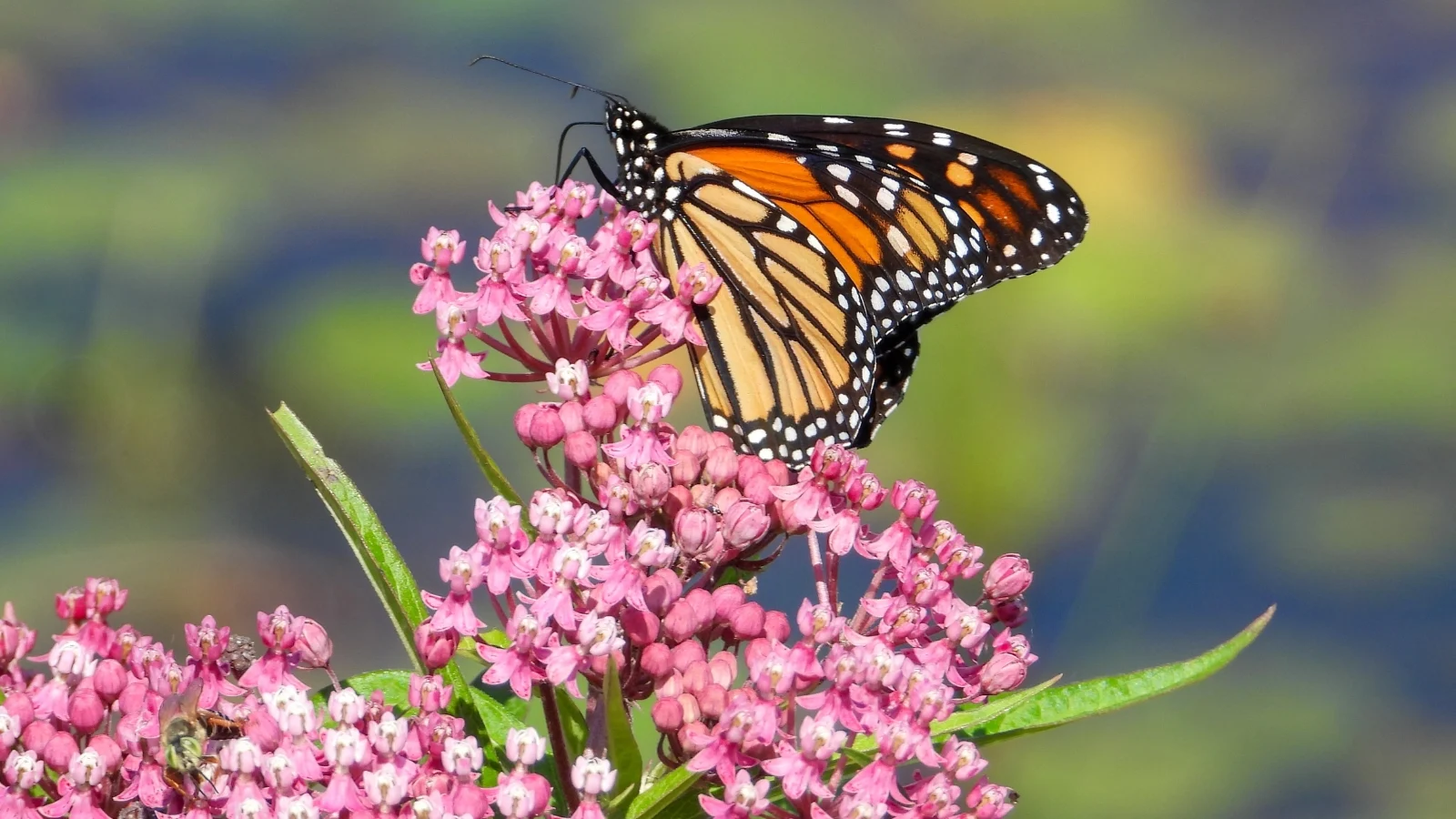
- Botanical Name: Asclepias incarnata
- Sun Requirements: Full Sun
- Height: 3’–5’
- Hardiness Zones: 3–9
Milkweed is a must if you want monarchs to do more than fly by. It’s the sole larval food for monarch caterpillars, making it non-negotiable for a true butterfly habitat.
Avoid relying on tropical milkweed (A. curassavica) in Florida; it can disrupt migration. Choose natives like A. incarnata and A. tuberosa to support timing, nutrition, and healthier monarch generations.
2. Maypop Passionvine (Passiflora incarnata)

- Botanical Name: Passiflora incarnata
- Sun Requirements: Full Sun to Partial Shade
- Height: 10’–25’ (with support)
- Hardiness Zones: 5–9
This gorgeous vine is a top-tier host for the zebra longwing (Florida’s state butterfly) and the Gulf and variegated fritillaries. It also produces ornate, pollinator-magnet flowers and tasty, egg-shaped fruit.
Give it a sturdy trellis or fence and a bit of room to roam. Pair with nectar plants nearby so adults can refuel while the larvae feed.
3. Bahama Cassia (Senna mexicana var. chapmanii)

- Botanical Name: Senna mexicana var. chapmanii
- Sun Requirements: Full Sun
- Height: 4’–8’
- Hardiness Zones: 10–11
Also called Bahama senna, this native shrub is both host and nectar plant for cloudless sulphur, sleepy orange, and orange-barred sulphur butterflies. It blooms heavily and often in frost-free areas.
Use it as a structural anchor in the landscape. The sunny yellow flowers and fine foliage bring year-round interest and constant pollinator traffic.
Shade and North Florida Host Anchors
4. Spicebush (Lindera benzoin)

- Botanical Name: Lindera benzoin
- Sun Requirements: Partial to Full Shade
- Height: 6’–15’
- Hardiness Zones: 4–9
For North Florida, spicebush is a landscape cornerstone. It prefers dappled light—think under an oak canopy—and offers fragrant foliage, spring flowers, and golden fall color.
It’s the primary host for spicebush swallowtails and sometimes eastern tiger swallowtails. Plant a pair (male and female) if you want summer berries for birds.
5. Woolly Dutchman’s Pipevine (Aristolochia tomentosa)

- Botanical Name: Aristolochia tomentosa
- Sun Requirements: Full Sun to Partial Shade
- Height: 15’–30’ (with support)
- Hardiness Zones: 5–9
This vining native is essential for the pipevine swallowtail. While it isn’t a major nectar source, it’s indispensable as a larval host.
Provide a trellis or arbor and keep the soil evenly moist. The odd, beautiful flowers and generous foliage make it a conversation piece.
6. Coontie (Zamia integrifolia)

- Botanical Name: Zamia integrifolia
- Sun Requirements: Full Sun to Partial Shade
- Height: 1’–3’
- Hardiness Zones: 8–11
Florida’s only native cycad is the sole larval host of the atala butterfly. Gardeners helped bring atalas back from the brink by planting coontie across urban and suburban landscapes.
Coontie adds bold, evergreen texture and is tough, slow-growing, and long-lived. It doesn’t offer nectar, but it’s vital to the atala lifecycle.
Native Nectar Powerhouses for a Busy Garden
7. Lantana (Lantana depressa)

- Botanical Name: Lantana depressa
- Sun Requirements: Full Sun
- Height: 1’–6’
- Hardiness Zones: 8–11
A near-constant nectar source in warm regions, native lantana feeds almost every Florida butterfly. Skip invasive L. camara and choose L. depressa or L. involucrata instead.
Heat and drought don’t faze it, and the flower clusters often tempt hummingbirds too. Deadhead lightly to keep blooms coming.
8. Blanket Flower (Gaillardia pulchella)

- Botanical Name: Gaillardia pulchella
- Sun Requirements: Full Sun
- Height: 12”–24”
- Hardiness Zones: 3–10
This native is as tough as nails and blooms for a long season in poor, sandy soils. It’s a nectar buffet for butterflies and other pollinators.
Perfect along coastal sites, it spreads into a colorful “blanket,” filling gaps and powering your nectar calendar. For gardeners in coastal or salty areas, check out our guide to salt-loving flowers for plants that thrive in similar conditions.
9. Firebush (Hamelia patens var. patens)

- Botanical Name: Hamelia patens var. patens
- Sun Requirements: Full Sun to Partial Shade
- Height: 4’–12’
- Hardiness Zones: 8–11
One of Florida’s best wildlife shrubs, firebush is a top-tier nectar source for butterflies and hummingbirds. In frost-free zones, it can bloom nearly year-round.
It also offers small dark berries that songbirds adore. Choose the native species, not the non-native dwarf types often sold in big-box stores.
Annuals and Perennials That Keep Pollinators Coming
10. Zinnia (Zinnia elegans)

- Botanical Name: Zinnia elegans
- Sun Requirements: Full Sun
- Height: 6”–4’ (variety dependent)
- Hardiness Zones: 2–11
Zinnias are cheerful, easy annuals that thrive in Florida heat and tolerate drought. Choose single-petaled varieties—they’re the right shape for butterfly landing and feeding.
They bloom for a long stretch and often self-sow for a repeat show next year.
11. Cosmos (Cosmos spp.)

- Botanical Name: Cosmos spp.
- Sun Requirements: Full Sun
- Height: 1’–6’
- Hardiness Zones: 2–11
Cosmos are fast and forgiving from seed, pumping out nectar-rich blooms through summer. Their open flowers provide a stable landing pad even on breezy days.
Use them to weave color through beds and fill nectar gaps between perennial flushes. If you enjoy low-maintenance, sun-drenched designs, see our list of rock garden plants that complement butterfly-friendly perennials.
12. Coneflower (Echinacea spp.)

- Botanical Name: Echinacea spp.
- Sun Requirements: Full Sun
- Height: 2’–5’
- Hardiness Zones: 3–9
Coneflower offers nectar for pollinators and, later, seeds for finches and other birds. It’s reliable in Central and North Florida but can struggle in South Florida’s extreme heat.
Leave the seedheads after bloom for self-sowing or to feed birds—either result is a win.
13. Porterweed (Stachytarpheta spp.)

- Botanical Name: Stachytarpheta spp.
- Sun Requirements: Full Sun to Partial Shade
- Height: 1’–6’
- Hardiness Zones: 8–11
Porterweed’s tall spikes flower from top to bottom over a long window, offering reliable nectar for skippers, bumblebees, and hummingbirds. Despite its delicate look, it’s surprisingly drought tolerant.
In zones 10–11 it’s evergreen; in zones 8–9 it’s root-hardy and returns after winter.
Florida Favorites to Round Out Your Planting
14. Pentas (Pentas lanceolata)
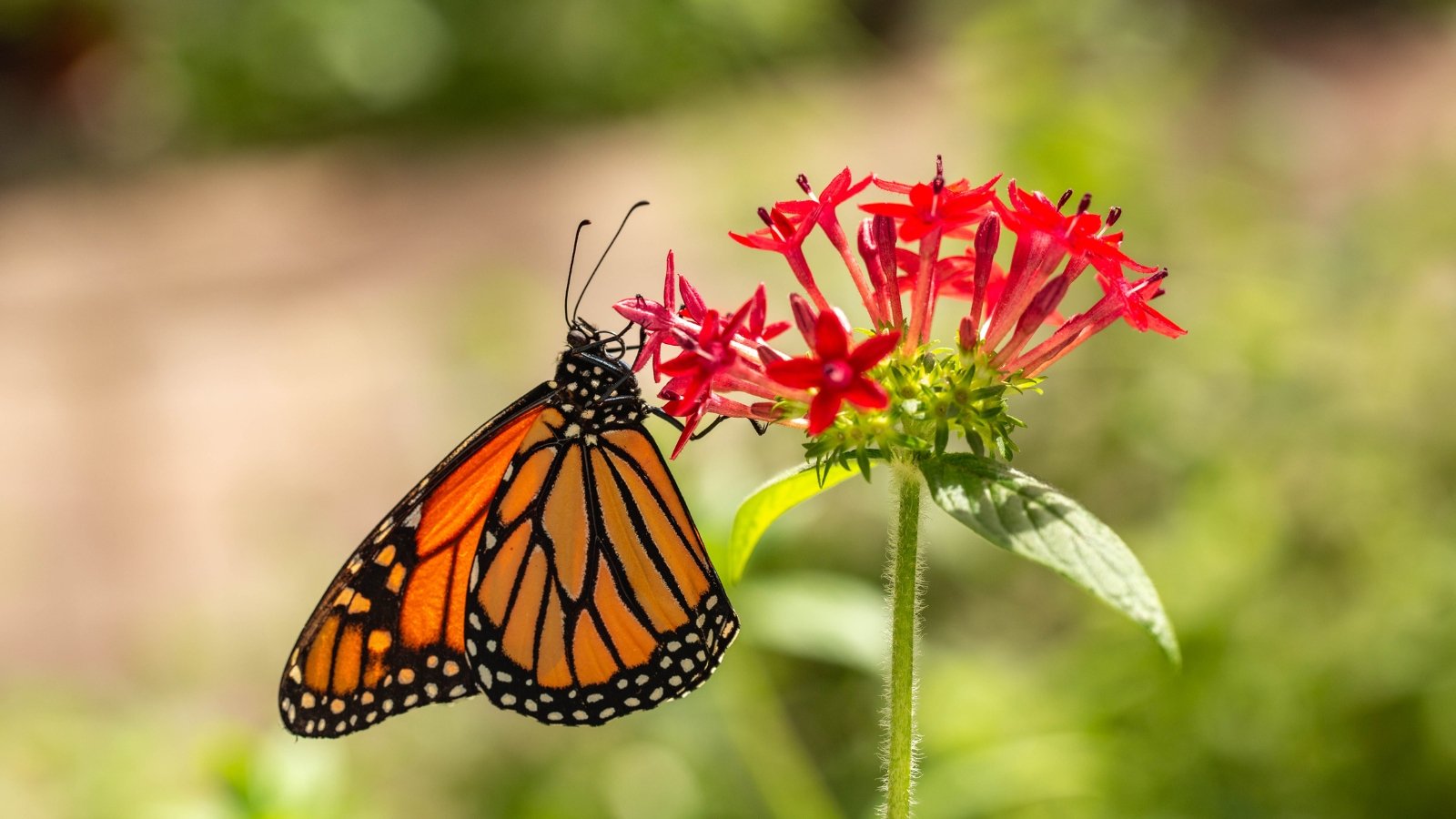
- Botanical Name: Pentas lanceolata
- Sun Requirements: Full Sun
- Height: 12”–36”
- Hardiness Zones: 9–11
Pentas deliver near-constant nectar in warm weather. Their star-shaped blooms are exactly the right format for butterfly feeding, and they’re dependable across much of Florida.
They’re perennial in zones 10–11 and behave as tender annuals in zone 9—replant each spring for continuous color.
15. Coreopsis (Coreopsis spp.)

- Botanical Name: Coreopsis spp.
- Sun Requirements: Full Sun
- Height: 12”–36”
- Hardiness Zones: 3–9
Florida’s state wildflower is dependable, drought tolerant, and long-blooming. It keeps nectar flowing for months and, in warmer regions, can flower nearly year-round.
It stays semi-evergreen in North Florida winters and truly thrives on neglect—especially in sandy soils.
Smart Design, Care, and Troubleshooting
Quick Planting Game Plan: 5 Steps
- Map Sun and Wind: Note full sun, part shade, and protected spots to match each plant’s needs.
- Pair Host + Nectar: Place a nectar source within 3–6 feet of each host plant to support emerging adults.
- Stagger Bloom Times: Mix natives (firebush, blanket flower) with annuals (zinnia, cosmos) for continuous nectar.
- Layer Heights: Use shrubs (firebush, cassia), mid-layers (porterweed, coneflower), and low edgers (coreopsis) to create sheltered feeding lanes.
- Skip Pesticides: Avoid insecticides and use hand-picking or targeted controls for pests. For a natural approach to pest management, see our article on using rubbing alcohol safely on plants.
Avoid These Common Mistakes
- Planting Tropical Milkweed Only: Choose native Asclepias to support healthy monarch cycles.
- Buying Invasive Lookalikes: Avoid Lantana camara; select L. depressa or L. involucrata instead.
- Over-Fertilizing: Excess nitrogen reduces nectar and invites pests; compost and mulch are usually enough.
- Too Much Tidiness: Leave some seedheads (coneflower) and leaf litter for shelter and food.
Signs Your Plants Are Happy
- Frequent Visitors: Daily butterfly activity and repeat sightings of the same species.
- Eggs and Caterpillars: The clearest indicator your hosts are doing their job.
- Fresh Growth and Buds: Steady flushes of foliage and blooms across seasons.
Simple Watering and Maintenance Rhythm
- Establish Deep Roots: Water new plantings 2–3 times weekly for the first month, then taper.
- Mulch Lightly: A 2–3″ layer conserves moisture and cools roots without smothering crowns.
- Renew Blooms: Light deadheading on zinnia, cosmos, and blanket flower keeps nectar coming.
- Prune for Shape: Tip-prune firebush, porterweed, and cassia to encourage branching and more flowers.
Summary and Next Steps
| Plant | Role | Sun | Zones | Notes |
|---|---|---|---|---|
| Swamp Milkweed (Asclepias incarnata) | Host (Monarch) | Full Sun | 3–9 | Use natives; avoid tropical milkweed. |
| Maypop Passionvine (Passiflora incarnata) | Host (Zebra Longwing, Fritillaries) | Sun–Part Shade | 5–9 | Needs support; edible fruit. |
| Bahama Cassia (Senna mexicana var. chapmanii) | Host + Nectar (Sulphurs) | Full Sun | 10–11 | Blooms nearly year-round in frost-free areas. |
| Spicebush (Lindera benzoin) | Host (Spicebush Swallowtail) | Part–Full Shade | 4–9 | Dappled light; fragrant foliage. |
| Woolly Dutchman’s Pipevine (Aristolochia tomentosa) | Host (Pipevine Swallowtail) | Sun–Part Shade | 5–9 | Moist soil; vining habit. |
| Coontie (Zamia integrifolia) | Host (Atala) | Sun–Part Shade | 8–11 | Evergreen texture; slow-growing. |
| Lantana (Lantana depressa) | Nectar | Full Sun | 8–11 | Choose natives; drought/heat tolerant. |
| Zinnia (Zinnia elegans) | Nectar | Full Sun | 2–11 | Single forms for easy feeding; self-sows. |
| Blanket Flower (Gaillardia pulchella) | Nectar | Full Sun | 3–10 | Thrives in sandy, coastal soils. |
| Pentas (Pentas lanceolata) | Nectar | Full Sun | 9–11 | Tender annual in zone 9; long bloom. |
| Firebush (Hamelia patens var. patens) | Nectar + Wildlife | Sun–Part Shade | 8–11 | Nectar and berries; choose native species. |
| Coneflower (Echinacea spp.) | Nectar + Seeds | Full Sun | 3–9 | Best in Central/North FL; leave seedheads. |
| Cosmos (Cosmos spp.) | Nectar | Full Sun | 2–11 | Easy from seed; fills nectar gaps. |
| Porterweed (Stachytarpheta spp.) | Nectar | Sun–Part Shade | 8–11 | Evergreen in 10–11; root-hardy in 8–9. |
| Coreopsis (Coreopsis spp.) | Nectar | Full Sun | 3–9 | Florida’s wildflower; thrives on neglect. |
Smart gardening is about matching plant roles to your conditions and letting nature do the heavy lifting. For additional guidance on garden layout, plant pairing, and seasonal care that can complement Florida conditions, see this practical guide from the University of Wisconsin Extension. Focus on a strong host-and-nectar backbone, layer heights for shelter, and stagger blooms for constant food. With these 15 plants, you can build a Florida butterfly garden that’s vibrant, resilient, and alive with activity.
If you found this helpful, I’d love to hear what’s working in your yard. Share your plant list or a butterfly sighting in the comments on Plant Care Dairy—your experiences help fellow gardeners grow better habitats.
Disclaimer: Gardening outcomes vary by microclimate, soil, and maintenance. Always verify plant IDs, local invasive species guidance, and municipal regulations before planting. The information provided here is educational and not a substitute for site-specific professional advice.