
If you’ve ever stood in a nursery aisle staring at palms—fan, feather, dwarf, “cold-hardy,” “tropical”—and thought, “Which one actually belongs in my yard?”, you’re in the right place. My goal here is simple: cut through the confusion and give you actionable guidance so you can match the right palm to your exact California microclimate and care routine.
By the end, you’ll know how to pick from 15 proven California-ready palms, how to plant them the smart way, and how to avoid the most common pitfalls (like planting a tropical palm in a frost pocket or drowning a desert-loving species). I’ll also include a handy checklist and table you can screenshot before you shop.
Quick story: when I planted my first queen palm, I assumed “coastal breeze + full sun” was all it needed. A dry spell hit, I under-watered, and it sulked for months. Since then, I’ve learned that matching species to site—sun, wind, soil, and zone—turns guesswork into gorgeous results. Let’s do this right the first time.
Why Matching Palm To Place Matters
Microclimates, Zones, And That Coastal/Inland Divide
California is home to wildly diverse ecosystems—from foggy coastlines to hot inland valleys. California is home to wildly diverse ecosystems—from foggy coastlines to hot inland valleys. For readers curious about palm classification and the family they belong to, the Arecaceae are detailed on Wikipedia. That means one palm can thrive in San Diego but struggle in a frosty foothill backyard.
Always check USDA Zones and your yard’s microclimate (wind exposure, frost pockets, reflected heat from walls) before buying. Always check USDA Zones and your yard’s microclimate (wind exposure, frost pockets, reflected heat from walls) before buying. For a broad overview of palm tree biology, growth patterns, and uses worldwide, see Britannica’s palm tree entry.
As a baseline, most palms prefer well-drained soil and plenty of light. Some (like the California fan palm) shrug off drought, while others (like queen palms) want steady moisture in summer.
Sun, Heat, And Wind Tolerance
Most palms love sun, but your location matters. Coastal growers can push more “tropical” species thanks to milder winters. Inland growers need to watch for heat and low humidity, especially during Santa Ana winds. If you’re in a windy corridor, pick palms with sturdy, wind-tolerant fronds and give them shelter when young.
Soil Drainage And Watering Style
Think in terms of extremes: tropical palms need consistent moisture but still demand drainage, while desert-adapted palms prefer to dry slightly between waterings. Heavy clay? Plant mounded, amend with coarse materials, and never let water pool around the trunk.
15 California-Ready Palms To Grow Now
I’ve grouped the essential details for each palm—what it looks like, how big it gets, where it thrives, and a must-know tip. I’ve grouped the essential details for each palm—what it looks like, how big it gets, where it thrives, and a must-know tip. For an exhaustive encyclopedia of palm species, including detailed images and descriptions, you can explore the Palm Tree Encyclopedia. Use these to narrow your short list quickly.
1. California Fan Palm (Washingtonia filifera)

- Botanical Name: Washingtonia filifera
- Sun Requirements: Full sun
- Mature Height: 40–80’
- Hardiness Zones: 9–11
California’s own native fan palm brings a stately, upright silhouette and an iconic skirt of old fronds if untrimmed. It’s more drought-tolerant than most tropical species and dislikes soggy soil.
In urban and rural landscapes, it shines in frost-free zones. Annual trimming improves looks and reduces fire risk by removing the dry, shaggy “petticoat.” Annual trimming improves looks and reduces fire risk by removing the dry, shaggy “petticoat.” For a detailed planting guide and care tips, see our full California Fan Palm guide.
2. Canton Fishtail Palm (Caryota mitis)

- Botanical Name: Caryota mitis
- Sun Requirements: Full sun to partial shade
- Mature Height: ~25’
- Hardiness Zones: 9–10
Fishtails are instantly recognizable: the leaf tips look like fish tails, almost gingko-like. This clumping species handles brief chills to around 26°F (−3°C) and brings a lush, tropical vibe.
Note that the fruits contain needle-like crystals that can cause skin irritation, so avoid handling them. After fruiting, a main trunk dies—new shoots from the base keep the clump going.
3. Chilean Wine Palm (Jubaea chilensis)

- Botanical Name: Jubaea chilensis
- Sun Requirements: Full sun
- Mature Height: 50–80’
- Hardiness Zones: 7–10
This palm boasts a massively thick trunk that can reach three feet across, etched with leaf-scar patterns. The feather-like fronds look and sound stunning in wind and rain.
Surprisingly hardy to around 20°F (−7°C), it’s great for larger spaces. Add winter mulch over the root zone in colder pockets for extra insurance.
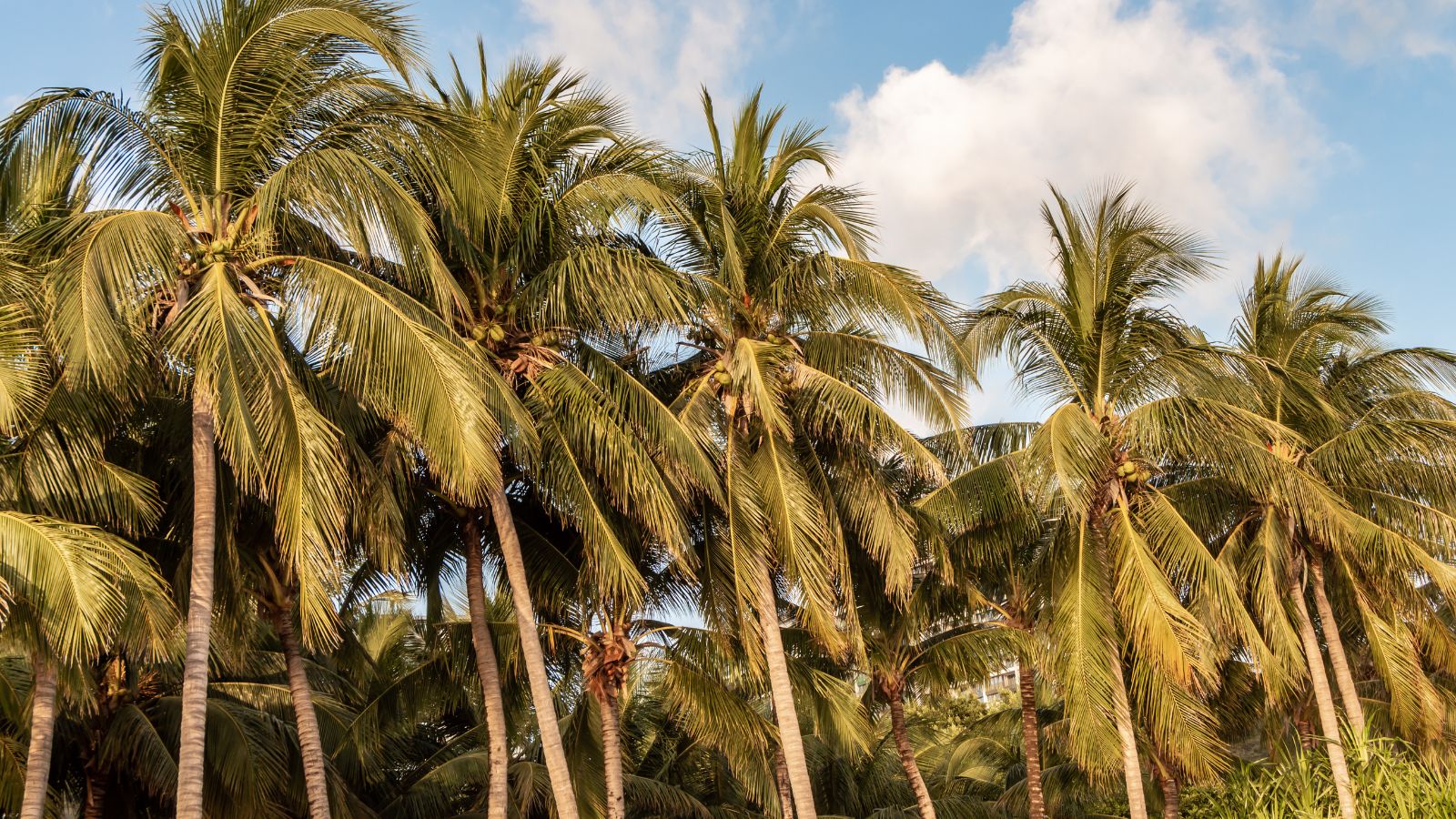
4. Coconut Palm (Cocos nucifera)
- Botanical Name: Cocos nucifera
- Sun Requirements: Full sun
- Mature Height: 50–100’
- Hardiness Zones: 10–12
The famous coconut palm is both ornamental and productive, with glossy, arching fronds and edible coconuts. It tolerates salty conditions and can perform in warm inland valleys if winters stay mild.
Harvesting requires height management (or safe picking tools). Plant where falling coconuts won’t pose risks.
5. Date Palm (Phoenix dactylifera)
- Botanical Name: Phoenix dactylifera
- Sun Requirements: Full sun
- Mature Height: 80–100’
- Hardiness Zones: 9–12
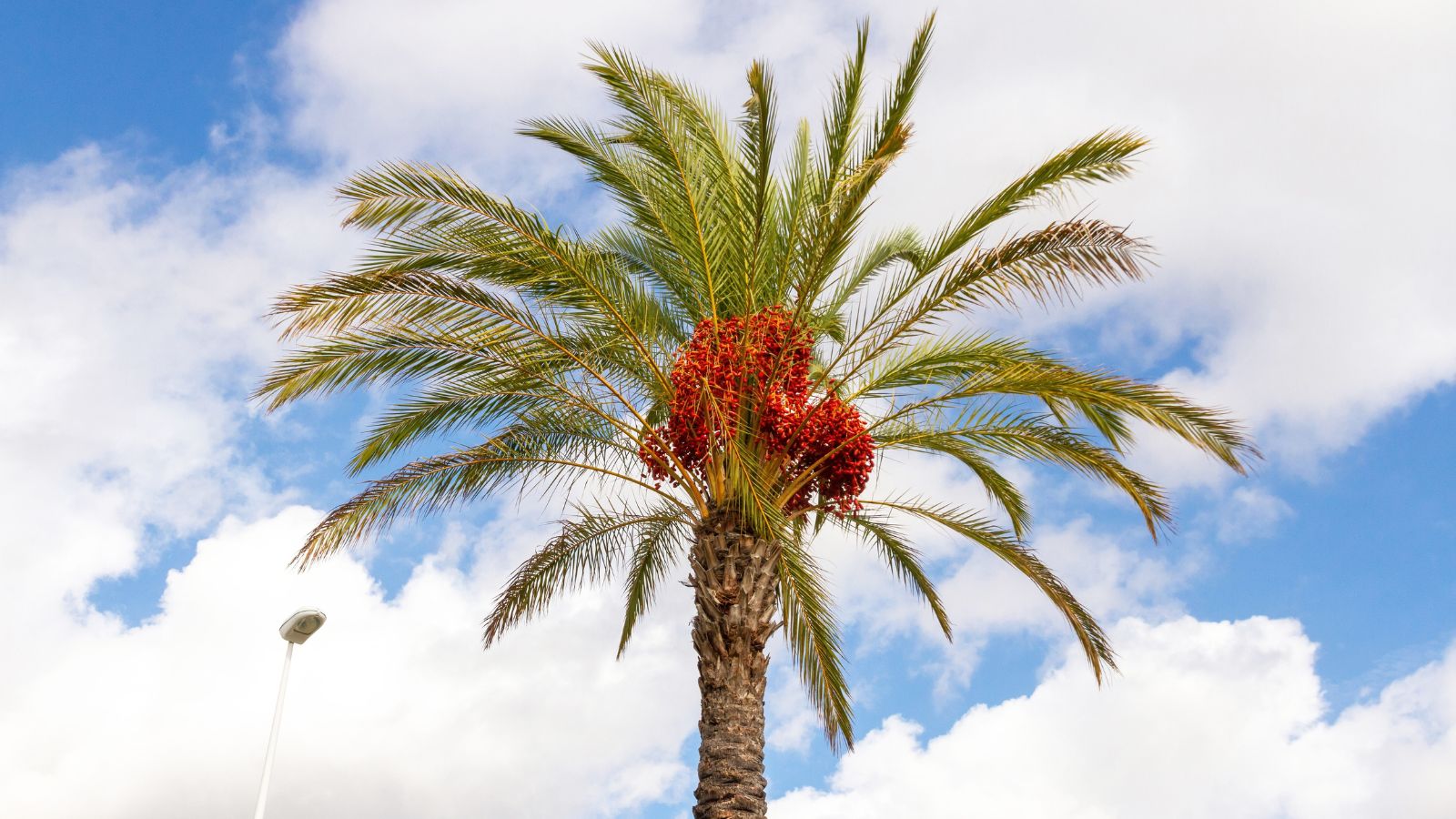
Iconic and massive, date palms love hot, sunny, well-drained conditions. They’re hardy to roughly 20°F (−7°C) and sometimes a bit lower.
They require space and annual maintenance to manage fruits (or you can snip the flowers to prevent mess). For small gardens, consider the dwarf relative Phoenix roebelenii.
6. King Palm (Archontophoenix cunninghamiana)

- Botanical Name: Archontophoenix cunninghamiana
- Sun Requirements: Full sun to partial shade
- Mature Height: 40–60’
- Hardiness Zones: 9–11
Regal and elegant, king palms have arching leaves and pink-white flower sprays. In mild, frost-free areas, they deliver a classic, lush canopy.
Snip flower clusters if you want to divert energy to foliage. Provide occasional irrigation in Southern California and avoid cold, mountainous locations.
7. Lady Palm (Rhapis excelsa)
- Botanical Name: Rhapis excelsa
- Sun Requirements: Partial to full shade
- Mature Height: 5–12’
- Hardiness Zones: 9–11
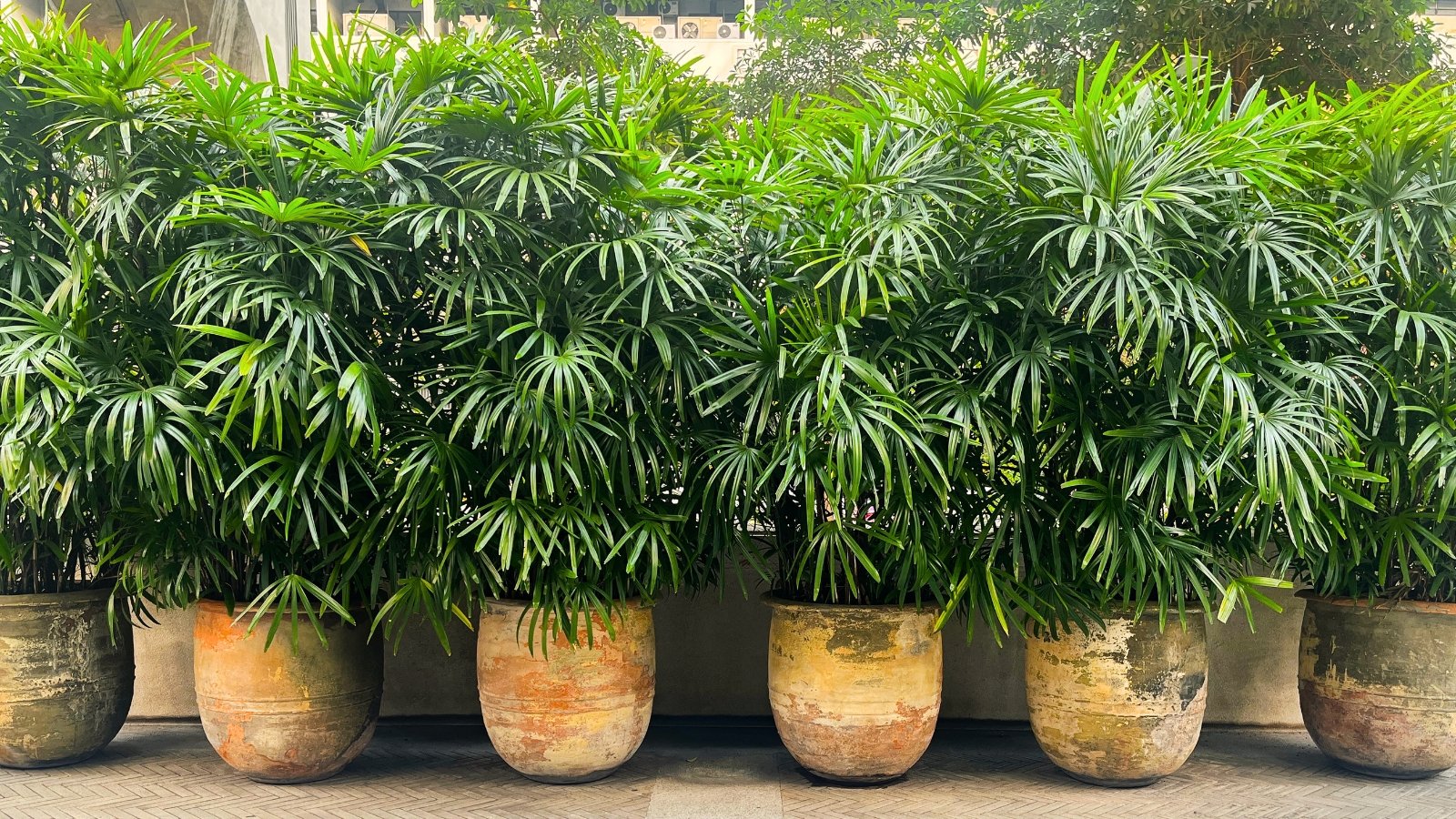
Perfect for shade and containers, lady palms bring refined texture and stay comfortably small. Indoors, they tolerate low light but look best in bright, indirect light.
Outdoors, tuck them under taller trees, line walkways, and keep their soil evenly moist (never soggy). Outdoors, tuck them under taller trees, line walkways, and keep their soil evenly moist (never soggy). For inspiration on creating a lush indoor jungle on a budget, see our Indoor Jungle guide. They’re among the most forgiving palms for beginners.
8. Loulu Lelo (Pritchardia hillebrandii)
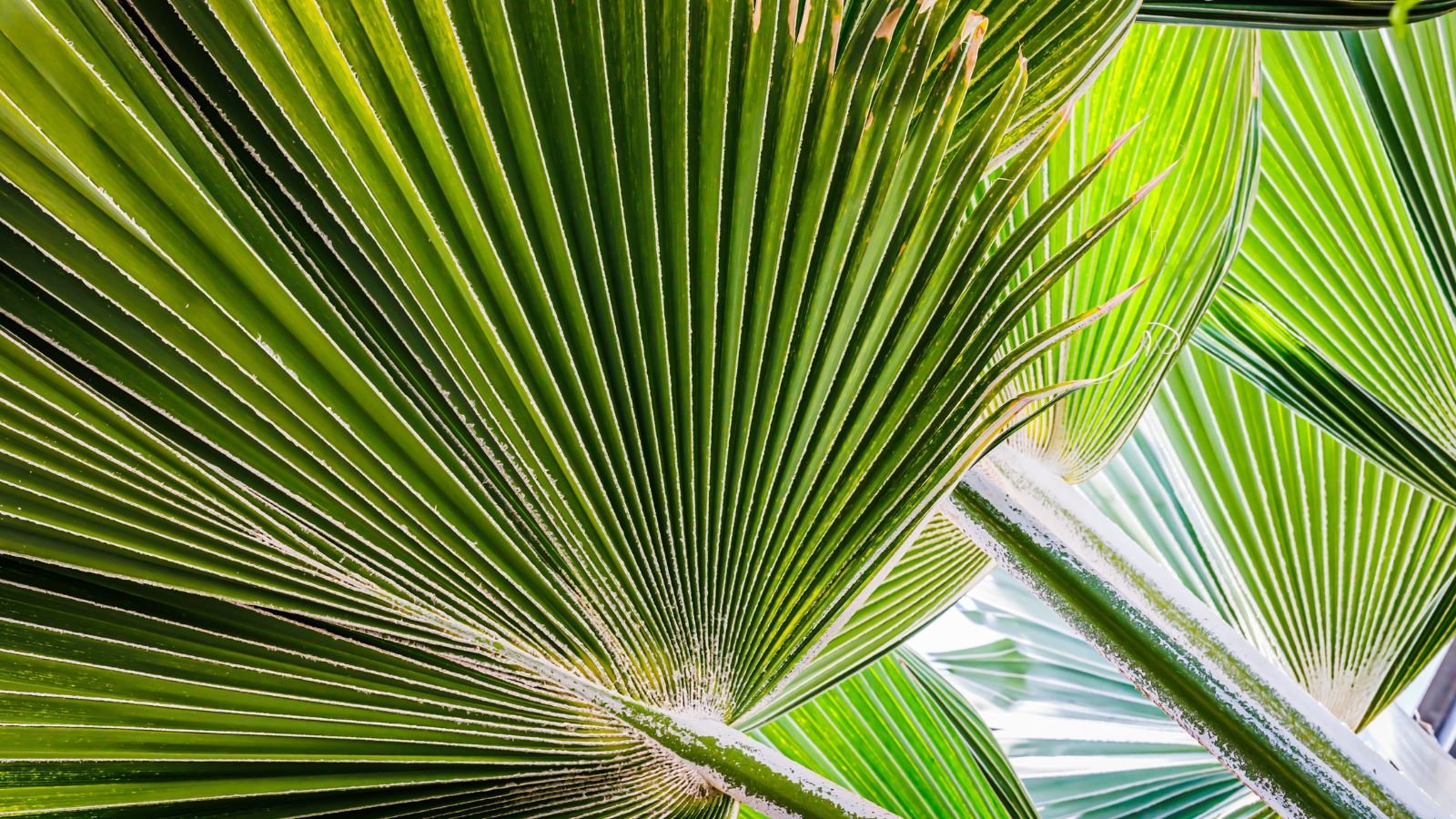
- Botanical Name: Pritchardia hillebrandii
- Sun Requirements: Full sun
- Mature Height: ~20’
- Hardiness Zones: 10–12
A Hawaiian native that loves the coastal climate, loulu lelo thrives with cool winds, ample sun, and steady moisture. Its fan leaves often take on a blue hue in bright light.
Provide excellent drainage, especially in rainy seasons, and showcase it near water features to amplify the tropical feel.
9. Mediterranean Fan Palm (Chamaerops humilis)
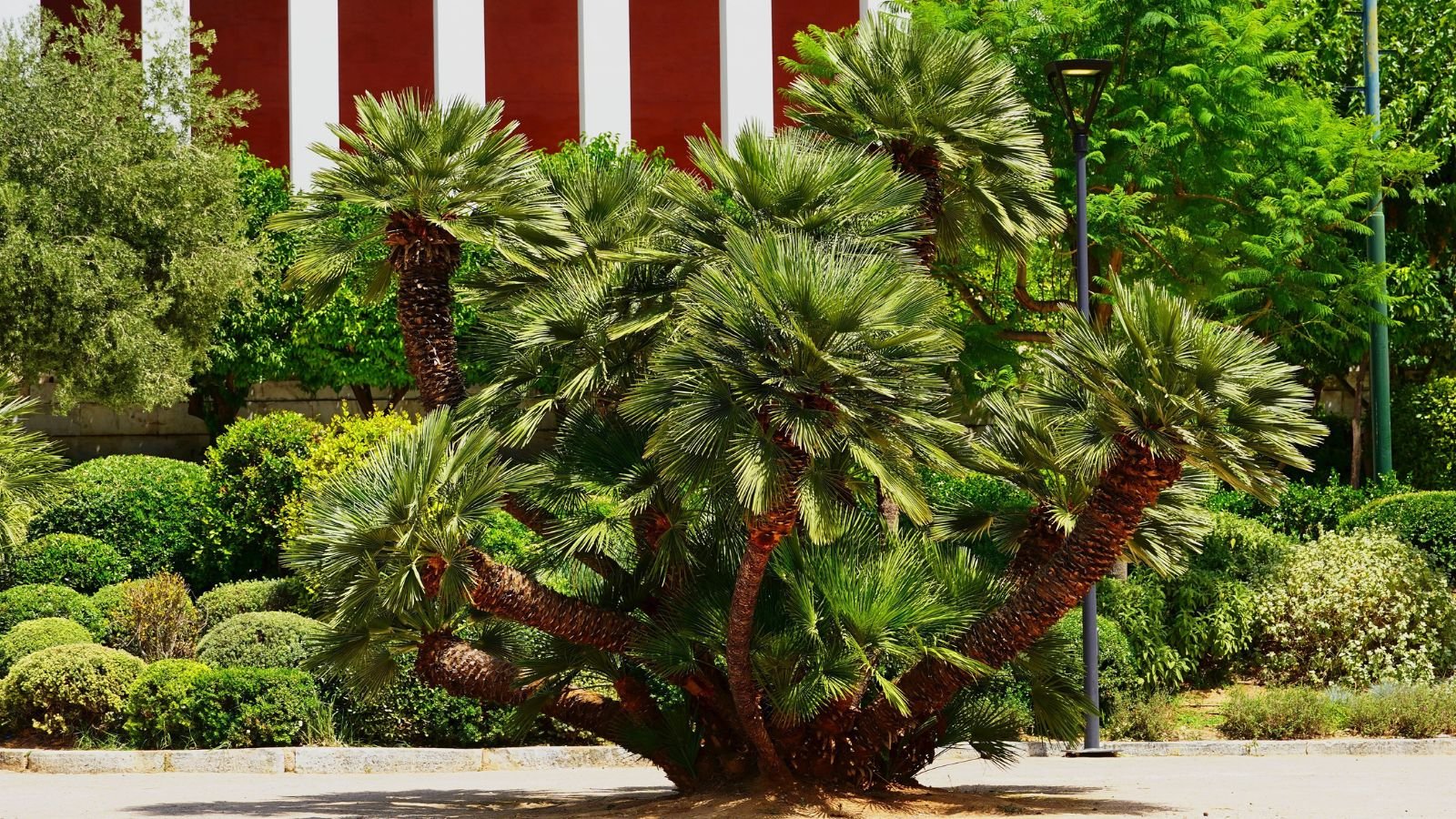
- Botanical Name: Chamaerops humilis
- Sun Requirements: Full sun to partial shade
- Mature Height: ~20’
- Hardiness Zones: 9–11 (brief dips lower with protection)
This hardy European fan palm excels in temperate California regions. It forms clumps that you can train into single- or multi-trunk specimens.
In colder pockets, grow in containers and overwinter indoors or under cover. It tolerates brief spells near 0°F (−18°C) with protection, making it one of the tougher choices.
10. Needle Palm (Rhapidophyllum hystrix)

- Botanical Name: Rhapidophyllum hystrix
- Sun Requirements: Full sun to partial shade
- Mature Height: 3–6’
- Hardiness Zones: 6–10
Compact, trunkless, and ultra-hardy for a palm, needle palm thrives from coast to hot valleys. It’s a superb choice for small spaces and mixed borders.
It’s dioecious (male and female flowers on separate plants) and bears spiny fruits—avoid handling with bare hands. Keep soil evenly moist but never waterlogged.
11. Palmetto (Sabal palmetto)

- Botanical Name: Sabal palmetto
- Sun Requirements: Full sun
- Mature Height: 12–35’ (often shorter in gardens)
- Hardiness Zones: 7–11
A U.S. native built for coastal conditions, palmetto tolerates drought and occasional flooding. It prefers strong sun and can stall in shade.
The airy flowers draw pollinators in droves. In gardens, expect heights under 20’ unless conditions are ideal.
12. Pindo Palm (Butia capitata)

- Botanical Name: Butia capitata
- Sun Requirements: Full sun to partial shade
- Mature Height: 10–35’
- Hardiness Zones: 8–11
The pindo palm is beloved for its edible, jelly-worthy fruits. Its arching, gray-green fronds create a soft, weeping form that looks elegant year-round.
Trim old frond stubs evenly for a tidy look. It thrives in warm, sunny sites and tolerates cold down to roughly 15°F (−9°C).
13. Queen Palm (Syagrus romanzoffiana)
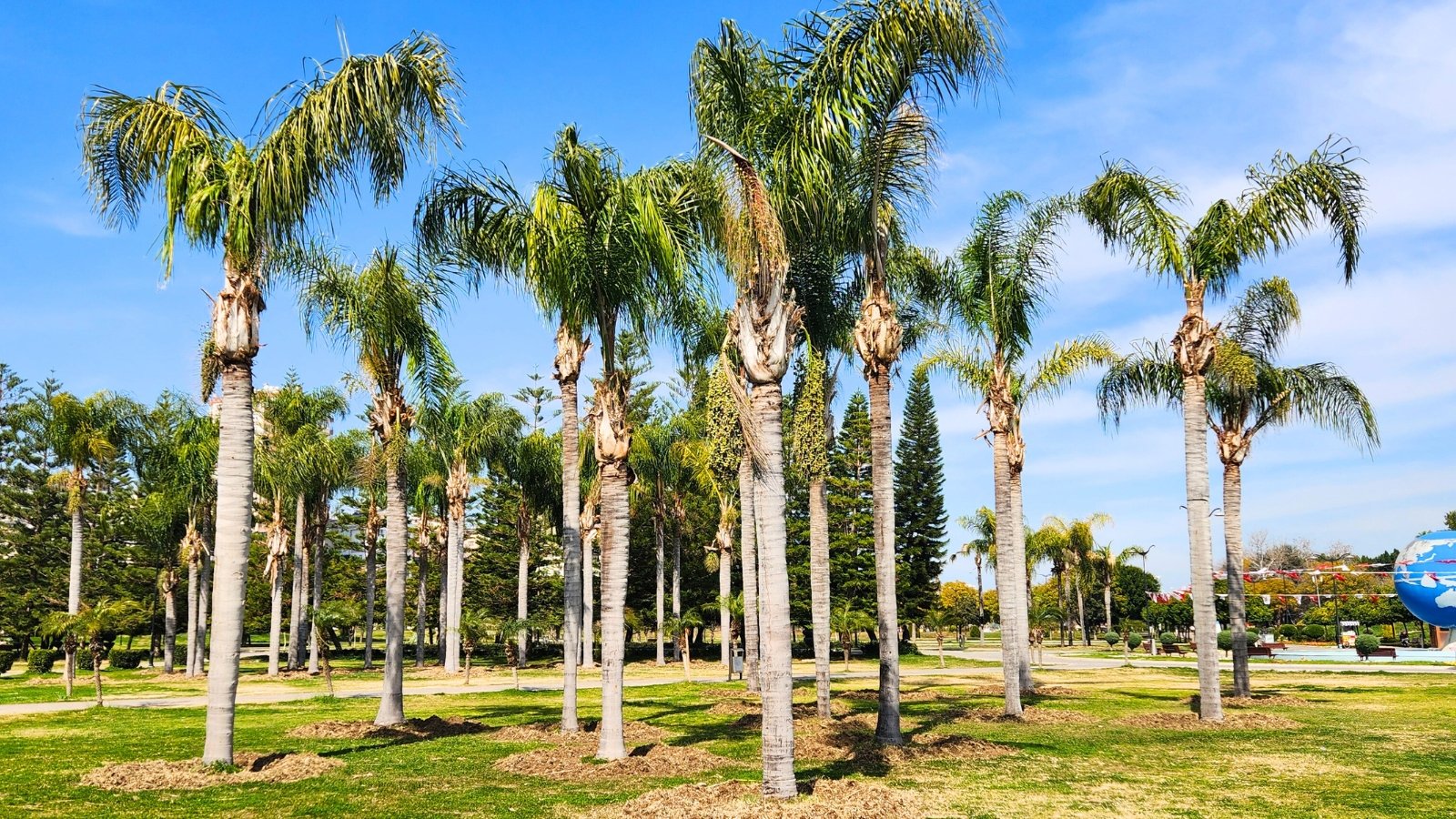
- Botanical Name: Syagrus romanzoffiana
- Sun Requirements: Full sun
- Mature Height: 50–70’
- Hardiness Zones: 9–11
Queens are classic California palms for warm regions with mild winters. They’ll take light frost, but deep freezes can damage fronds (they usually rebound as weather warms).
Provide regular irrigation, especially in Southern California, and plant in free-draining, slightly acidic soil to avoid root troubles.
14. Royal Palm (Roystonea regia)

- Botanical Name: Roystonea regia
- Sun Requirements: Full sun
- Mature Height: 50–100’
- Hardiness Zones: 10–11
Few trees say “tropical grandeur” like a row of royals. The smooth gray trunk topped with a green crownshaft is unmistakable, and fronds can reach 10–20 feet long.
They’re fast-growing in moist, well-drained soil with consistent feeding. Ideal for boulevards, large borders, and formal plantings.
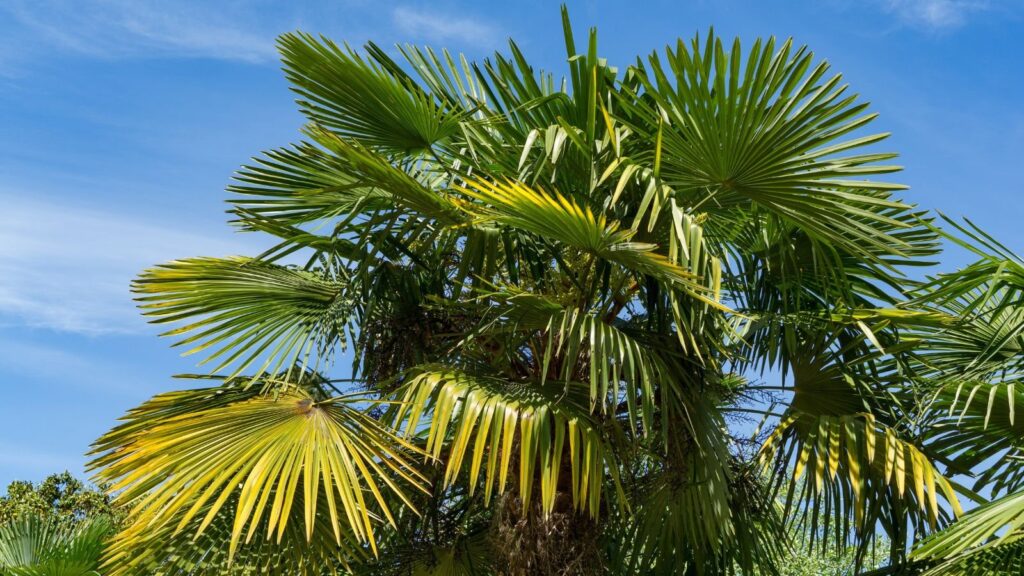
15. Windmill Palm (Trachycarpus fortunei)
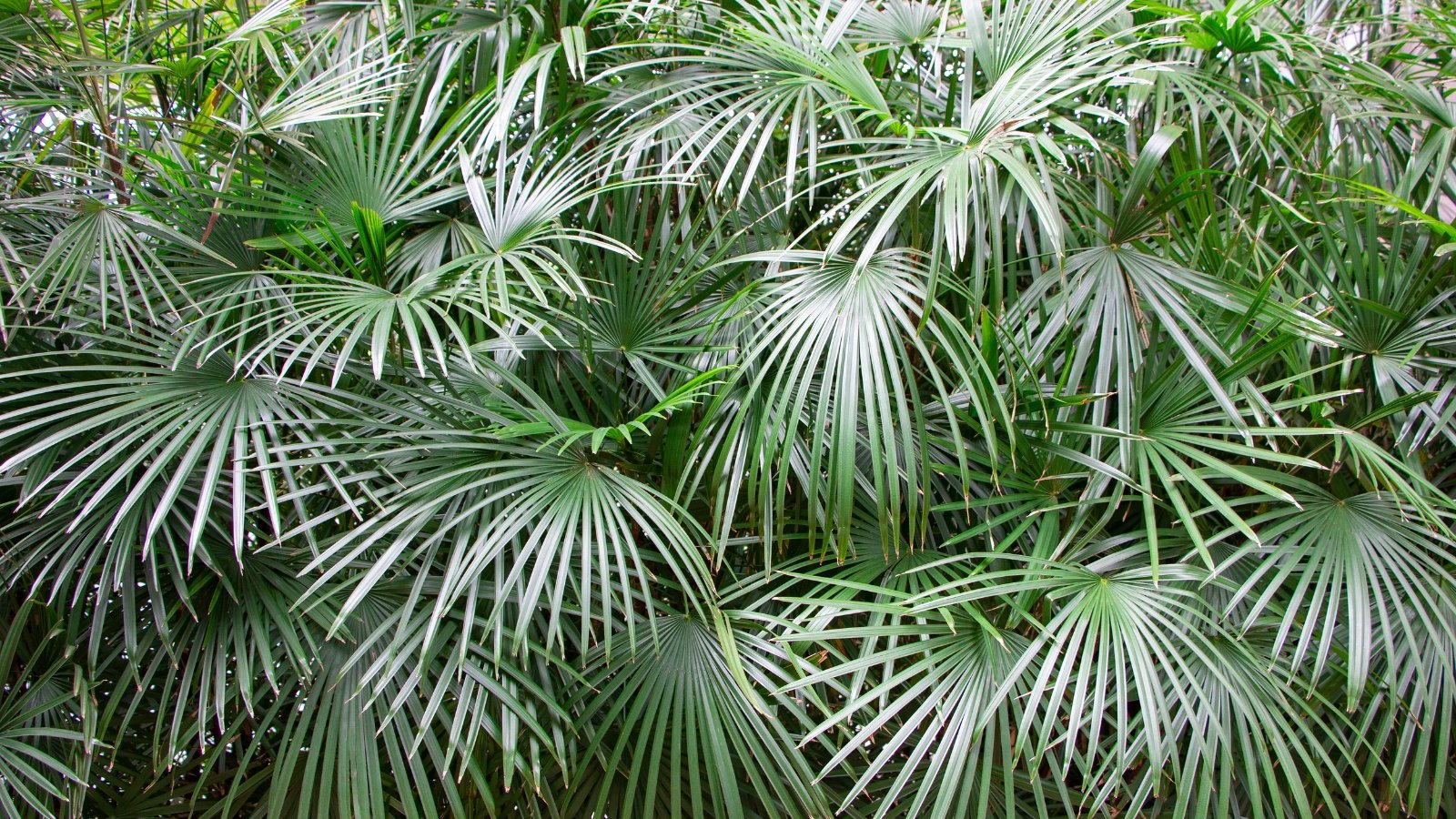
- Botanical Name: Trachycarpus fortunei
- Sun Requirements: Full sun to partial shade
- Mature Height: 10–40’
- Hardiness Zones: 7–11
One of the most cold-hardy palms, windmills tolerate much of California and even into Oregon. They prefer consistent moisture during the growing season but resent winter “wet feet.”
Mulch the root zone in winter, leaving a gap around the trunk. Shelter young plants from strong, drying winds until established.
Planting And Preparation: Soil, Sun, Water, And Spacing
Site Prep: Drainage First, Always
I always start by testing drainage. Dig a hole, fill with water, and see how fast it drains. If it’s slow, plant on a slight mound, mix in coarse material (pumice, bark), and avoid low-lying spots where water pools.
Palms generally appreciate rich but free-draining soil. Avoid burying or mulching against the trunk; keep the flare visible.
Planting Steps (New Palms Or Transplants)
- 1. Measure The Root Ball: Dig a hole 1–2x as wide and just as deep.
- 2. Position For Sun/Wind: Turn the best face toward your view and give windbreak to young palms.
- 3. Set High, Not Deep: Plant so the root crown is level with grade (or slightly above in clay).
- 4. Backfill And Water In: Firm soil gently; deep-water to settle without compacting.
- 5. Stake If Needed: Use soft ties and remove after the first growing season.
Container Growing
For balconies, patios, or colder zones, containers are smart. Pick a well-draining mix (palm/cactus blend), a pot with large drain holes, and water when the top 1–2 inches dry. Lady palm, Mediterranean fan palm, and needle palm are excellent container candidates.
Lady palm, Mediterranean fan palm, and needle palm are excellent container candidates. If you’re curious about propagating container palms like ponytail palms indoors, check out our easy indoor propagation guide.
Routine Care And Seasonal Tasks
Watering That Works In California
- Coastal: Water deeply but less often; cool, humid air slows evaporation.
- Inland Valleys: Expect more frequent summer irrigation—especially for queen and king palms.
- Desert-Edge Areas: Choose drought-tolerant palms (e.g., Washingtonia filifera, Phoenix dactylifera) and mulch generously.
Feeding For Strong Fronds
Use a complete palm fertilizer with micronutrients (especially magnesium and manganese) during active growth. I feed light but regularly, 2–3 times in the warm season, and never on dry soil.
Pruning And Clean-Up
Only remove completely brown fronds and hazardous fruit clusters. Over-pruning weakens the crown; leave healthy green fronds for best energy production.
Cold Protection (When Frost Threatens)
- Mulch: 2–4 inches over roots (not touching the trunk).
- Wrap: For young palms, wrap the spear/crown lightly with frost cloth during cold snaps.
- Hydrate: Water the day before a freeze to buffer roots (but avoid waterlogging).
Troubleshooting Palm Problems In California
Too Much Or Too Little Water
- Overwatering Signs: Yellowing fronds starting at the base, soggy soil, slowed growth.
- Underwatering Signs: Crispy tips, dull gray-green color, premature frond drop in heat.
- Fix: Improve drainage, adjust irrigation frequency, and mulch to moderate swings.
Cold Damage And Recovery
- Symptoms: Blackened or translucent leaf tissue after frost; spear may loosen if severely damaged.
- Fix: Wait until new growth pushes before removing damaged fronds; protect next time with cloth and mulch.
Nutrient Deficiencies
- Magnesium: Yellow bands on older fronds with green centers (common on queen palms).
- Manganese: Frizzled, small new leaves (frizzle top) on new growth.
- Fix: Apply a balanced palm fertilizer with micros; for manganese issues, use a manganese sulfate drench.
Pests To Watch
- Scale/Mealybugs: Sticky residue, sooty mold—treat with horticultural oil.
- Weevils/Borers: Monitor the crown; remove severely infested material and consult local guidance.
- Prevention: Healthy watering and nutrition make palms less inviting to pests.
Conclusion And Quick-Action Checklist
Smart palm gardening in California is all about right plant, right place, plus steady, sensible care. Choose a species that matches your zone and microclimate, plant high with drainage in mind, water deeply and wisely, and prune minimally. Do that, and your landscape will look effortlessly tropical—without the drama.
| Palm (Botanical) | Zones | Sun | Height | Key Note |
|---|---|---|---|---|
| California Fan (Washingtonia filifera) | 9–11 | Full | 40–80’ | Native; drought-tolerant; prune old skirts |
| Canton Fishtail (Caryota mitis) | 9–10 | Full–Part | ~25’ | Clumping; fruit can irritate skin |
| Chilean Wine (Jubaea chilensis) | 7–10 | Full | 50–80’ | Thick trunk; hardy to ~20°F |
| Coconut (Cocos nucifera) | 10–12 | Full | 50–100’ | Salt tolerant; harvest caution |
| Date Palm (Phoenix dactylifera) | 9–12 | Full | 80–100’ | Hot, dry sites; manage fruit or flowers |
| King Palm (Archontophoenix cunninghamiana) | 9–11 | Full–Part | 40–60’ | Snip blooms to boost foliage |
| Lady Palm (Rhapis excelsa) | 9–11 | Part–Shade | 5–12’ | Great indoors/containers |
| Loulu Lelo (Pritchardia hillebrandii) | 10–12 | Full | ~20’ | Coastal; blue-toned fans in sun |
| Mediterranean Fan (Chamaerops humilis) | 9–11 | Full–Part | ~20’ | Hardy; single or multi-trunk |
| Needle Palm (Rhapidophyllum hystrix) | 6–10 | Full–Part | 3–6’ | Trunkless; very cold-hardy |
| Palmetto (Sabal palmetto) | 7–11 | Full | 12–35’ | Coastal tough; pollinator magnet |
| Pindo (Butia capitata) | 8–11 | Full–Part | 10–35’ | Edible fruit; tidy by trimming stubs |
| Queen (Syagrus romanzoffiana) | 9–11 | Full | 50–70’ | Moisture-loving; frost-tender |
| Royal (Roystonea regia) | 10–11 | Full | 50–100’ | Fast with moisture and feeding |
| Windmill (Trachycarpus fortunei) | 7–11 | Full–Part | 10–40’ | Cold-hardy; avoid winter wet |
Checklist: Plant Palms With Confidence
- 1. Confirm Your Zone: Match palm hardiness to your USDA zone and microclimate.
- 2. Test Drainage: If water lingers, plant high and amend for flow.
- 3. Sun Match: Full-sun palms need at least 6–8 hours of direct light.
- 4. Water Wisely: Deep, infrequent soakings for established palms; more frequent for new plantings and moisture-loving species.
- 5. Feed In Season: Use a palm-specific fertilizer with micronutrients.
- 6. Prune Lightly: Remove only brown fronds and hazardous clusters.
- 7. Plan For Winter: Mulch roots; protect crowns during frost.
If you found this guide helpful, I’d love to hear what you’re planting this season. Drop your questions or palm victories in the comments on Plant Care Dairy—your experience helps other gardeners, too.
Disclaimer: The information in this article is for general educational purposes. Always consider your specific site conditions and consult local experts or extension services for region-specific advice. Use caution when handling spiny fruits or pruning tall palms.