
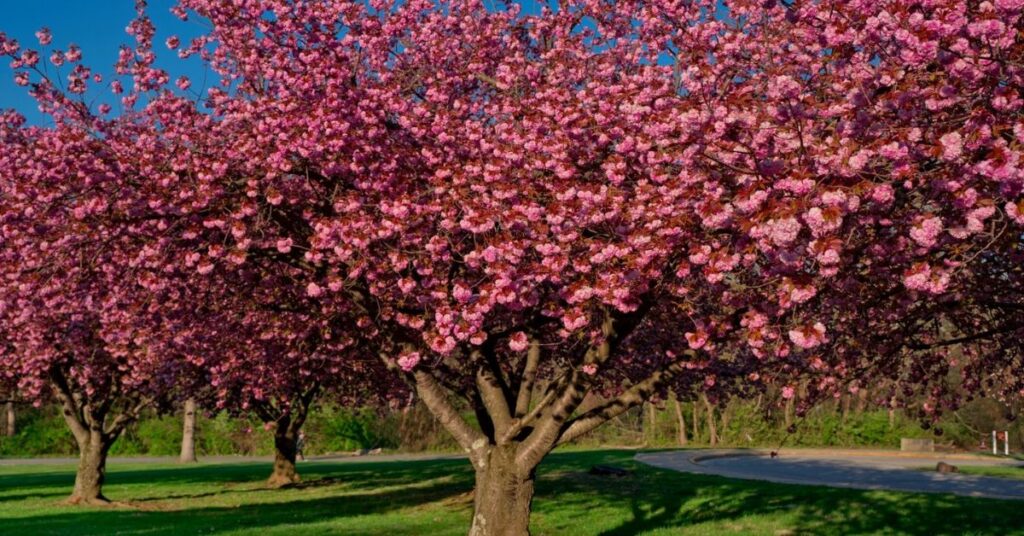
If you’ve ever stood in a nursery, puzzled by rows of pretty labels, you’re not alone. My goal here is to cut through the noise and help you confidently match the right crabapple to your space, sun, soil, and style—without guesswork or regrets.
In this guide, you’ll learn how to size a tree for your yard, what light and soil each variety prefers, and which selections deliver the flowers, fruit, or fall color you’re after. I’ll also share care shortcuts and a quick-reference table so you can plant once and enjoy for years.
Confession time: the first crabapple I planted was a “dwarf” that outgrew its corner by year three. I loved the blooms—but I learned to measure spread, check sun, and plan pruning before I dig. Consider this your friendly head start.
Compact And Patio-Friendly Crabapples
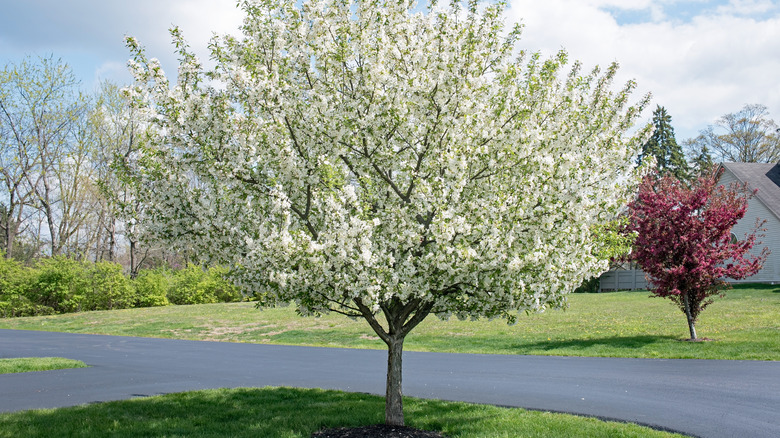
1. Lollipop Crabapple (Malus lollizam)
Lollipop is a tidy, naturally rounded dwarf that behaves beautifully in small beds, near patios, or flanking a path. Its white blooms and petite red fruits add four-season charm without overwhelming the space.
- Bloom Season: Spring
- USDA Zones: 4–8
- Light: Full sun (at least 6 hours)
- Soil: Moist, well-drained, slightly acidic
- Size: Up to 8 feet
Gardeners focusing on smaller yards and patio spaces can also explore The Old Farmer’s Almanac guide on the best crabapples for your yard, which compares dwarf and ornamental selections.

2. Cinderella Dwarf Crabapple (Malus cinzam)
Cinderella Dwarf is low-maintenance and perfect for pots or petite gardens. Keep the root zone mulched to hold moisture; once established, it generally needs only weekly watering in dry spells. Dwarf crabapples like this also perform well in large containers, similar to the plants featured in our list of the best shrubs to grow in pots and containers.
- Bloom Season: Mid-spring
- USDA Zones: 4–9
- Light: Full sun
- Soil: Slightly acidic; aim for pH ≤ 6.5
- Size: Up to 8 feet

3. Pink Princess Crabapple (Malus parrsi)
Pink Princess delivers striking red foliage and deep red fruit on a compact framework. Its horizontal habit makes it a smart pick for small hedges, edging, or a bold color accent in limited spaces.
- Bloom Season: Late spring
- USDA Zones: 5–9
- Light: Full sun
- Soil: Moist, loamy, acidic
- Size: About 8 feet
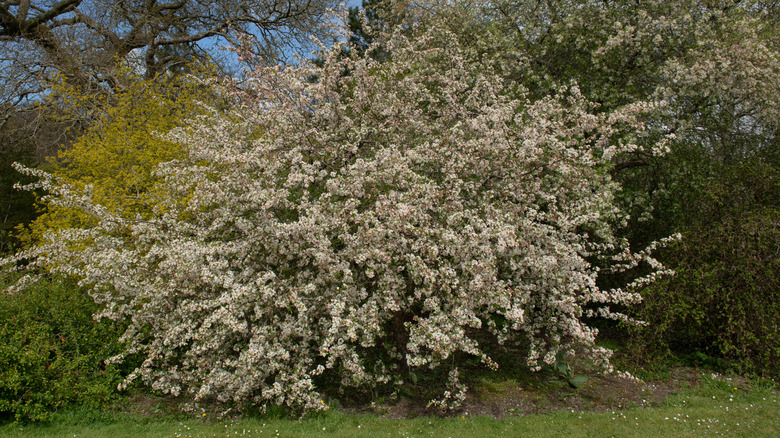
4. Sargent Tina Dwarf Crabapple (Malus sargentii ‘Tina’)
Sargent Tina is a miniature take on the classic Sargent, ideal for foundation beds and courtyards. Expect red buds opening to pink-white flowers and abundant tiny fruits that birds adore.
- Bloom Season: Late spring to early summer
- USDA Zones: 4–8
- Light: Full sun
- Soil: Moderate, well-drained
- Size: Around 6–8 feet
Upright And Architectural Statements

5. Adirondack Crabapple (Malus ‘Adirondack’)
Adirondack is a narrow, upright selection with loads of white spring blossoms and persistent fall fruit. Its contained spread is great where width is limited but vertical impact is welcome.
- Bloom Season: Mid-spring
- USDA Zones: 4–8
- Light: Full sun
- Soil: Loam, clay, sand; neutral; well-drained
- Size: Up to 18 feet
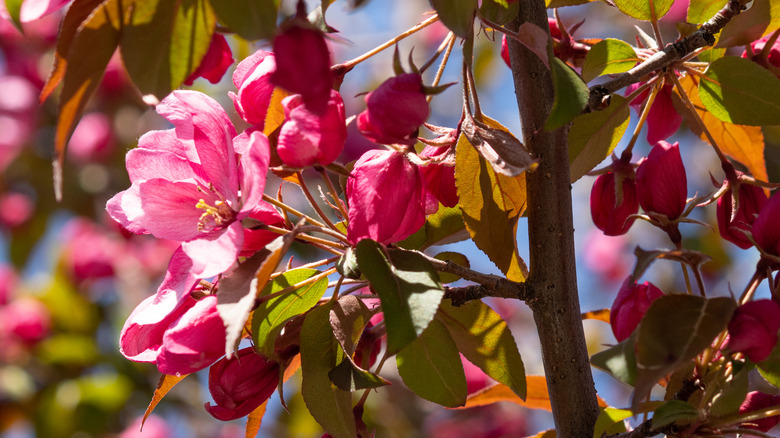
6. Velvet Pillar Crabapple (Malus ‘Velvet Pillar’)
Velvet Pillar (also called Roseybloom) grows with an upright, columnar character, casting elegant, narrow shade. Pointed leaves age to deep burgundy and red fruits add fall drama.
- Bloom Season: Mid-spring
- USDA Zones: 4
- Light: Full sun
- Soil: Any, kept evenly moist
- Size: Up to 20 feet

7. Pink Spires Flowering Crabapple (Malus hybrid)
Pink Spires brings two-toned pink blossoms over dark purple-red foliage—an instant focal point. Its upright-oval form looks tailored along drives or as a specimen in lawn.
- Bloom Season: Early spring
- USDA Zones: 5–8
- Light: Full sun
- Soil: Well-drained
- Size: Around 15 feet

8. Prairifire Crabapple (Malus ‘Prairifire’)
Prairifire is beloved for weeks of vivid reddish-pink bloom, disease resistance, and year-round good looks. Leaves emerge purple, deepen to green with red veins, and bronze in fall.
- Bloom Season: Spring
- USDA Zones: 3–8
- Light: Full sun
- Soil: Adaptable—well-drained; tolerates acidic, moist, loamy, sandy, wet, or clay
- Size: To about 20 feet (15-foot spread)
Best For Edible Yields And Preserving

9. Centennial Crabapple (Malus ‘Centennial’)
Centennial puts out reddish-orange fruit ideal for jelly, apple butter, and spiced preserves. Golden fall foliage adds extra glow at season’s end.
- Bloom Season: May
- USDA Zones: 3–9
- Light: Full sun
- Soil: Loamy, well-drained
- Size: 8–15 feet
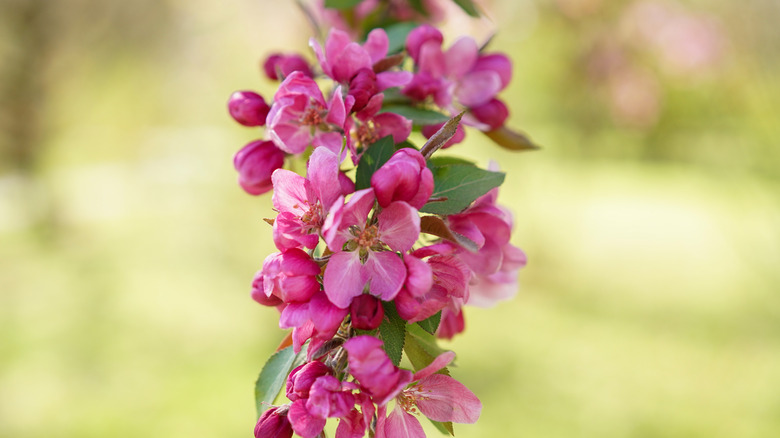
10. Hoppa Crabapple (Malus hopa)
Hoppa is both tough and beautiful, with fragrant pink blossoms and semi-weeping grace. Dark scarlet fruit is tasty fresh or canned; plan on occasional height-control pruning.
- Bloom Season: Mid to late spring
- USDA Zones: 4–8
- Light: Full sun best; tolerates partial sun
- Soil: Clay or sand; well-drained
- Size: Up to 25 feet

11. Whitney Crabapple (Malus pumila)
Whitney is a cold-hardy culinary workhorse with red-and-yellow fruits excellent for cooking and cider. It tolerates intense winters and warm summers alike.
- Bloom Season: April
- USDA Zones: As cold as Zone 2
- Light: Full sun for at least half the day
- Soil: Loamy; well-drained
- Size: 10–16 feet
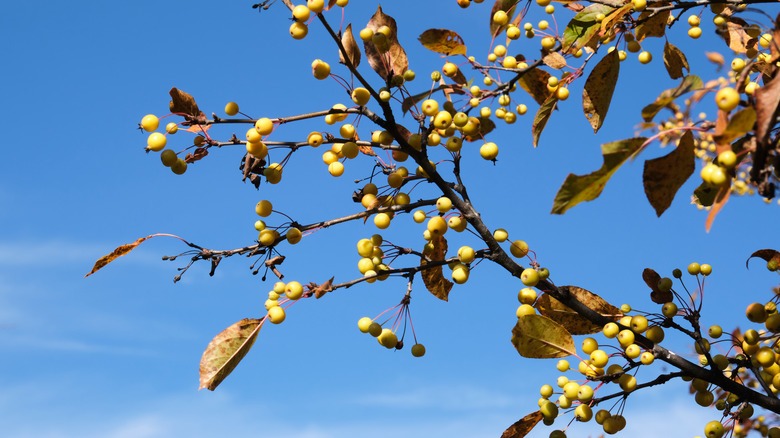
12. Harvest Gold Crabapple (Malus ‘Hargozam’)
Harvest Gold wows with clear white bloom in May, followed by bright yellow fruits that shine well into fall. Disease resistance and adaptability make it easy to love.
- Bloom Season: Late spring
- USDA Zones: 4–8
- Light: Full sun
- Soil: Well-drained; tolerates occasionally wet, clay, loam, sand; acidic or alkaline
- Size: Up to 25 feet
Classic Landscape Workhorses For Paths And Lawns
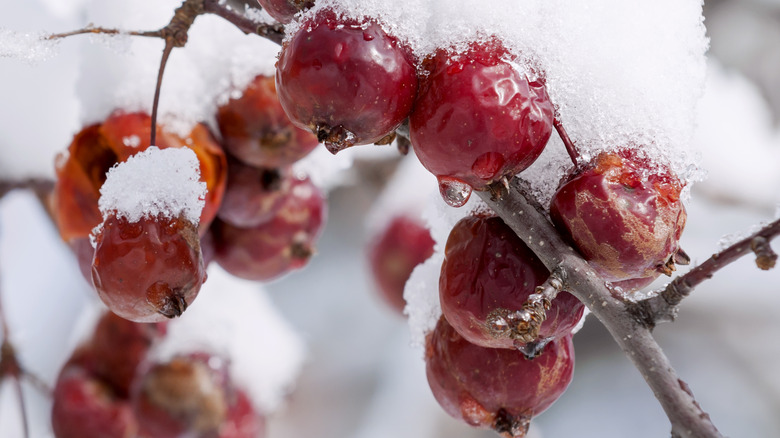
13. Red Jewel Crabapple (Malus x ‘Red Jewel’)
Red Jewel packs a lot into a compact shape: bright white flowers and jewel-red fruit ideal for entries and small lawns. Use as symmetrical anchors flanking a front walk.
- Bloom Season: Spring
- USDA Zones: 4A–8A
- Light: Full sun
- Soil: Loamy, well-drained
- Size: Up to 15 feet
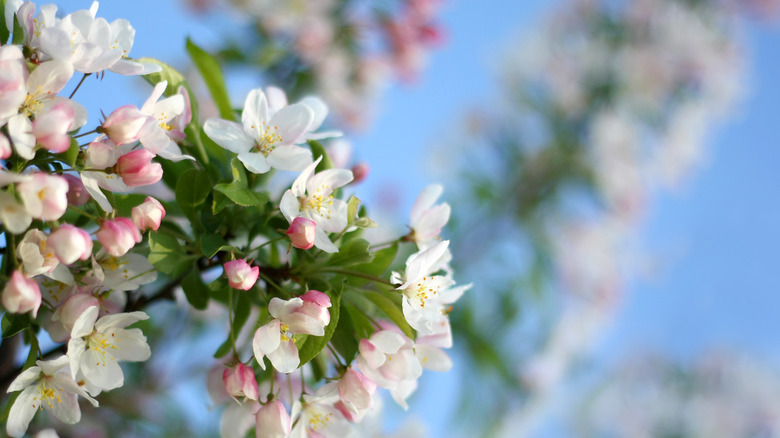
14. Snowdrift Crabapple (Malus ‘Snowdrift’)
Snowdrift is a four-season crowd-pleaser: pink buds, clouds of white bloom, and orange-red fruits that often persist into winter. Give it sun and well-drained soil for best performance.
- Bloom Season: Spring
- USDA Zones: 4–8
- Light: Full sun
- Soil: Fertile, well-drained
- Size: Up to 20 feet (similar spread)
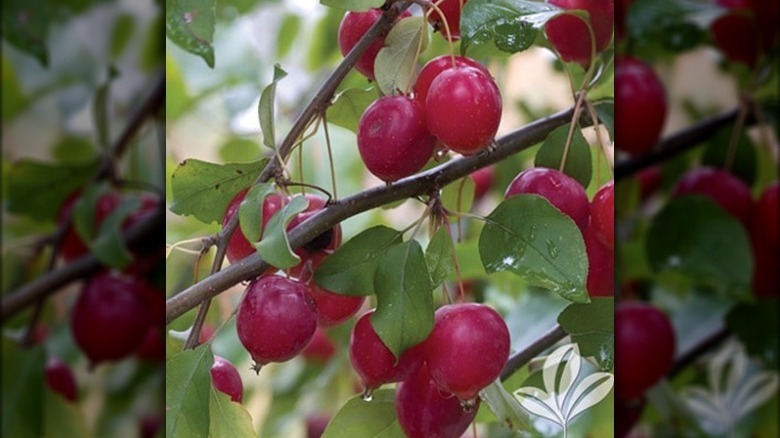
15. Callaway Crabapple (Malus x ‘Callaway’)
Callaway opens pink-tinged buds into white flowers, then sets small, dark red crabapples. It’s adaptable and disease resistant overall, though I prune annually to keep air flowing.
- Bloom Season: Early spring
- USDA Zones: 4b–8
- Light: Full sun
- Soil: Well-drained; loam or clay; acidic or alkaline
- Size: Up to 25 feet (similar spread)

16. Louisa Crabapple (Malus ‘Louisa’)
Louisa has gracefully bowed branches smothered in soft pink bloom, followed by yellow-to-orange fruits that may hang into winter. It stays neat with a late-winter shape-up.
- Bloom Season: Early spring
- USDA Zones: 4–8
- Light: Full sun
- Soil: Clay, loam, sand, or chalk; well-drained
- Size: Up to 15 feet
Cascading Beauty And Spring Drama

17. White Cascade Crabapple (Malus ‘Cascole’)
White Cascade is a weeping ornamental that puts on a late-spring snowstorm of bloom, then sets small yellow fruit. Water regularly the first year; a watering moat helps young trees.
- Bloom Season: Mid to late spring
- USDA Zones: 4–8
- Light: Partial to full sun
- Soil: Sand or clay; keep evenly moist
- Size: About 12 feet

18. Coralburst Crabapple (Malus ‘Coralcole’)
Coralburst grows slowly and stays manageable, topping out around 10–15 feet. Rose-pink flowers lead to bronze fruits that shimmer against dark green leaves.
- Bloom Season: Spring
- USDA Zones: 3–8
- Light: Full sun
- Soil: Any, provided drainage is good and watering is regular
- Size: About 15 feet
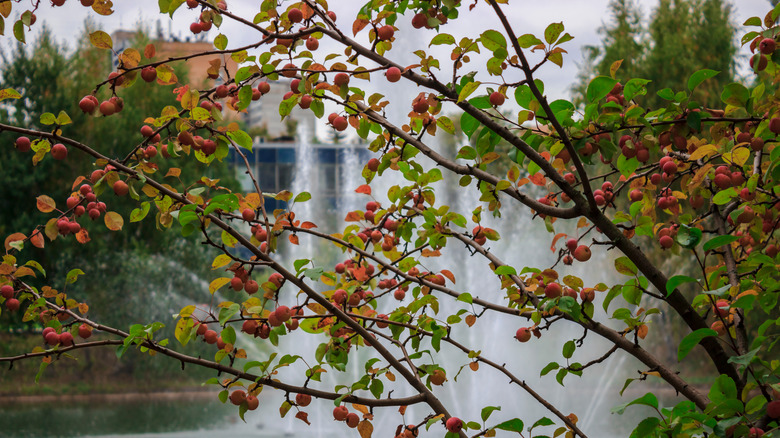
19. Adams Crabapple (Malus ‘Adams’)
Adams has standout pink blossoms, glossy red fruits, and green-red foliage that looks good most of the year. It’s one of the taller forms—prune in late winter to control spread.
- Bloom Season: Spring
- USDA Zones: 4–8
- Light: Full sun
- Soil: Acidic loam preferred
- Size: Up to 20 feet

20. Indian Magic Crabapple (Malus × ‘Indian Magic’)
Indian Magic is a four-season ornamental with deep pink-violet blooms, vivid red fruit, and foliage that turns red in fall. The slightly rounded crown reads as elegant in all seasons.
- Bloom Season: Mid-spring
- USDA Zones: Sunset 1–10, 14–21 (cold-to-warm range)
- Light: Full sun; drought tolerant once established
- Soil: Clay, chalk, loam, or sand; well-draining
- Size: Up to ~15 feet
If you’re still narrowing down varieties, Better Homes & Gardens has a helpful overview of the best crabapples for your yard based on size, bloom, and landscape use.
Planting, Care, And Quick-Reference Summary
Sun, Soil, And Space: The Big Three
I always start with the basics: sun, soil, and space. Full sun fuels better bloom and fruit, well-drained soil prevents root issues, and a realistic look at height/spread keeps you from pruning regrets later.
- Sun: Aim for 6–8 hours of direct light for best flowering and fruiting.
- Soil: Most crabapples adapt; they prefer moist, well-drained loam. Avoid soggy spots.
- Space: Check mature height and spread on the tag, then measure your site before buying.
- Airflow: Site trees with breeze access to reduce foliar disease.
For a more detailed comparison of bloom color, growth habit, and site conditions, Gardenia’s guide on how to choose the right flowering crabapple for your garden is a useful reference.
Planting And Pruning Basics
Plant at the same depth as the nursery container, spreading roots outward and watering thoroughly. If you’re planning spring or fall planting, this guide on when to plant cherry trees offers seasonal timing tips that also apply well to crabapples.
I mulch 2–3 inches deep, pulling mulch back from the trunk to prevent rot. For best results, especially in changing weather, this guide on the best time to mulch explains when mulching protects roots and when it should be avoided.
- Watering: Keep evenly moist the first season; then water deeply during dry spells.
- Feeding: In spring, a light application of balanced, slow-release fertilizer is plenty.
- Pruning: Late winter is ideal. Remove crossing, dead, or inward-growing wood to open the canopy.
- Monitoring: Inspect leaves and fruit midseason; catch issues early for easy fixes.
Smart Gardener’s Checklist
- 1. Match Variety To Goal: Compact for patios, upright for narrow spaces, heavy-fruiting for preserves.
- 2. Confirm Sun And Drainage: Full sun plus well-drained soil equals fewer problems and more flowers.
- 3. Measure Twice, Plant Once: Verify mature spread against pathways, fences, and power lines.
- 4. Plan A Winter Prune: Book a yearly 30-minute cleanup for shape and airflow.
- 5. Mulch Smart: 2–3 inches over the root zone, not against the trunk.
- 6. Water Deeply: Especially the first season; then as needed during drought.
- 7. Think Wildlife: Choose fruiting varieties if you want birds and winter color.
Quick-Reference Table
| Goal | Great Picks | Typical Size | Sun & Soil |
|---|---|---|---|
| Small Spaces / Patios | Lollipop, Cinderella Dwarf, Pink Princess, Sargent Tina | 6–8 ft | Full sun; moist, well-drained, slightly acidic |
| Narrow, Upright Form | Adirondack, Velvet Pillar, Pink Spires, Prairifire | 15–20+ ft | Full sun; adaptable, avoid soggy sites |
| Best For Preserves | Centennial, Hoppa, Whitney, Harvest Gold | 10–25 ft | Full sun; well-drained loam preferred |
| Four-Season Landscape | Red Jewel, Snowdrift, Callaway, Louisa | 15–25 ft | Full sun; fertile, well-drained |
| Weeping / Cascading | White Cascade, Coralburst, Adams, Indian Magic | 12–20 ft | Full sun; keep evenly moist, good drainage |
Wrapping Up: Smart gardening is about clarity, not luck. When you pick the right crabapple for your site and goals—and follow a simple care routine—you’ll enjoy reliable bloom, fruit, color, and structure for years.
If you found this guide helpful, I’d love to hear what you’re planting next. Drop a comment on Plant Care Dairy and share your favorite crabapple variety or a photo from your yard!
Disclaimer: This article is for educational purposes only. Always check local growing conditions, pest/disease pressures, and cultivar availability in your region before planting. Consult a licensed arborist for site-specific advice.