

If your snake plant seems stuck at the same height year after year, you’re not alone. This guide cuts through the mixed messages and gives you actionable, science-backed steps to boost growth without sacrificing the plant’s easy-care charm.By the end, you’ll know exactly how to match light, water, soil, and timing to your plant’s natural rhythm. I’ll show you how to set your snake plant up for steady, noticeable growth using simple routines you can maintain all year.
When I first brought home a small pot of snake plant (Dracaena trifasciata), I parked it in a dim hallway and wondered why it never grew. Once I moved it to a bright window, repotted with a fast-draining mix, and adjusted watering, it nearly doubled in size in one season. You can do the same with a few targeted changes.
Why Snake Plants Stall And How To Fix It
Low Light Myths
Snake plants are often labeled “low light” and “indestructible,” but that doesn’t mean they grow in the dark. For a comprehensive guide on speeding up snake plant growth, check out this detailed guide from Abana Homes. They tolerate dim conditions; they don’t thrive in them. For faster growth, they need abundant light.
These plants are native to West and West Central Africa, where they bask in strong sun and dry air. A reliable rule I use is: put your snake plant where it can “see the sky.” South-facing windows are ideal, and bright east or west exposures also work with a few hours of direct sun.
Temperature And Humidity Reality
Snake plants can handle cooler rooms and low humidity, but their growth slows in cold, dim conditions. Aim for 65–85°F (18–29°C) for active growth and avoid drafts from AC vents or leaky windows.
Humidity doesn’t need to be high, but consistency helps. A stable, warm spot with strong light beats any humidifier for this species.
Pot Size And Root-Bound Balance
Snake plants don’t mind being a bit root-bound, but an overly cramped pot restricts growth. If roots ring the pot or bulge the sides, it’s time to size up. Go up just 1–2 inches in diameter with a pot that has ample drainage holes. Oversized pots hold too much moisture, slowing roots and risking rot.
Troubleshooting Patterns
- Leaves won’t get taller: Check light first. Move to a brighter window where the plant gets several hours of sun. If you want to explore whether your snake plant can thrive outdoors, check our guide on snake plants outdoors.
- Soft, mushy bases: You’re watering too often or using dense soil. Switch to a fast-draining mix and let it fully dry before watering again.
- Wrinkled or curling leaves: The plant is staying dry for too long in warm weather. Water thoroughly, then drain, when the mix is bone dry.
- Faded or weak variegation: Increase light exposure gradually to restore color and energy.
7 Proven Steps To Turbocharge Growth

The 7-Step Plan
- Give It Genuine Sun: Place your plant in a south-facing or very bright east/west window with 2–4 hours of direct sun. If it can “see the sky,” it can grow faster.
- Use Fast-Draining Soil: Mix cactus/succulent mix with perlite or pumice (about 2:1). This mimics the airy, rocky conditions that snake plants love.
- Water Deeply, Then Drain: When it’s time, soak the soil thoroughly until water exits the drain holes, then empty the saucer. Always pour water onto the soil, not the leaves.
- Let It Dry Completely: Check that the entire mix is dry before watering again. In warm months, this might be every 10–21 days; in winter, it could be 3–6 weeks.
- Feed Lightly In Season: During spring and summer, apply a dilute, balanced fertilizer monthly or a slow-release pellet at label rates. Skip feeding in winter.
- Repot When Crowded: Size up 1–2 inches and refresh the mix every 18–24 months, or divide healthy clumps to keep vigor high.
- Keep It Warm And Clean: Maintain 65–85°F, dust leaves monthly to maximize light capture, and rotate the pot a quarter turn weekly for even growth.
Common Mistakes To Avoid
- Nibbling water “sips” too often: Frequent tiny drinks invite rot. Thorough soak-and-drain is safer because the soil dries evenly.
- Overpotting: A huge pot slows drying and growth. Choose a pot just slightly larger than the root ball.
- Dim corners: “Surviving” isn’t “thriving.” Move to brighter light to trigger new leaf production. For more troubleshooting tips when your snake plant isn’t growing, see this Stylist article.
- Heavy, peat-only soil: Dense mixes suffocate roots. Add perlite/pumice or switch to a cactus blend.
A Quick Weekly Routine
- Light check: Confirm the plant gets bright light most of the day; pull it closer to the window if needed.
- Dryness test: Use a moisture meter or finger test down 2–3 inches; water only if fully dry.
- Leaf clean-up: Wipe dust with a damp cloth to improve photosynthesis.
- Rotate: Turn the pot 90° to keep new growth upright and balanced.
Light: Give It Real Sun
Best Windows And Light Duration
For noticeable growth, aim for bright, direct-to-bright indirect light. A south-facing window usually delivers the strongest, most consistent light indoors. The Spruce provides expert tips on snake plant light requirements and indoor placement for optimal growth.
If south isn’t available, use an east window for gentle morning sun or a west window for stronger afternoon rays. Keep the plant within a few feet of the glass to capture usable intensity.
Signs Of Too Little Or Too Much Light
- Too little: Slower growth, elongated leaves, fading variegation, and soil staying wet too long.
- Too much too fast: Bleached patches or crispy tips after a sudden move from shade to sun. Acclimate over 1–2 weeks.
- Just right: Firm leaves, steady new shoots, and soil that dries predictably between waterings.
Supplemental Light Options
If windows are limited, LED grow lights work well. Position full-spectrum LEDs about 12–18 inches above the leaves for 10–12 hours daily.
Use a timer for consistency. Even a modest increase in light intensity can translate to faster leaf production and sturdier growth.
Water Right: Soak, Drain, And Dry
How Often To Water By Season
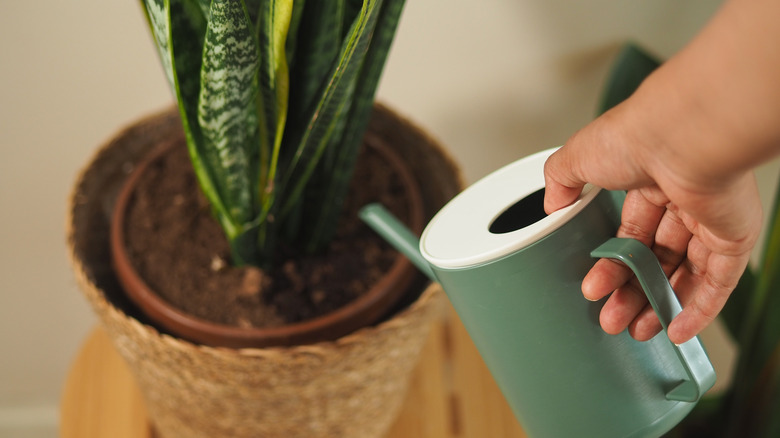
Snake plants are sensitive to overwatering, but they still need a full drink when dry. In warm, bright months, you may water every 10–21 days; in winter, every 3–6 weeks is common.
Always check the root zone—if the potting mix feels cool and dry top-to-bottom, it’s time. Water the soil directly until it runs from the drain holes, then empty the saucer.
Soil And Potting Mix For Fast Growth
The right medium makes or breaks your watering success. Choose a well-draining cactus/succulent mix, or blend your own with 2 parts cactus mix and 1 part perlite or pumice.
This structure prevents waterlogging, helps roots breathe, and lets you water thoroughly without fear of rot—critical for faster growth.
Drainage And Pots That Prevent Rot
- Always use drainage holes: No exceptions. Excess water must escape freely.
- Empty outer pots and saucers: Don’t let the plant sit in runoff—discard it after each watering.
- Choose the right material: Terra-cotta speeds drying; plastic retains moisture longer. Match the pot to your home’s conditions.
- Water the soil, not the leaves: Keep crowns dry to avoid rot at the leaf bases.
Nutrition, Repotting, And Year-Round Care
Fertilizer Timing And Type
Feed lightly during the active season. I use a dilute, balanced liquid fertilizer (for example, 1/4 strength 10-10-10 or 3-1-2 profile) monthly from spring through late summer. Learn why your snake plant might not be blooming and how to fix it in this internal guide.
Alternatively, apply a slow-release product at label rates. Avoid fertilizing in winter when plants naturally slow down.
Repotting Without Shock
- Timing: Repot every 18–24 months or when roots circle densely and growth stalls.
- Right size: Move up 1–2 inches in diameter with a pot that has strong drainage.
- Refresh the mix: Use a fast-draining blend; tease roots gently and remove any mushy tissue.
- Option to divide: Cut clumps between rhizomes with a clean blade to create new plants and rejuvenate growth.
Winter Slowdown Versus Summer Push
In winter, growth naturally slows. Keep the plant warmer, maximize light, and stretch the time between waterings; do not force growth with fertilizer.
In spring and summer, increase light exposure, resume feeding, and maintain a steady soak-and-dry watering rhythm to encourage new leaves.
Wrap-Up And Fast-Growth Checklist
Faster snake plant growth comes from pairing bright light with a soak-then-dry watering habit and fast-draining soil. The goal isn’t coddling—it’s matching your plant’s indoor setup to the conditions it’s built for.
Smart gardening means observing, adjusting, and repeating. When you align light, water, and timing with intention, your snake plant will repay you with sturdy, taller leaves season after season.
Quick Summary Table
| Key Factor | What To Do | Quick Check |
|---|---|---|
| Light | South-facing or very bright east/west window; 2–4 hours direct sun | Does the plant “see the sky” and cast a shadow at midday? |
| Water | Soak thoroughly, drain fully, then let mix dry completely | Soil is dry top-to-bottom before rewatering |
| Soil | Cactus mix + perlite/pumice (about 2:1) | Water runs through quickly; pot feels lighter as it dries |
| Fertilizer | Light, monthly feeding in spring/summer; none in winter | New growth appears in warm months; no tip burn |
| Pot/Repot | Size up 1–2 inches; strong drainage; refresh mix | Roots not crowding; no standing water in saucer |
| Temperature | Keep 65–85°F; avoid drafts | Leaves firm and upright without cold damage |
Actionable Checklist
- Relocate to brighter light: South-facing if possible, or the brightest window you have.
- Replant in fast-draining mix: Cactus blend plus perlite/pumice for airflow and quick drying. You can also discover how to fill empty corners with big houseplants to complement your snake plant and brighten indoor spaces.
- Adopt soak-then-dry watering: Water deeply, drain fully, and wait for the mix to dry completely.
- Feed lightly in season: Monthly, dilute fertilizer from spring through late summer; skip winter feeding.
- Repot or divide as needed: Upgrade pot size by 1–2 inches or split healthy clumps.
- Keep it warm and clean: 65–85°F, dust leaves, and rotate weekly.
If you found this guide helpful, I’d love to hear what’s working for your plant. Drop a comment on Plant Care Dairy and share your setup, wins, and questions—we’re all learning together.
Disclaimer: The information in this article is for educational purposes only. Always consider your home’s specific conditions and follow product labels. When in doubt about pests, disease, or safety, consult a local horticulture professional.