

Want the citrus joy of oranges without living in a subtropical climate? Here’s the truth: you can grow a compact calamondin orange tree indoors and enjoy blossoms and bright fruit nearly year-round—if you match its needs for light, heat, water, and feeding. In this guide, I’ll cut through the conflicting advice and give you a clear plan you can follow today.
By the end, you’ll know exactly how to place your tree for 8–12 hours of light, keep it warm enough to make sweet-tart fruit, water and feed it without guesswork, and even hand-pollinate with a tiny paintbrush. I’ll also show you how to troubleshoot leaf drop, fruit drop, and pests so you can grow with confidence.
Why Calamondin Belongs Indoors
What Makes Calamondin Different
The calamondin orange (X Citrofortunella microcarpa) is a compact citrus that thrives in containers, making it perfect for apartments, sunrooms, or small homes. It’s believed to be a cross between a kumquat and a mandarin, combining vigorous fruiting with a tidy indoor size.
Kept as an indoor tree, calamondin typically tops out at 3 to 5 feet. For a deeper dive into how to care for a calamondin tree indoors and maximize its fruiting potential, check out this detailed guide from Our Little Chateau. That means you can position it near a bright window and still move it for seasonal light without wrestling a giant tub.
Flavor and Kitchen Uses
Don’t expect a sweet dessert orange. Calamondin fruit are 1–2 inches across with a zesty, sour bite. While they’re too tart to snack on fresh, they’re phenomenal in the kitchen.
Use them as a stand-in for lemons or limes, shake them into cocktails, or simmer them into an aromatic marmalade. You’ll love the way their fragrance fills your kitchen when you zest or slice them.
Size, Growth, and Fruiting Habit
Once established, calamondin can flower and fruit almost year-round indoors. It’s normal to see tiny green fruit, fragrant white blossoms, and ripe orange globes at the same time.
This heavy fruiting is why consistent light, warmth, and nutrition are non-negotiable. When the plant has what it needs, it rewards you with an abundance of color and aroma.
A Quick Personal Note From My Window
I tucked a 3-foot calamondin beside a sunny south window one winter because I missed garden color. Within weeks, the buds opened and the room smelled like honeyed citrus. I hand-pollinated a few flowers with a paintbrush, and a month later a dozen tiny fruits were hanging like ornaments.
That’s when I realized: with the right routine, indoor citrus isn’t fussy—it’s predictable.
Light and Heat: Your Non-Negotiables
Target Temperatures for Sugar Production
Citrus need warmth to build sugars. Aim for 65°F (18°C) or warmer during the day and keep nights above 50°F (10°C). Dips below 50°F stress the plant and can stall fruit or cause leaf yellowing.
If your windows are drafty, pull the pot 6–12 inches away at night or use an insulating curtain. Consistent warm days and mild nights make the difference between flowers that fail and fruit that ripens.
Daily Light Targets and Placement
Indoors, think like a greenhouse. Calamondin perform best with 8–12 hours of bright light daily. A south or southwest window is ideal, with an unobstructed view of the sky. Patch Plants provides a complete guide to calamondin care, including tips on optimizing indoor light and temperature for year-round flowering.
Rotate the pot a quarter turn weekly to keep growth even, and avoid hot, reflected afternoon glare through unshaded west glass in summer. Light equals energy—more light means more fruit.
Supplementing With Grow Lights in Winter
Most homes can’t deliver 8–12 bright hours in winter, so add a full-spectrum LED grow light set 12–18 inches above the canopy. Run it for 10–14 hours a day on a timer.
Look for fixtures that spread light wider than the pot to cover new growth. A simple bar or panel light is usually enough for a single calamondin.
Humidity and Airflow Balance
Calamondin appreciate moderate humidity, especially when flushing new growth in spring and summer. I lightly mist once daily during active growth and ensure the room has gentle airflow.
A small fan on low, pointed away from the plant, reduces fungal issues and helps pollination without drying the leaves.
Watering, Feeding, and Pollination Basics
When and How to Water Thoroughly
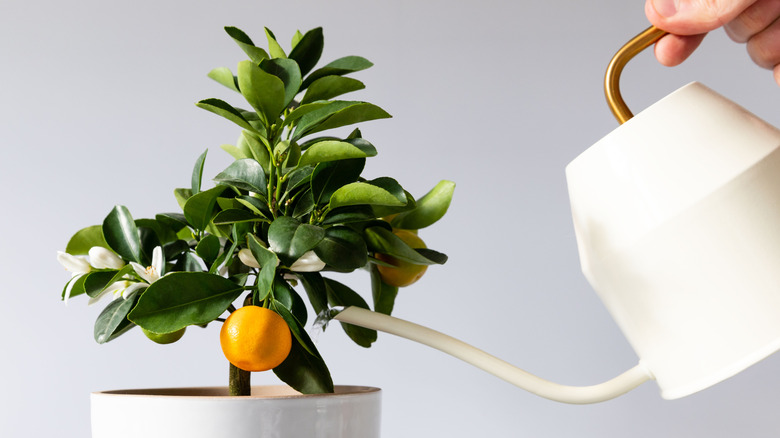
Watering is simple when you’re consistent. When the top inch of soil feels dry, water slowly until excess drains from the bottom of the pot. Empty saucers after 10–15 minutes.
During spring and summer growth, the tree uses more water, and light daily misting helps. If you’re interested in composting indoors to create nutrient-rich soil for your calamondin, check out our step-by-step guide. In winter, expect to water less often as growth slows.
Citrus-Specific Fertilizer Schedule
Use a citrus-formulated fertilizer that supplies nitrogen plus micronutrients like iron, zinc, and magnesium. Feed lightly but consistently through the year, easing up just a touch in mid-winter if growth pauses.
Slow-release granules or a diluted liquid every 2–4 weeks both work. The key is steady nutrition rather than feast-or-famine dosing.
Simple Hand-Pollination With a Brush
Indoors, pollinators aren’t always around. To set more fruit, hand-pollinate open flowers by gently brushing pollen from flower to flower with a small, clean paintbrush.
Do this in the morning when blossoms are fresh. You don’t need to touch every flower—just a sampling across the canopy increases your odds.
The 12 Essential Steps to Indoor Calamondin Success
Steps 1–4: Light and Heat Foundations
- Choose a True Dwarf Calamondin: Look for a compact, grafted tree suitable for containers so it stays in the 3–5 foot range indoors.
- Place in Full Sun First: Give it a south or southwest window with 8–12 hours of bright light as your baseline.
- Maintain Warm Days, Mild Nights: Target 65°F days and keep nights above 50°F to support sugar production and steady growth.
- Add a Grow Light in Winter: Use a full-spectrum LED 12–18 inches above the canopy for 10–14 hours on a timer when days are short.
Steps 5–8: Water, Feeding, and Medium
- Water Deeply, Then Wait: Soak the root ball until water drains, then water again only when the top inch of soil is dry.
- Mist During Active Growth: Lightly mist daily in spring and summer flushes to support tender leaves and flowers.
- Feed Like Citrus, Not Houseplants: Use a citrus fertilizer with micronutrients, applied lightly and regularly all year.
- Use a Fast-Draining Mix: Pot in a coarse, well-aerated citrus or cactus mix with added perlite to avoid soggy roots.
Some traditional gardening tips passed down from grandparents can also help you care for indoor plants like calamondin more effectively.
Steps 9–12: Training, Pollination, and Fruiting
- Prune Lightly for Shape: Tip back leggy stems after harvests to keep a compact canopy and improve light penetration.
- Hand-Pollinate Blossoms: Gently transfer pollen with a clean paintbrush when flowers open to boost fruit set.
- Rotate and Support: Turn the pot a quarter turn weekly and stake heavy branches that are weighed down by fruit.
- Expect Some Fruit Drop: Container trees shed excess fruit they can’t support—thin clusters to 1–2 fruits if branches are overloaded.
Troubleshooting and Pro Tips
Signs of Cold Stress or Low Light
- Dull, Limp Leaves: Often caused by insufficient light; increase hours with a grow light and clean dusty leaves to improve photosynthesis.
- Curling or Yellowing Near Windows: Nighttime drafts or glass that’s cold to the touch can chill foliage; move the pot slightly inward at night.
- Slow or No Flowering: Light is usually the culprit; aim for 8–12 bright hours and verify your fertilizer includes micronutrients.
Similar to hand-pollinating your calamondin flowers, indoor cacti like Schlumbergera also require specific care to bloom each year.
Why Fruit Drops and What to Do
- Natural Self-Thinning: It’s normal for calamondin to shed some immature fruit, especially on container trees.
- Water Stress: Long dry spells followed by heavy soaking can trigger drop; stick to the “top inch dry” rule.
- Weak Pollination: Hand-pollinate a few flowers on each branch to increase your chances of fruit holding.
Pests to Watch Indoors
- Spider Mites: Look for stippled leaves and fine webbing; rinse foliage in the shower and increase humidity.
- Scale and Mealybugs: Check stems and leaf bases; dab with alcohol on a cotton swab or use horticultural oil per label.
- Fungus Gnats: Let the surface dry between waterings and consider yellow sticky traps until populations drop.
For step-by-step instructions on growing citrus trees indoors, including pest management and container selection, see this practical guide from Royal City Nursery.
Container Size, Soil, and Repotting Tips
- Right-Sized Pot: Start in a container just 1–2 inches wider than the root ball; upsize gradually to prevent waterlogging.
- Drainage Is Non-Negotiable: Ensure large holes and a saucer you can empty; avoid decorative pots without drainage.
- Refresh the Mix: Repot every 1–2 years in late winter using a fresh, fast-draining citrus blend with perlite or pine bark.
Smart Gardener’s Summary and Next Steps
Quick Reference Table
| Care Factor | Target | Notes |
|---|---|---|
| Light | 8–12 hours/day | South/southwest window; add LED grow light in winter |
| Temperature | 65°F+ days; >50°F nights | Protect from drafts; pull back from cold glass at night |
| Water | When top 1 inch is dry | Water thoroughly; empty saucer after 10–15 minutes |
| Feeding | Citrus fertilizer year-round | Include micronutrients; steady, light applications |
| Pollination | Hand-pollinate as needed | Use a clean brush on morning blossoms |
| Pruning | Light, post-harvest | Tip back leggy growth; keep canopy open to light |
Final Checklist
- Set the Stage: South or southwest light, 65°F+ days, above 50°F nights.
- Boost in Winter: Add a full-spectrum LED grow light on a timer for 10–14 hours.
- Water on a Rhythm: Top inch dry, then soak; never let roots stew in a full saucer.
- Feed for Citrus: Use citrus fertilizer with micronutrients on a steady schedule.
- Pollinate for Fruit: Brush pollen from flower to flower when blooms open.
- Expect Some Drop: Normal self-thinning happens—thin heavy clusters to help branches.
The Smart-Gardening Mindset
Smart gardening isn’t about fussing—it’s about consistency. Give calamondin enough light and warmth, water deeply but not constantly, and feed modestly all year, and the plant returns the favor with flowers and fruit on repeat.
Keep notes on light hours, watering intervals, and feeding dates. When you see a pattern, you can predict problems before they start and grow with confidence.
Join the Conversation
I’d love to hear how your indoor citrus journey is going. Share your questions or wins in the comments on Plant Care Dairy—your experiences help other growers, too!
Disclaimer: The information in this article is for educational purposes only and is not a substitute for professional horticultural or local extension advice. Always consider your home’s unique conditions and follow product labels for any fertilizers or treatments.