

If choosing a hydrangea feels confusing, you’re not alone. I’ve cared for dozens of cultivars over the years and learned that the secret is matching type, light, soil, and pruning to your space. This guide cuts through the noise with practical, real-world advice and 20 specific, proven varieties you can plant with confidence.
By the end, you’ll know how to pair your USDA zone and sun exposure with the right hydrangea type, how soil pH nudges flowers toward blue or pink, and what pruning each group prefers. I’ll also show you how to layer choices for a season-spanning color show—without high maintenance.
Quick personal note: when I first planted hydrangeas professionally, I treated them all the same. Big mistake. A panicle loved the full sun corner while a mophead sulked two beds over. Once I grouped by type and set expectations for color and care, everything clicked—and the blooms followed.
The 20 Varieties At-A-Glance
- ‘Nikko Blue’ — Classic blue mophead for acidic soils; reliable in protected Zones 6–9.
- ‘Twist-n-Shout’ — Cold-hardy lacecap from Endless Summer; blooms pink to blue, Zones 4–9.
- ‘Annabelle’ — Smooth hydrangea with giant white globes for shade, Zones 3–8.
- ‘Bloomstruck’ — Vivid color shifts on a reblooming macrophylla; light prune only, Zones 4–9.
- ‘Mini Mauvette’ — Compact smooth hydrangea with mauve-pink heads, Zones 4–9.
- ‘Pinky Winky’ — Huge panicles turn pink in fall; leave for winter interest, Zones 3–9.
- ‘Penny Mac’ — Easygoing mophead that blooms all summer, Zones 5–9.
- ‘Vanilla Strawberry’ — Panicle stunner shifting white to bright pink, Zones 4–8.
- ‘Ruby Slippers’ — Compact oakleaf with brilliant fall foliage, Zones 5–9.
- ‘Let’s Dance Lovable’ — Color-packed rebloomer with burgundy fall leaves, Zones 4–9.
- ‘Limelight’ — Big, tough panicle with lime-to-burgundy show, Zones 3–9.
- ‘Glowing Embers’ — Shade-friendly mophead with raspberry-to-burgundy shifts, Zones 5–9.
- ‘Snowflake’ — Double-flowered oakleaf; the definition of three-season beauty, Zones 5–9.
- ‘Blue Enchantress’ — Dark stems, pale blue mopheads; protect from winter winds, Zones 4–9.
- ‘Strawberry Sundae’ — Compact panicle; cream to raspberry red, Zones 4–8.
- ‘Love’ — Compact, double-blossomed lavender-pink mophead, Zones 4–9.
- ‘Ayesha’ — Fragrant, cupped florets in lilac-like clusters, Zone 6+.
- ‘Mystical Flame’ — Small panicle with a white-to-rose finale, Zones 4–9.
- ‘Little Lime’ — Downsized ‘Limelight’ for tight spaces, Zones 3–9.
- ‘Magical Crimson’ — Color-changer that swings green to cobalt or crimson, Zone 6+.
Broadleaf Mopheads That Paint the Garden Blue and Pink
Macrophylla hydrangeas (mopheads) are the color-changers most people crave. They reward partial shade and consistent moisture, and many will shift between blue in acidic soil and pink in alkaline soil. A bit of wind protection helps winter buds survive in cooler climates.
‘Nikko Blue’

This beloved classic grows about 6 feet tall and wide and shines in Zones 6–9. Buds open light green with blue tints, then deepen to periwinkle-to-cobalt at summer peak.
- Light: Morning sun with afternoon shade is ideal.
- Soil pH: Add aluminum sulfate, pine needles, peat, or coffee grounds for truer blue; lime for pinker tones.
- Winter care: Site near a wall or fence for wind protection; mulch with shredded bark or leaves.
- Pruning: Minimal; remove spent heads in early spring when buds swell.
‘Penny Mac’

‘Penny Mac’ is an easy, floriferous mophead that grows 4–6 feet and blooms repeatedly all summer in Zones 5–9. Expect blue, purple, or pink on the same shrub depending on soil pH.
- Light: Partial shade keeps blooms vivid and leaves lush.
- Soil pH: Acid = bluer; alkaline = pinker. Adjust gradually to avoid stress.
- Water: Even moisture and a 2–3 inch pine bark mulch layer help steady performance.
- Pruning: Light deadheading only; avoid hard cuts that remove flower buds.
‘Let’s Dance Lovable’
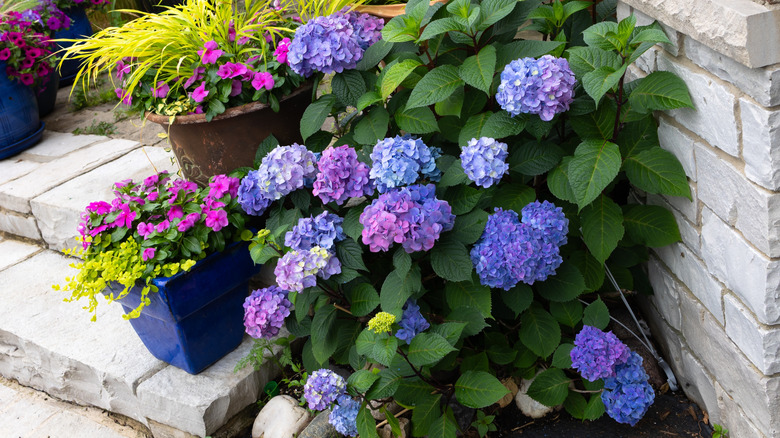
From the ‘Let’s Dance’ series, ‘Lovable’ brings reblooming color in pink, lavender, blue, and purple with a tasteful burgundy fall foliage show. It’s compact and cold-hardy in Zones 4–9.
- Light: Morning sun or bright dappled light.
- Soil pH: Tweak pH for pink or blue; expect multi-tonal displays.
- Pruning: Minimal—remove old blooms in spring; do not shear in fall.
- Use it: Front-of-border or foundation accent where reblooming shines.
‘Blue Enchantress’

Trademarked by Monrovia, ‘Blue Enchantress’ pairs dark, wine-red stems with pale blue mopheads touched with cream and green. It’s cold-hardy in Zones 4–9, but appreciate a wind-sheltered site.
- Light: Partial sun; avoid harsh afternoon exposure.
- Soil pH: Alkaline soil nudges blooms pink; acid keeps them blue.
- Winter prep: After the first hard frost, mulch lightly to protect buds.
- Design tip: Those dark stems are dramatic against light siding or stone.
Lacecaps And Unique Blooms That Turn Heads
If you crave texture and conversation-starting flowers, look to lacecaps and distinctive bloom forms. These selections deliver refined structure, reblooming potential, and in some cases, fragrance.
‘Twist-n-Shout’

An Endless Summer lacecap that’s notably cold-hardy in Zones 4–9. Expect delicate outer florets surrounding a cloud of tiny blooms in pink, purple, or blue depending on pH.
- Light: Partial shade; morning sun boosts flower count.
- Winter care: Mulch and avoid wind exposure in colder zones.
- Color play: Default leans pink with a whisper of lavender.
‘Love’

Compact and enchanting, ‘Love’ features double, pale lavender-pink blooms on a tidy plant roughly 2 by 3 feet. It’s adaptable in Zones 4–9.
- Light: Partial shade to full sun with steady moisture.
- Soil: Moist, well-drained soil keeps double blooms pristine.
- Use it: Front of border, containers, or along a path where details shine.
If you enjoy container-friendly plants like this, our guide on how to grow foxtail fern in pots pairs well with compact hydrangeas for patio displays.
‘Ayesha’

‘Ayesha’ is unusual: cupped, lilac-like florets and a light fragrance. It often shows pink, blue, and purple on one plant. Best in Zone 6+ with partial sun.
- Light: Bright morning sun; protect from hot afternoons.
- Soil pH: Expect mixed pastels as pH and aluminum availability vary.
- Tip: Grow near patios and seating where fragrance is appreciated.
‘Magical Crimson’

Part of the brilliantly colorful ‘Magical’ line, ‘Magical Crimson’ shifts through lime green, dusky blue or red, to cobalt or bright crimson before fading to green again. Compact and best with some winter protection in Zone 6+.
- Light: Partial sun for deeper saturation and sturdier stems.
- Soil pH: Manipulate pH for a wide palette of color effects.
- Design: A knockout in cottage borders or color-themed beds.
Cold-Climate Winners And Low-Maintenance Workhorses
When you need reliability, these varieties take imperfect soil, partial shade, and winter swings in stride. If you garden in challenging climates, Dr. Snell Nursery’s Hydrangea 101 on choosing the right hydrangea reinforces which types truly thrive with less fuss. They’re terrific for building a backbone of blooms with minimal pruning.
‘Annabelle’

A smooth hydrangea (H. arborescens) loved for huge, creamy-white flowers that hold for weeks. Thrives in partial shade and cold-hardy in Zones 3–8.
- Pruning: Trim spent heads in late winter or leave for winter interest.
- Soil: Adds compost in fall to improve drainage and vigor.
- Note: White flowers age to tan rather than pink, still charming late-season.
‘Mini Mauvette’

A newer arborescens introduction, hardy to Zone 4 and content in partial shade. Compact at about 4 feet, it packs lush mauve-pink heads with zero fuss.
- Maintenance: Deadhead as blooms fade; otherwise low care.
- Use it: Along paths and mixed borders where steady color is welcome.
- Value: A small start quickly becomes a showy, durable clump.
‘Bloomstruck’

Some Endless Summer types can be finicky in colder spots, but ‘Bloomstruck’ has been a standout for me in Zone 5b–6a. The color parade runs from pale green-blue to violet, then deep burgundy into late fall.
- Pruning: Give it a light spring tidy only; remove old blooms as new buds swell.
- Light: Partial sun is perfect; avoid baking exposures.
- Soil: Keep evenly moist and mulch to protect roots.
‘Little Lime’

A scaled-down cousin of ‘Limelight’, this panicle hydrangea stays near 3–5 feet and thrives in Zones 3–9. Flowers shift from green-tinted cream to blush and dusty rose.
- Light: Partial to full sun; very forgiving and tough.
- Pruning: Remove dead heads in late fall or early spring; avoid heavy fall cuts.
- Use it: Small gardens, containers, and tight foundation spots.
Gardeners designing patios and balconies may also like our roundup of the best shrubs to grow in pots and containers, which includes other low-maintenance options.
Panicle Hydrangeas For Sun, Structure, And Three-Season Color
Panicle hydrangeas (H. paniculata) excel in colder climates and brighter exposures. Their cone-shaped blooms age beautifully, and dried heads add winter architecture.
‘Pinky Winky’

Don’t let the playful name fool you—this is a large, commanding shrub. Creamy summer panicles mature to rosy-to-hot pink. Hardy in Zones 3–9, with winter interest if you leave spent heads.
- Pruning: Tidy in early spring if desired; or leave for winter texture.
- Upgrade: ‘Pinky Winky Prime’ grows up to 9 feet for extra drama.
- Use it: As a specimen or anchor in mixed borders.
‘Vanilla Strawberry’

Also known as ‘Vanille Fraise’, this favorite grows to about 6–7 feet and shifts from warm white to clear, bright pink, often mixing white, pink, and burgundy at once. Cold-hardy in Zones 4–8.
- Light: Partial sun with consistent moisture for best flower size.
- Pruning: Remove old panicles in spring; avoid heavy fall cuts.
- Use it: Specimen or informal hedge for a dynamic summer-to-fall show.
‘Limelight’

A superstar panicle known for its giant heads and lime-to-cream-to-burgundy glow. Big and bold at 6–9 feet, cold-hardy in Zones 3–9, and very forgiving.
- Light: Partial to full sun; give it space to shine.
- Soil: Shredded pine bark mulch helps retain moisture and suppress weeds.
- Use it: Focal points, privacy screens, and back-of-border drama.
‘Strawberry Sundae’

A compact panicle at 4–5 feet that transitions from creamy white to pink and raspberry red. Easy care and gorgeous in partial shade to full sun.
- Pruning: Very minimal—just clean up old flowers late fall or spring.
- Design: Perfect for smaller beds where you want big-season color.
- Zones: Cold-hardy in Zones 4–8.
Foliage And Four-Season Appeal (Oakleaf And More)
Oakleaf hydrangeas (H. quercifolia) bring phenomenal fall color, and several compact cultivars fit into small spaces. I also pair them with shade-tolerant macrophylla cultivars to extend seasonal interest.
‘Ruby Slippers’
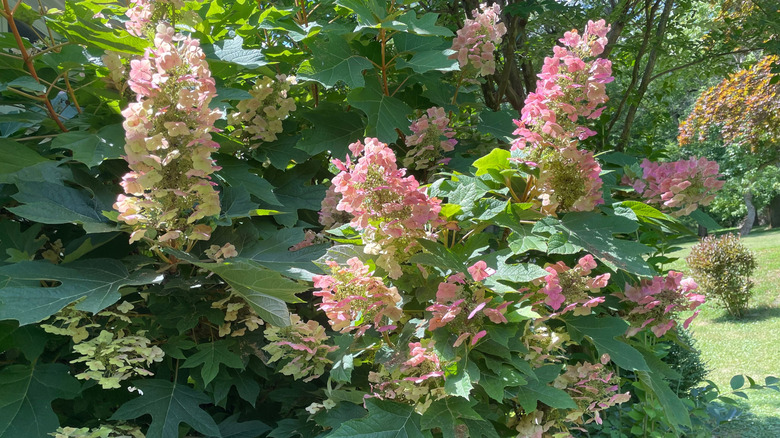
A compact oakleaf that’s easy to tuck into smaller gardens. Flowers progress from creamy white to rose-pink with hints of green, and the leaves blaze rust and burgundy in fall. Hardy in Zones 5–9.
- Light: Partial shade suits it well; drought-tolerant once established.
- Wildlife: Dense leaves offer shelter for songbirds.
- Pruning: Minimal; shape lightly after bloom if needed.
‘Snowflake’

A show-stopping oakleaf with double, layered flowers that open creamy white and pick up rosy tones late in the season. Medium-sized at 5–6 feet, hardy in Zones 5–9.
- Foliage: Leaves shift to deep red and wine in autumn.
- Use it: Feature near patios where those layered blooms wow up close.
- Care: Even moisture and mulch to protect shallow roots.
‘Glowing Embers’

Compact, shade-friendly, and bred to be drought-tolerant. Blooms start white with green hues and mature to raspberry pink and burgundy red; acid soil can nudge toward blue. Best in morning sun.
- Winter care: Mulch lightly to insulate roots; leave hollow stems until spring for pollinator habitat.
- Maintenance: Suckers can be divided to control spread and replant elsewhere.
- Zones: Performs in Zones 5–9.
‘Mystical Flame’

A compact panicle cultivar maturing around 3–4 feet. Flowers progress from white to pale pink to rose red, making it one of the most colorful small panicles. Hardy in Zones 4–9.
- Light: Full sun gives the richest reds by late summer.
- Use it: Plant in multiples for a low, flowering hedge along walks or fences.
- Pruning: Light spring cleanup is all it needs.
Smart Growing Basics You’ll Use With Every Hydrangea
- Match type to light: Mopheads prefer partial shade; panicles take more sun; oakleafs thrive in bright shade. For a visual breakdown of each group, Garden Design’s guide to hydrangea types helps connect plant form with placement.
- Mulch annually: A 2–3 inch layer of shredded bark or pine needles conserves moisture and protects roots. For a full step-by-step walkthrough from planting to seasonal care, see our complete guide on how to plant and care for hydrangeas.
- Feed the soil: Top-dress with compost or aged manure in fall to improve structure and drainage.
- Color control: Acidic soil (and available aluminum) favors blue; alkaline pushes pink.
- Right-time pruning: Many mopheads bloom on old wood—avoid hard fall cuts; panicles and smooth types can be pruned in late winter.
For gardeners who want a clear overview of types, pruning groups, and site selection, Hydrangea.com explains the basics well in its guide on choosing the right hydrangea for your garden.
Quick Reference Table
| Hydrangea Type | Best For | Typical Zones | Pruning Window |
|---|---|---|---|
| Broadleaf (Mophead/Lacecap) | Color-shifting blue/pink, partial shade, dramatic summer bloom | 4–9 (site/protection dependent) | Minimal; light spring deadheading; avoid heavy fall pruning |
| Panicle | Cold-hardy, sun-tolerant, strong structure, great winter interest | 3–9 (cultivar dependent) | Late winter to early spring cleanup |
| Smooth (H. arborescens) | Reliable in partial shade, big white or mauve heads, low maintenance | 3–9 (cultivar dependent) | Late winter; can cut back harder if needed |
| Oakleaf | Textured cones, brilliant fall foliage, woodland edges | 5–9 | Light shaping after bloom; otherwise minimal |
Final Thought: Smart gardeners match type + site + care. Pick your hydrangea for the light you have, tweak soil to nudge color, and prune at the right time. Do that, and these 20 standouts will reward you with a long, low-effort bloom season.
Tell us what you’re planting! Share your favorite cultivar or a photo of your garden in the comments at Plant Care Dairy—we love seeing what you grow.
Disclaimer: Gardening outcomes depend on local conditions. Always consider your site’s microclimate, verify cultivar hardiness for your region, and follow product labels when applying soil amendments or fertilizers.