

Why Swap Turf For Blooming Ground Covers
Environmental Wins That Add Up
- Less Water: Many ground covers are far more drought-tolerant than turfgrass once established.
- Fewer Inputs: Skip the regular fertilizers and herbicides—most options here need little to none.
- Healthier Soil: Some, like clover, are nitrogen-fixing, slowly enriching your soil over time.
To explore a wider variety of flowering ground covers and see how they perform in different landscapes, check out this detailed guide on flowering groundcovers.
Lower Maintenance, Lower Costs
- No Routine Mowing: Many stay under 6–12 inches, neat without weekly cuts.
- Weed Suppression: Dense mats shade out competitors, reducing weeding time.
- Erosion Control: Spreading roots help lock soil in place on slopes and paths.
Wildlife Support And Four-Season Beauty
- Pollinator Buffets: Nectar-rich blooms feed bees, butterflies, and other helpful insects. To maximize pollinator benefits in your yard with minimal work, explore our guide to creating a low-maintenance pollinator garden.
- Seasonal Pop: From spring carpets to fall fireworks, you get color for months.
- Texture And Fragrance: Plants like creeping thyme release scent when brushed—pure magic.
Preparation: Choose And Plan For Success
Match Sun And Heat
- Full Sun (6+ hours): Choose tough, sun-craving bloomers like sedum, portulaca, ice plant, creeping thyme, and blue daze.
- Partial Shade (3–6 hours): Consider clover or creeping phlox, which tolerate a bit less light.
- Heat Islands: Near driveways and stone paths, pick succulents and heat lovers that won’t scorch.
If you’re interested in native options that thrive in your region’s sun and soil conditions, this article on native ground covers provides excellent guidance.
Check Soil And Drainage
- Gravelly/Sandy: Plants like portulaca, sedum, ice plant, and blue daze thrive in lean, quick-draining soil. For rocky or well-drained sites, see our roundup of rock garden plants that can handle lean soils and add visual interest.
- Average Loam: Most plants here will be happy—amend compacted areas with compost for better rooting.
- Poor Or Thin Soil: Try sedum, creeping thyme, or snow-in-summer that don’t mind fewer nutrients.
Plan For Foot Traffic
- Light To Moderate Traffic: Creeping thyme, clover, and perennial peanut tolerate occasional steps.
- Paths And Edges: Combine stepping stones with low growers like thyme for traffic + fragrance.
- Play Areas: Keep high-impact zones mulched or paved; use ground covers in adjacent spaces.
Planting Steps And Early Care
- Clear And Loosen: Remove weeds, de-thatch remaining grass, and loosen the top 3–4 inches of soil.
- Amend As Needed: Mix in compost for poor soils; add grit/sand for plants that demand sharp drainage.
- Lay Out Plants: Space to mature widths—dense spacing (8–12 inches) fills faster, reduces weeding.
- Plant And Water In: Tuck crowns at soil level and water deeply to settle roots.
- Mulch Lightly: A thin organic mulch or fine gravel suppresses weeds while plants establish.
- Water To Establish: Keep evenly moist for 2–6 weeks; then taper to deep, infrequent watering.
- Hands-Off Mode: Once rooted, most picks here become low-input, low-mow, low-stress.
Sun-Loving Stars: 4 Blooming Ground Covers
1. Perennial Peanut (Arachis glabrata)

If you garden in warm climates, perennial peanut is a cheerful, durable lawn alternative that blooms spring through fall. It forms a dense, low mat of foliage topped with golden, pea-like flowers and doesn’t ask for mowing.
- Botanical Name: Arachis glabrata
- Sun Requirements: Full sun
- Height: 6–17 inches
- Hardiness Zones: 8–11
- Why I Love It: Heat and drought tolerant, handles light foot traffic, and thrives in Florida and similar climates.
2. Portulaca (Portulaca grandiflora)

Also called moss rose, portulaca thrives on neglect, exploding with color in hot, dry sites. In frost-free areas it can be year-round; elsewhere it’s an easy annual for an all-summer show.
- Botanical Name: Portulaca grandiflora
- Sun Requirements: Full sun
- Height: 4–8 inches
- Hardiness Zones: 2–12 (commonly grown as an annual in cold regions)
- Best Features: Succulent foliage, thrives in rocky soils, no fertilizer required.
3. Blue Daze (Evolvulus glomeratus ‘Blue Daze’)

For true-blue blooms in warm regions, blue daze brings near-continuous color in summer and fall. It adores sandy soils, laughs at heat, and even tolerates salt spray—perfect for coastal gardens. If you’re gardening near coastal areas or dealing with salty soils, check out our guide to salt-loving flowers for options that thrive in these conditions.
- Botanical Name: Evolvulus glomeratus ‘Blue Daze’
- Sun Requirements: Full sun
- Height: 6–18 inches
- Hardiness Zones: 8–11 (annual in cooler climates)
- Notes: Low maintenance, no deadheading required, a pollinator favorite.
4. Trailing Lantana (Lantana montevidensis)
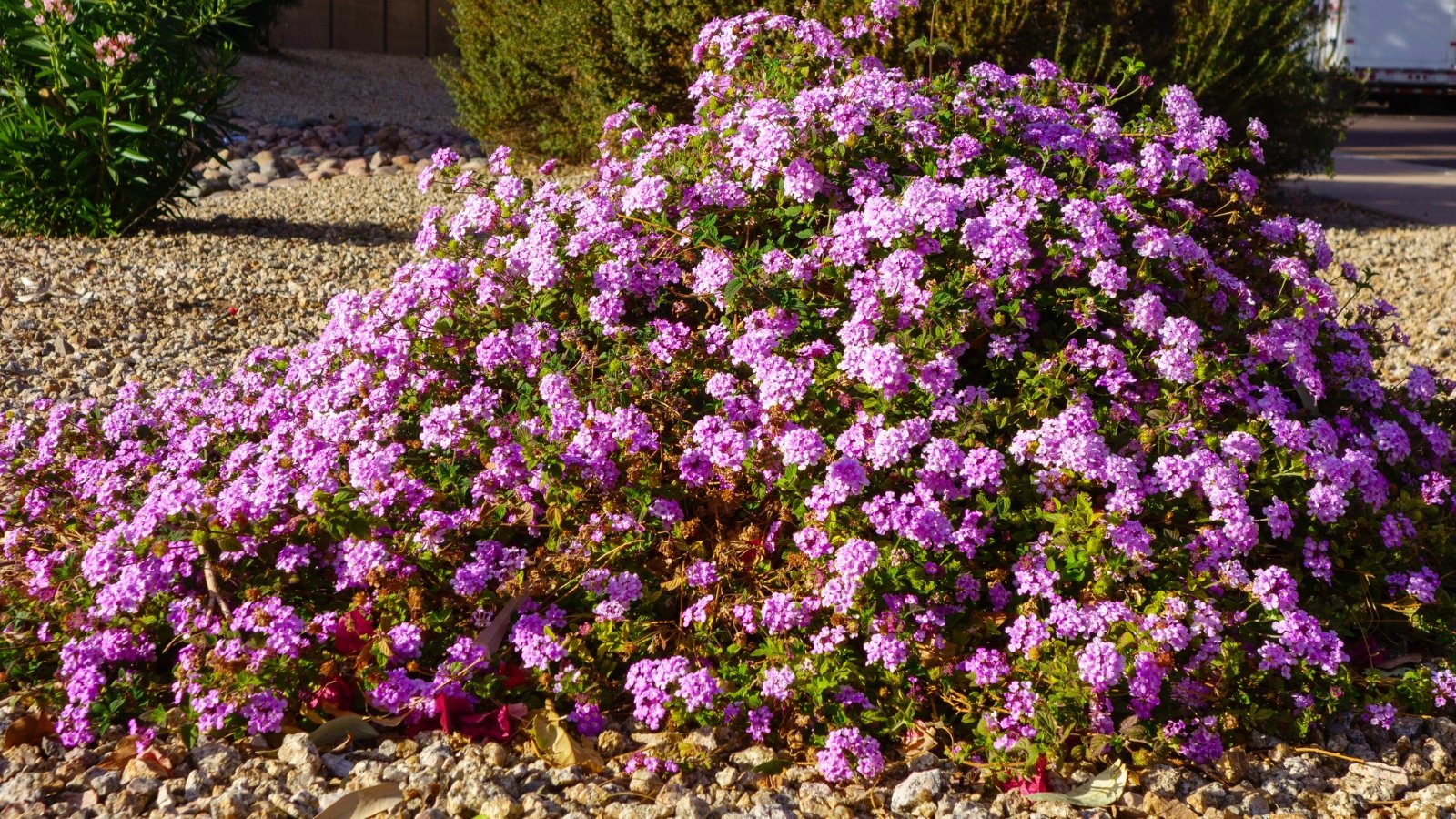
Trailing lantana naturally hugs the ground and roots as it spreads, making it a star for slopes and sunny open spaces. Expect months of blooms and nonstop butterfly visits.
- Botanical Name: Lantana montevidensis
- Sun Requirements: Full sun
- Height: 12–24 inches
- Hardiness Zones: 8–11
- Standouts: Excellent erosion control and ultra-long bloom window.
Drought-Defying Carpets: 4 Blooming Ground Covers
5. Creeping Thyme (Thymus serpyllum)
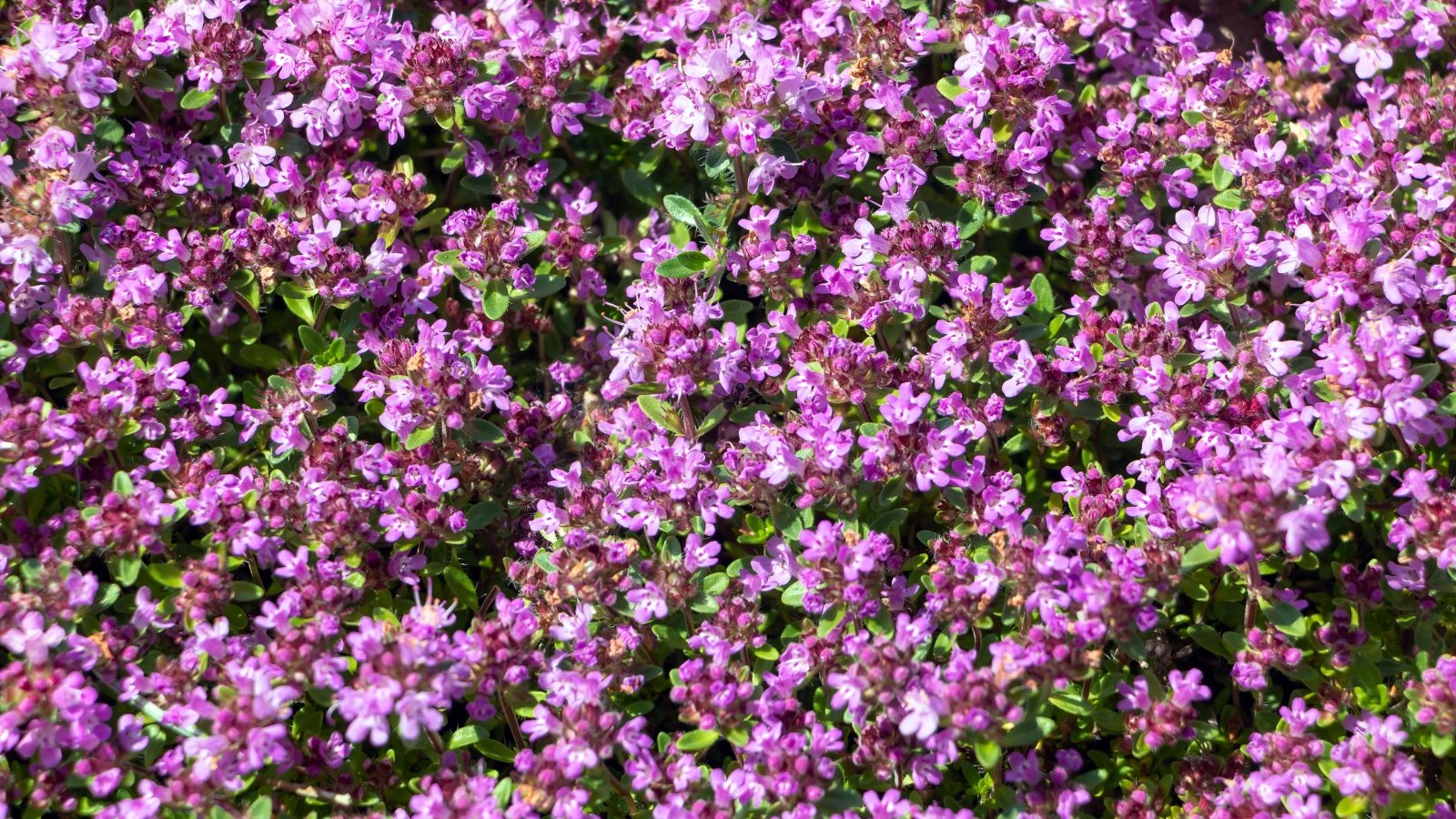
Creeping thyme turns paths into perfume. It’s cold-hardy, heat and drought tolerant, and releases fragrance underfoot while bees buzz happily in late spring and early summer.
- Botanical Name: Thymus serpyllum
- Sun Requirements: Full sun
- Height: 1–3 inches
- Hardiness Zones: 4–9
- Perks: Handles light foot traffic, thrives in lean soils, semi-evergreen in many climates.
6. Sedum (Sedum spp.)

With hundreds of varieties, sedum offers colorful foliage and late-season blooms that feed pollinators. Choose low, spreading species for ground cover; all share a love of sun and sharp drainage.
- Botanical Name: Sedum spp.
- Sun Requirements: Full sun
- Height: 2–36 inches (variety dependent)
- Hardiness Zones: 3–9
- Why It Works: Succulent, drought-wise, minimal care, autumn flowers for late nectar.
7. Ice Plant (Delosperma spp.)
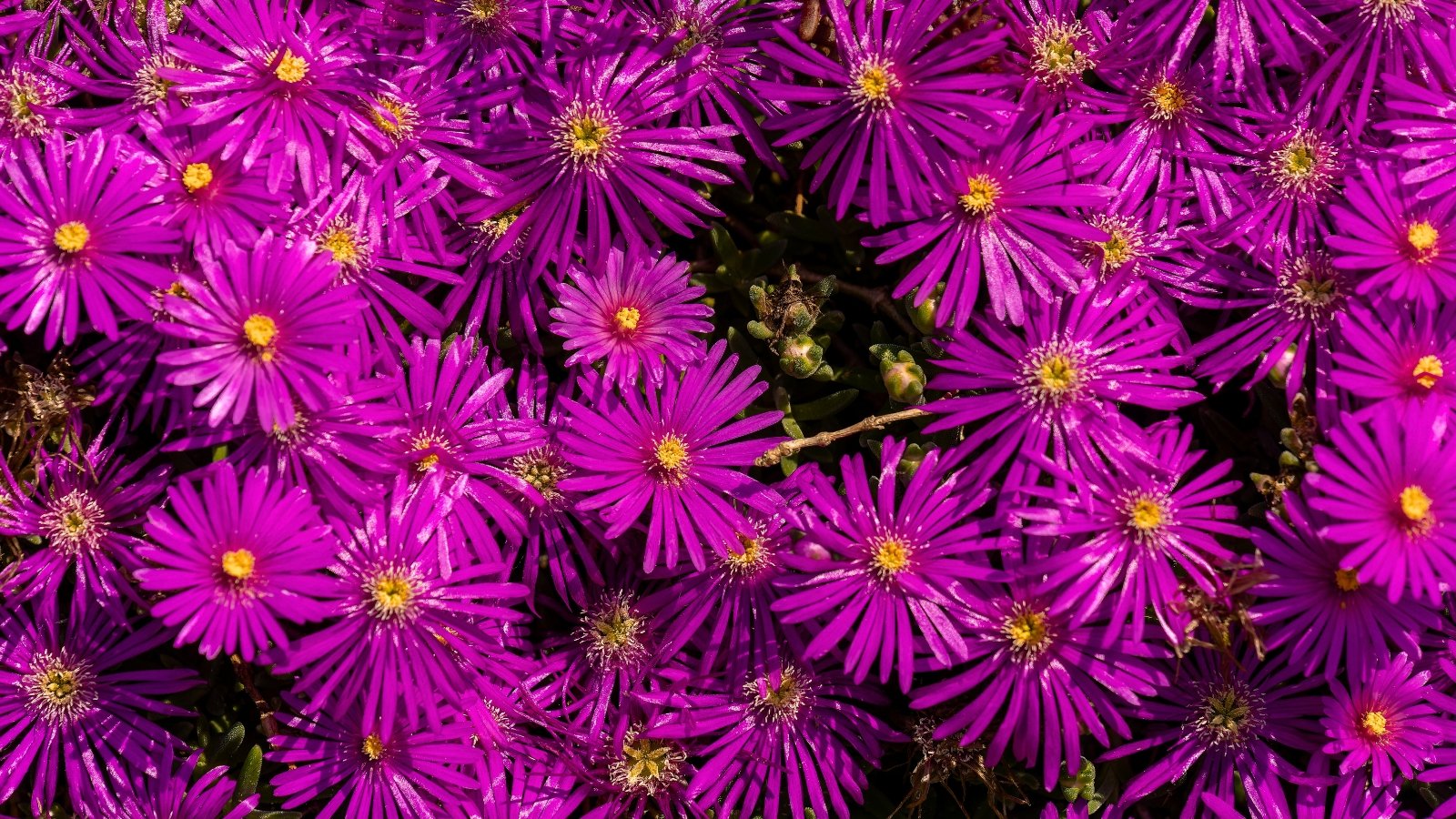
Ice plant glitters in the sun thanks to its succulent foliage and nearly nonstop blooms in warm regions. It stays low and neat without fertilizer, perfect for hot, dry banks.
- Botanical Name: Delosperma spp.
- Sun Requirements: Full sun
- Height: 2–6 inches
- Hardiness Zones: 5–8
- Highlights: Year-round appeal in warm climates; dazzling color spring to fall elsewhere.
8. Snow-In-Summer (Cerastium tomentosum)
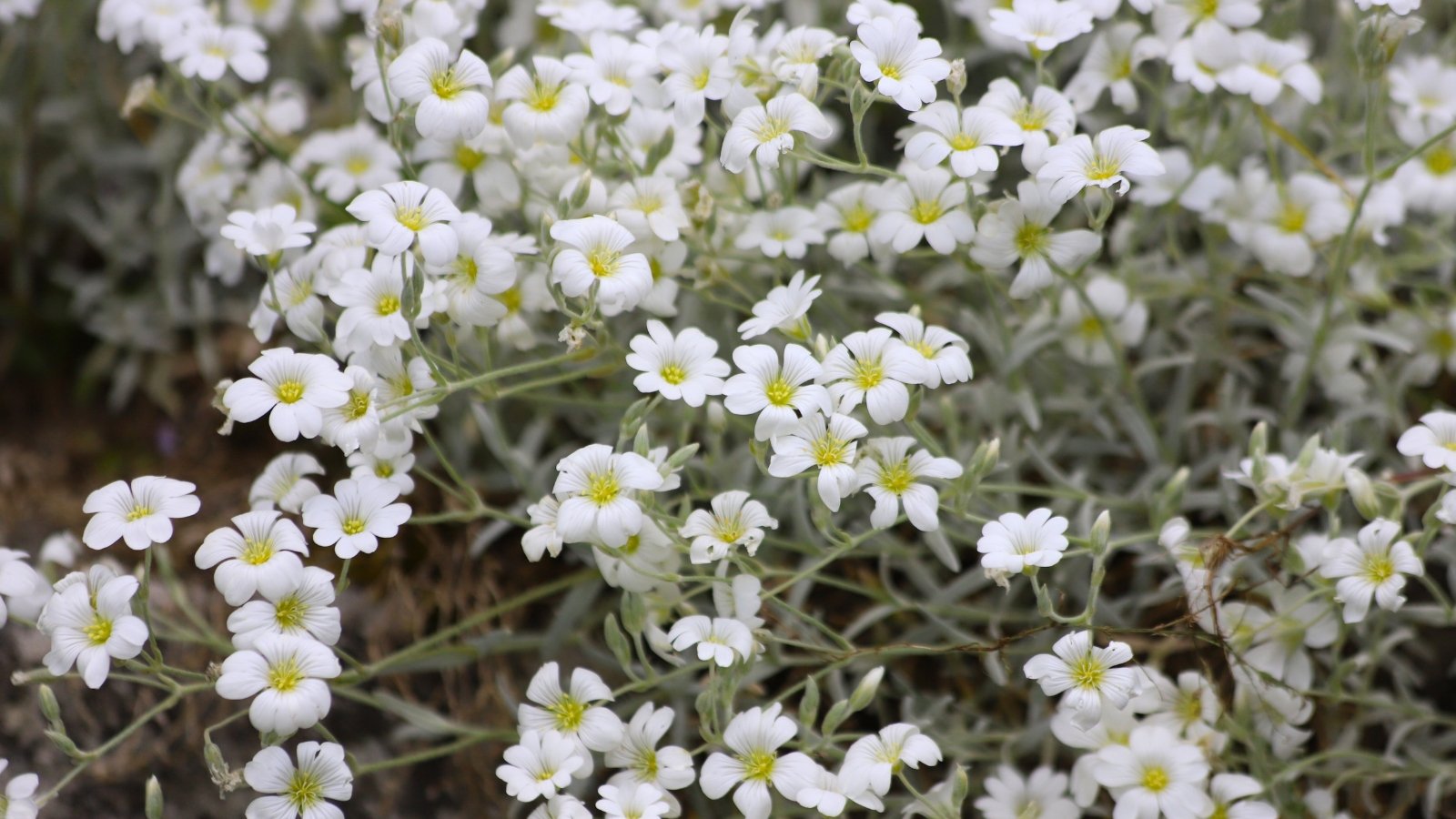
A silvered, drought-tough beauty, snow-in-summer excels in dry, sunny, cool climates. It blankets spring and early summer with white and keeps slopes from eroding.
- Botanical Name: Cerastium tomentosum
- Sun Requirements: Full sun
- Height: 4–12 inches
- Hardiness Zones: 3–7
- Good To Know: Not a top nectar plant, but blooms profusely and loves poor soil.
Pollinator Magnets For Mixed Climates: 3 Blooming Ground Covers
9. Moss Verbena (Glandularia tenera)
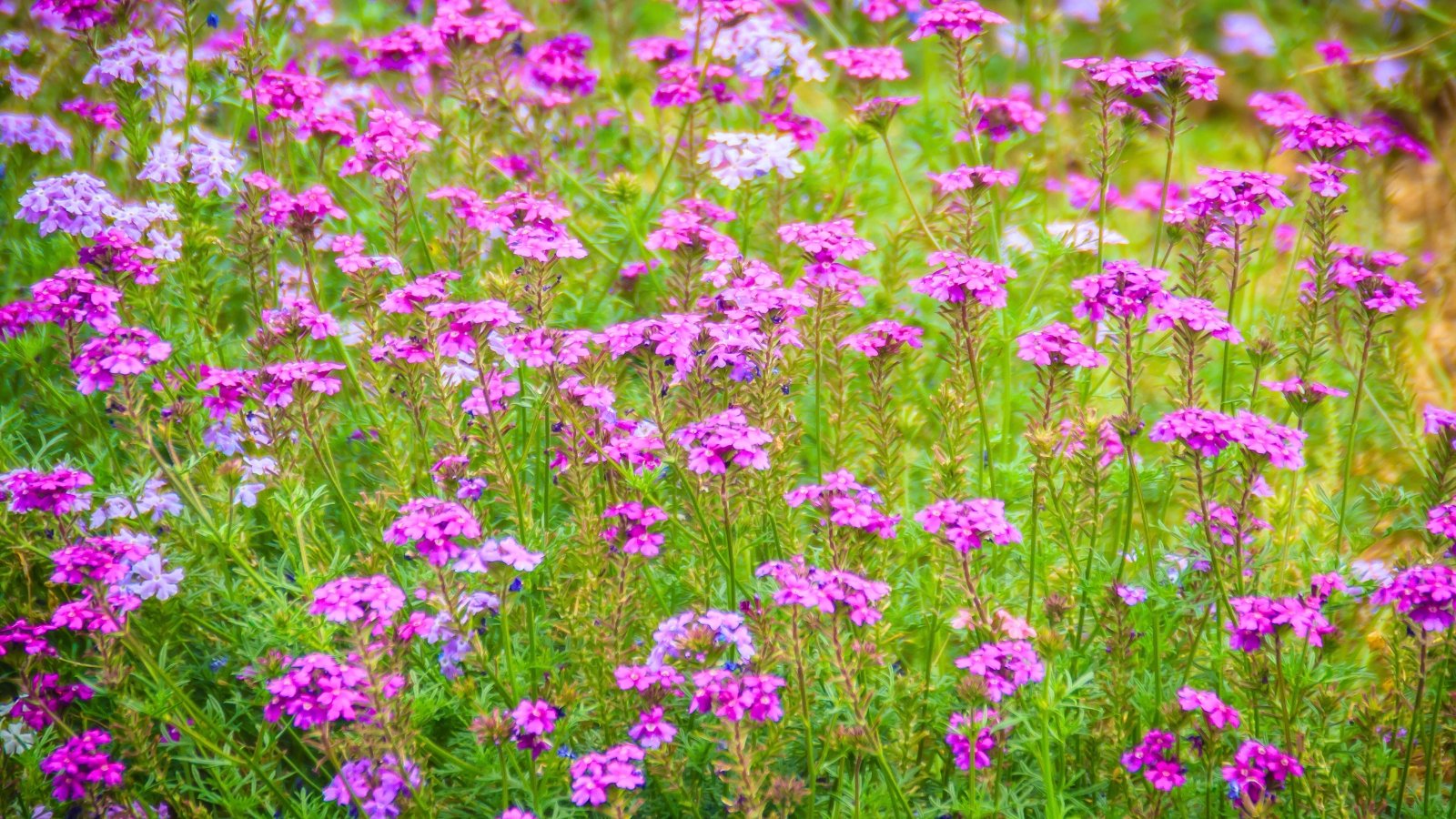
Fast-growing and virtually carefree, moss verbena forms a soft, mossy-looking mat bursting with color from spring to fall. It’s evergreen in frost-free climates and stabilizes sandy slopes.
- Botanical Name: Glandularia tenera
- Sun Requirements: Full sun
- Height: 4–10 inches
- Hardiness Zones: 7–11
- Why It’s Handy: Heat tolerant, great for erosion control, blooms for months.
10. Clover (Trifolium spp.)
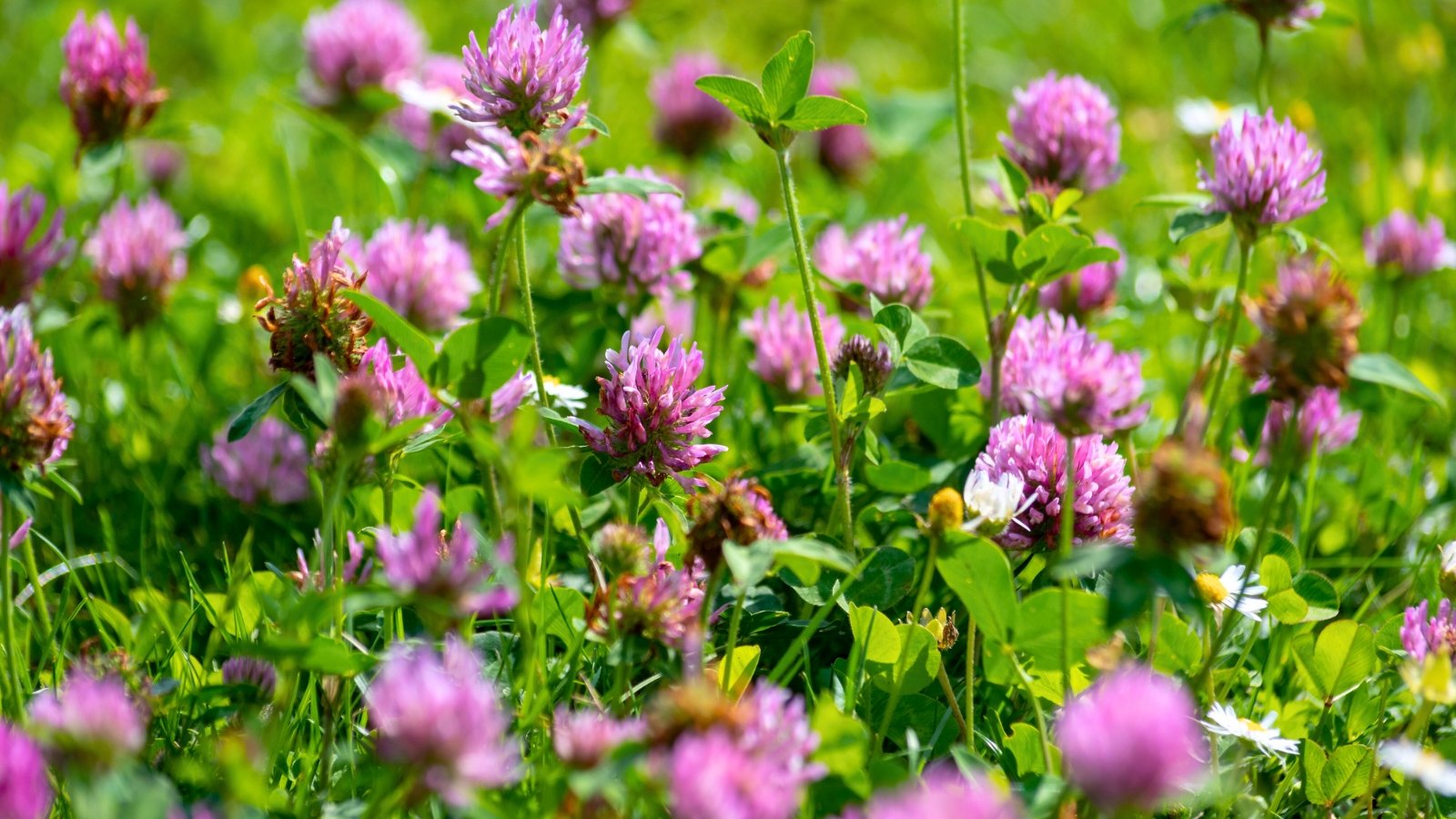
If you want maximum benefits for minimal effort, clover is for you. It’s nitrogen-fixing, low-growing, and a nectar powerhouse for native pollinators from spring into fall.
- Botanical Name: Trifolium spp.
- Sun Requirements: Full sun to partial shade
- Height: 3–12 inches
- Hardiness Zones: 3–10
- Note: Some types can spread aggressively—check local guidance before planting.
11. Creeping Phlox (Phlox subulata)

Creeping phlox is a spring showstopper that turns banks and borders into a fairyland of color. Evergreen foliage forms a dense mat that suppresses weeds and feeds early pollinators.
- Botanical Name: Phlox subulata
- Sun Requirements: Full sun to partial shade
- Height: 3–6 inches
- Hardiness Zones: 3–9
- Care Tip: Once established, it’s remarkably drought-tolerant and low maintenance.
Fast Annual Color And Easy Fill-Ins
12. Sweet Alyssum (Lobularia maritima)

Few plants flower as generously as sweet alyssum. Honey-scented blooms draw pollinators for months, self-seed politely, and spill beautifully along paths and beds.
- Botanical Name: Lobularia maritima
- Sun Requirements: Full sun to partial shade
- Height: 4–8 inches
- Hardiness Zones: 5–9 as an annual; 9–11 as a perennial
- Why Plant It: Fragrant, continuous bloom from spring to frost; adored by bees.
13. Creeping Zinnia (Sanvitalia procumbens)

For instant cheer, creeping zinnia is a compact spreader with bright, daisy-like blooms from late spring to frost. It thrives in full sun and well-drained soils and is perfect for edging and containers.
- Botanical Name: Sanvitalia procumbens
- Sun Requirements: Full sun
- Height: 4–8 inches
- Hardiness Zones: 2–11 (typically grown as an annual)
- Bonus: Blooms consistently and attracts small butterflies.
Smart Maintenance And Troubleshooting
- Weeds Sneaking In? Densify spacing, top-dress with fine mulch or gravel, and hand-weed early while roots are shallow.
- Color Fading Or Sparse Bloom? Check sun first—most bloomers need full sun. Reduce nitrogen; too much fertilizer pushes leaves over flowers.
- Poor Drainage? Elevate beds with compost + grit, or pick drought-tolerant succulents that demand sharp drainage.
- Winter Dieback? Select zone-appropriate species and let foliage remain as natural insulation; tidy in early spring. For tips on choosing the right ground covers for full sun and understanding how they perform across different sites, the Iowa State Extension guide on groundcovers in the sun is a helpful resource.
Smart gardening mindset: Choose plants that match your site, plant densely, water to establish, then step back and enjoy the show.
Quick Reference Summary
| Plant | Zones | Sun | Approx. Height | Standout Strength |
|---|---|---|---|---|
| Perennial Peanut | 8–11 | Full Sun | 6–17″ | Drought tolerant; handles light traffic |
| Portulaca | 2–12 (annual in cold) | Full Sun | 4–8″ | Thrives in hot, dry, rocky soils |
| Blue Daze | 8–11 | Full Sun | 6–18″ | Coastal/sandy tolerant; long bloom |
| Trailing Lantana | 8–11 | Full Sun | 12–24″ | Erosion control; butterfly magnet |
| Creeping Thyme | 4–9 | Full Sun | 1–3″ | Fragrant; tolerates light foot traffic |
| Sedum | 3–9 | Full Sun | 2–36″ | Succulent, drought-wise; fall nectar |
| Ice Plant | 5–8 | Full Sun | 2–6″ | Nearly nonstop bloom in heat |
| Snow-In-Summer | 3–7 | Full Sun | 4–12″ | Drought tolerant; spring carpet |
| Moss Verbena | 7–11 | Full Sun | 4–10″ | Fast grower; stabilizes sandy soils |
| Clover | 3–10 | Full Sun–Part Shade | 3–12″ | Nitrogen-fixing; pollinator buffet |
| Creeping Phlox | 3–9 | Full Sun–Part Shade | 3–6″ | Evergreen mat; spring show |
| Sweet Alyssum | 5–9 annual; 9–11 perennial | Full Sun–Part Shade | 4–8″ | Honey-scented; self-seeds |
| Creeping Zinnia | 2–11 (annual) | Full Sun | 4–8″ | Continuous color; edging star |
Actionable Checklist
- 1. Map Your Site: Mark full sun, part shade, slopes, and high-traffic zones.
- 2. Pick A Category: Heat lovers, drought-defiers, pollinator carpets, or fast annual color.
- 3. Start With 2–3 Species: Blend textures and bloom times for a long season.
- 4. Prep The Soil: Loosen top 3–4 inches; amend for drainage or organic matter as needed.
- 5. Plant Densely: Space 8–12 inches apart for fast fill and strong weed suppression.
- 6. Water To Establish: Keep moist for the first weeks; then shift to deep, infrequent soaks.
- 7. Maintain Lightly: Spot-weed early, shear lightly after peak bloom if needed, and enjoy.
Ready to trade chores for color? Share your zone, sun exposure, and goals in the comments at Plant Care Dairy—I’m happy to help you pick the perfect bloomers.
Disclaimer: This article is for educational purposes only. Always consult your local extension service or nursery for region-specific guidance, verify plant hardiness and potential invasiveness in your area, and follow label directions for any products you choose to use.