
If you’ve ever wondered whether there’s a “right” way to edge a lawn, you’re not alone. The goal of this article is simple: cut through the conflicting advice and give you clear, actionable steps for a crisp, long‑lasting lawn edge that supports both curb appeal and lawn health.
By the end, you’ll understand where to stand, which tool to use, how deep to cut, and how to avoid the common mistakes that lead to jagged lines, weed invasions, and crumbling edges.
Quick confession: I used to stand on the sidewalk with my trimmer because it “felt safer.” I kept nibbling into the turf, creating a wavy trench that drove me nuts for weeks. When I switched my stance and slowed down, my edges got instantly cleaner—and my neighbors noticed.
Why Lawn Edging Matters
Curb Appeal And Property Value
Neat, defined edges make the whole yard look intentional, even when mowing is overdue. The line frames walkways, driveways, and beds like a picture frame.
- First impression: A crisp edge can boost the perceived value of your property and elevate the look of your landscape.
- Design clarity: Clear borders help separate lawn from hardscape and beds, visually simplifying the space.
- Less cleanup: Defined boundaries keep grass blades from flopping onto pavement after mowing.
Many homeowners underestimate how much clean lines influence overall yard appearance, and insights from All Terrain Fargo’s lawn care guide reinforce how simple edging improvements can significantly elevate curb appeal.
Water, Weeds, And Pests
Edging isn’t just cosmetic; it’s functional. A consistent trench helps manage moisture and keeps weedy runners in check.
- Water control: A small, consistent edge directs water off hard surfaces, reducing puddling along walkways.
- Weed suppression: Clean edges discourage encroachment of turf into beds and reduce places where weeds can take hold.
- Pest awareness: Defined lines make it easier to spot ant mounds or rodent runs along hardscapes.
Depth, Distance, And Line Integrity
A proper edge is typically 2 to 3 inches deep. Too shallow and the edge collapses; too deep and you scalp roots or undermine the pavement.
- Depth matters: Aim for 2–3 inches to balance neatness with stability.
- Consistency: Keep the edge parallel to the hard surface to avoid wavy lines that collect debris.
- Edge health: Avoid overcutting or widening the trench, which can lead to erosion and weed invasion.
Why Your Lawn Edging Technique May Be Wrong

Standing On Grass Vs. Pavement
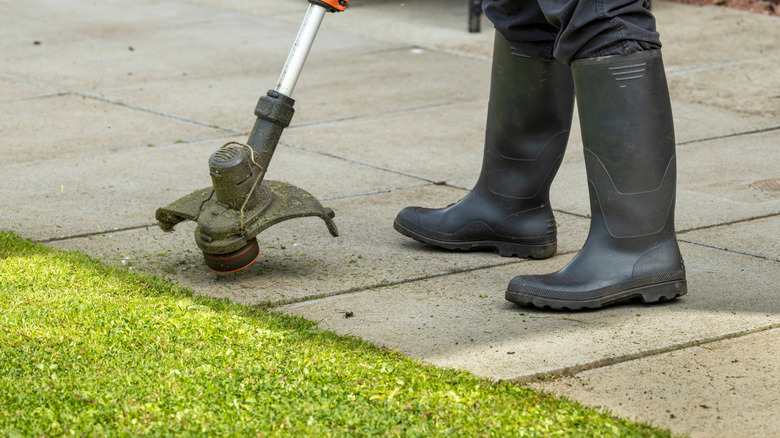
It feels intuitive to stand on the sidewalk while edging. But many DIYers get cleaner lines by standing on the grass instead.
- Grass-side stance: If your control slips, the trimmer tends to drift toward the pavement—not into the turf—protecting your edge.
- Pavement-side risks: Small hand motions can nibble into the lawn, creating scallops and wavy lines.
- Consistency around beds: If you can’t stand in the planting bed, staying on the grass side across the whole run maintains a uniform result.
This matches findings highlighted by House Digest, which notes that one of the most common edging mistakes is working from the pavement side, often leading to uneven cuts and damaged turf.
String Trimmer Control Problems
The biggest challenge with a string trimmer is keeping the string perfectly vertical. A slight tilt can gouge turf or widen the trench.
- Wrist fatigue: Long runs make it easy to rotate the head unintentionally.
- Throttle surges: Over-revving pops the string into the lawn; easing the throttle helps maintain a consistent cut.
- Deflector orientation: Misplacing the guard can blow debris toward you—or into the line you just cleaned.
Mistakes That Snowball
Little errors add up. The wrong stance, a dull string, or a rushed pass can turn a neat cut into a jagged trench.
- Jagged lines: Rushing creates chatter marks you see from the street.
- Overcut edges: Cutting too deep weakens the turf edge and encourages crumbling.
- Weed-friendly gaps: Irregular edges trap soil and seeds, setting the stage for weed outbreaks.
Improper cuts are more common than most people realize, and Aaron’s Greenscape points out that inconsistent depth and rushed passes are two of the leading causes of long-term edging damage
How To Edge The Right Way: Tools, Setup, And Safety
Picking The Right Tool
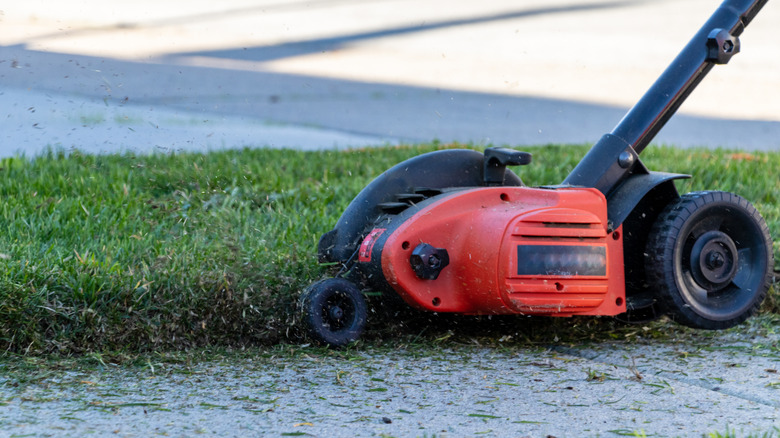
Both stick edgers and string trimmers can produce clean edges—if you use them correctly. Choose based on control, budget, and your yard’s layout.
- Dedicated stick edger: Best for beginners and perfectionists. The vertical blade and guide wheel help prevent gouges.
- String trimmer (weed whacker): Versatile and affordable. Turn the head vertical and move slowly; practice makes a big difference.
- Manual half-moon edger: Great for establishing a new edge or correcting lines; slower but precise.
Essential Safety Gear And Prep
Edging is messy. Protect yourself and prep the site so you can work smoothly without backtracking.
- Protective gear: Wear long pants, closed-toe shoes, gloves, and eye protection to block grit and pebbles.
- Mow first: A fresh mow exposes the true grass line and reduces cleanup later.
- Clear the run: Remove sticks, toys, and hose lines. Mark curves with a garden hose or chalk for a guide.
Ideal Depth, Angle, And Direction
Small technique changes create big results. Focus on depth, tool angle, and which way the debris flies.
- Depth: Target 2–3 inches to define the border without undermining roots.
- Angle: A true vertical or slightly outward tilt (away from the lawn) helps prevent turf undercutting.
- Direction of travel: Move so clippings blow away from you and off the pavement, which keeps the line visible.
Step-By-Step: 9 Tips For A Crisp, Clean Edge
What You’ll Need
Gather your basics so you can edge in one smooth pass without stopping for tools.
- Your chosen edger: Stick edger, string trimmer, or half-moon edger.
- Fresh line or blade: Worn string or dull blades tear instead of cut.
- Safety gear: Glasses, gloves, long pants, and hearing protection.
- Broom or blower: For final cleanup so your new edge pops.
9-Step Edging Method
- Mow First: Cutting the lawn before edging reveals the true perimeter and reduces later cleanup.
- Mark The Line: Use a hose or chalk along curves to establish a smooth, repeatable arc.
- Stand On The Grass Side: This stance makes slips drift toward pavement instead of biting into your turf.
- Set A Vertical Cut: Hold the trimmer head vertical (or the edger blade plumb). Use a light, steady throttle to avoid chatter.
- Control Debris Direction: Keep the deflector on your side and move so clippings blow away from the pavement and from you.
- Make A Shallow First Pass: Score the line lightly before deepening; it’s easier to correct a shallow guide than a deep gouge.
- Deepen To 2–3 Inches: Widen only as needed for a clean vertical wall; avoid undercutting the turf edge.
- Clean The Trench: Sweep or blow out debris so the edge looks crisp and drains well after rain.
- Maintain Weekly Or Biweekly: Frequent, light touch-ups are faster and keep lines sharper than infrequent deep cuts.
How Often To Edge
Frequency depends on growth rate and season. I edge lightly every mow in peak growth, then every 2–3 mows in shoulder seasons.
- Cool-season lawns: More frequent touch-ups in spring and early fall.
- Warm-season lawns: Step up frequency in mid-to-late summer when growth surges.
- After rain: Let the soil firm up; soggy edges collapse and smear.
For those managing lawns year-round, our guide on how to garden through winter offers practical ways to protect edges, soil structure, and plant health during cold weather months
Troubleshooting And Pro Fixes
If You Overcut Or Scallop
It happens. Don’t keep shaving at the mistake; stabilize it and coach the lawn to fill back in.
- Backfill lightly: Add a thin layer of topsoil to support the lip without burying turf crowns.
- Seed and pin: For larger bites, overseed with matching turf and secure straw matting until established.
- Shorten passes: Work in smaller segments next time to maintain a straight line.
If The Edge Invites Weeds
Weed-friendly edges usually trap soil and moisture. Tighten your line and remove the seedbed.
- Clean the gutter: Blow out the trench after every mow to deny weeds a home.
- Sharpen or replace: A dull string or blade frays the edge and rips stolons that resprout.
- Mulch barriers: Along beds, add a narrow mulch lip inside the bed to intercept stray turf runners.
For gardeners looking to recycle yard waste, you can also repurpose fall leaves as mulch, and our guide on using fallen leaves for compost and mulch explains simple ways to improve soil health while keeping bed edges tidy .
Around Beds, Curbs, And Obstacles
Curves and tight spots require extra patience. I’ll switch tools rather than force a bad cut.
- Half-moon helper: For small radiuses or root-laced soil, a manual edger keeps control high.
- Wheel guides: On long straight sidewalks, a stick edger with a guide wheel delivers the sharpest line.
- Bridges and transitions: Where pavement changes height, slow down and reset your stance before continuing.
Wrap-Up And Quick Reference
Smart Gardening Mindset
There isn’t just one “correct” tool—but there is a right approach. I focus on safety first, consistent stance, shallow scoring passes, and a 2–3 inch final depth. The result is a clean, durable edge that resists weeds and looks sharp all season. If you enjoy sustainable practices, our collection of eco-friendly fall garden tips shares easy ways to maintain your yard while reducing waste and supporting soil health.
When in doubt, slow down. Practice on a less-visible run until your hands learn the rhythm. The more you edge, the steadier your lines get.
Quick Comparison Table
| Scenario | Best Tool | Stance | Depth | Direction | Notes |
|---|---|---|---|---|---|
| Long, straight sidewalks | Stick edger with wheel | Grass side | 2–3 in | Blow away from you | Fast and accurate for beginners |
| Tight curves and beds | Manual half-moon or trimmer | Grass side | 2–3 in | Blow off pavement | Go slow; score first, deepen later |
| Driveway and curb edges | Stick edger or trimmer | Grass side | 2–3 in | Away from vehicles | Protect paint; watch for gravel |
| New edges or repairs | Manual half-moon + trimmer | Grass side | 2–3 in | Away from you | Establish line by hand, then maintain |
Handy Checklist
- Mow first to reveal the true edge.
- Suit up with eye protection, long pants, and gloves.
- Stand on the grass side for better control.
- Score shallow, then deepen to 2–3 inches.
- Keep the cut vertical; avoid undercutting.
- Control debris so it blows away from you and off pavement.
- Clean the trench with a broom or blower.
- Touch up weekly in peak growth; biweekly otherwise.
- Switch tools for tight curves or tricky transitions.
Join The Conversation
I’d love to hear what worked for you. Drop your edging questions or wins in the comments below, and explore more practical guides at Plant Care Dairy. Your tips help the whole community improve.
Disclaimer: The techniques shared here are for general informational purposes. Always follow your equipment manufacturer’s safety instructions, consider local regulations, and adjust methods for your specific lawn type, soil conditions, and climate.