

I’ve learned the hard way that tomatoes don’t forgive a badly timed trip. You leave for a few days, come back, and the leaves are curled, flowers are gone, and a few fruits are split from wild swings in moisture. This guide is my no-nonsense plan to vacation-proof your tomato plants so you can step out without gambling your harvest.
I won’t tell you to “just mulch and hope.” We’ll set up water that runs itself, match the method to your heat and humidity, and adjust for plant stage—seedlings, leafy growth, or heavy fruit set. That’s the difference between coming home to panic… or to plants that barely noticed you were gone.
You’ll get a tight 48-hour prep checklist, low-cost DIY options (think bottle drips and clay spikes), smarter container tricks, and simple timers if you’re away longer. No fancy gear required, just practical steps that hold steady moisture and reduce stress so blossoms stay on and fruit keeps sizing up.
Quick question before we dive in: how many days will you be away, and are your tomatoes in containers or in the ground?
Why Tomato Plants Struggle During Vacations
If you’ve ever left your tomatoes alone for a few days, you know how unforgiving they can be. Tomatoes have deep roots that pull water steadily, and when that rhythm breaks, stress kicks in fast. At the flowering and fruiting stage, their thirst doubles — that’s when missed watering means blossoms drop, fruits crack, or leaves curl.
I’ve come back from short trips to find plants with wilted tops and flowers gone, simply because the soil dried out quicker than expected. Tomatoes don’t just “pause” growth; they react sharply to water swings, protecting themselves by sacrificing flowers or fruit. That’s why understanding their needs matters before you even think about vacation-proofing.
Stress signs to watch for include:
- Leaf curl (plants trying to reduce water loss)
- Blossom drop (flowers falling before fruit sets)
- Cracked fruit (caused by uneven watering)
Knowing this science makes every hack you try — from mulch to bottle drips — make sense. Instead of guessing, you’ll be preparing your plants with purpose.
If pests are part of the problem when you return, hornworms are one of the worst culprits for tomatoes — here’s a guide on how to control and prevent hornworms before they wipe out your hard-earned harvest.
Prep Your Plants Before You Leave (The 48-Hour Rule)

I always treat the last two days before a trip as my tomato prep window. Think of it as giving your plants a full tank of fuel before you hit the road. This way, even if your watering setup fails, the plants aren’t immediately stressed.
Here’s the routine I follow:
- Water deeply 1–2 days before leaving : Let the water soak 6–8 inches down, so roots have a reservoir to pull from.
- Mulch generously: Add 2–3 inches of straw, shredded leaves, or compost. This shields soil from sun and slows evaporation.
- Check for pests and prune excess growth: Remove yellowing leaves and side shoots. With fewer leaves to support, your plant can focus energy on existing fruit.
- Stake or cage plants: Strong support prevents breakage if winds or storms hit while you’re gone.
Homes & Gardens also highlights how deep watering and mulching are key to keeping tomatoes stable while you’re away. It’s simple advice, but when paired with a careful once-over before you leave, it works like insurance for your harvest.
The beauty of this 48-hour prep is that it doesn’t require fancy equipment. Even if you’re gone longer, this baseline care gives your plants a strong chance to hold steady until you’re back.
Watering Hacks That Actually Work
You don’t need to invest in a full irrigation system to keep tomatoes alive while you’re away. Over the years, I’ve tried everything from quick DIY fixes to long-term solutions, and a few stand out as both budget-friendly and effective.
DIY Bottle Drip Systems
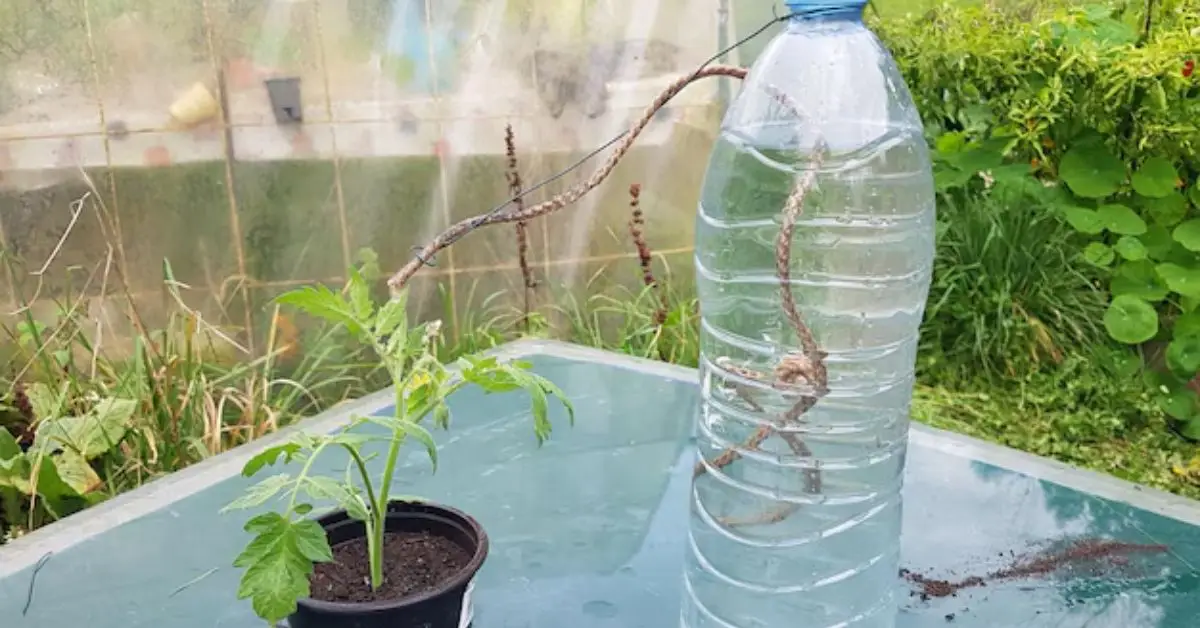
Grab an old plastic bottle, poke a few small holes in the cap, and bury it upside down in the soil near the roots. As the soil dries, water drips out slowly. I’ve also seen gardeners on Reddit flip wine bottles into terracotta spikes for the same effect. It’s cheap, quick, and works well for short trips.
Self-Watering Containers & Grow Bags
If your tomatoes are in pots, switching them into self-watering containers or fabric grow bags can save you a lot of stress. These setups store a small water reservoir at the base, which the plant pulls from as needed. It’s an easy fix if you’re gone for a week and don’t want to rely on neighbors.
Clay Ollas & Terracotta Spikes
An old trick that still works beautifully. You bury a clay olla (unglazed pot) or use terracotta spikes with bottles, and water seeps directly into the soil. The upfront cost is higher, but they last for years and are perfect for hot, dry gardens where evaporation is the main enemy.
Cost vs Effectiveness at a glance:
- Bottle drip = almost free, best for short-term
- Self-watering pots/grow bags = low cost, neat for balconies and patios
- Ollas/spikes = higher cost, but reliable for years and great for ground-planted tomatoes
Match Your Method to Your Climate
Not every watering hack works in every climate. Matching your method to your local weather makes all the difference.
- Hot/dry regions: Clay ollas or spikes are unbeatable here. Add a thick mulch layer to reduce evaporation.
- Humid/rainy climates: Focus on drainage instead. Self-watering pots or grow bags prevent soggy roots, which tomatoes hate.
- Small balcony gardens: Self-watering containers are tidy and perfect for limited space.
- Larger garden plots: Bottle drip systems or ollas buried close to the roots cover more ground effectively.
When your method matches your climate, your plants don’t just survive while you’re away — they stay balanced, which means less stress and fewer lost fruits.
Stage-Specific Care (Seedlings vs Fruiting Plants)
Most guides lump all tomato plants together, but their needs change drastically as they grow. Knowing the difference helps you plan smarter before you head out.
- Seedlings: Roots sit close to the surface, so they dry out faster. They need consistent surface moisture, light mulching, and small drip setups.
- Mature fruiting plants: Deeper roots make them more resilient, but they’re more sensitive to sudden water swings. Uneven watering often causes fruit cracking or blossom end rot. Steady, deep watering is non-negotiable here. Uneven watering is just one issue — tomatoes face many other challenges too. From yellow leaves to stunted growth, here are 5 tomato plant problems and how you can fix them fast to keep your plants thriving at every stage.
According to the University of California Master Gardener Program, tomatoes thrive when soil moisture stays even, especially during flowering and fruiting. This small detail — adjusting care by growth stage — is something most guides skip, but it’s the key to keeping both your plants and your harvest healthy while you’re away.
Backup Plans If You’re Away Longer
Sometimes a weekend prep isn’t enough — especially if you’re planning a vacation that stretches beyond a week or two. In those cases, I rely on a mix of people, community, and tech to bridge the gap.
- Neighbor check-ins: Nothing beats human eyes on your garden. I usually leave a clear note: “Water every 3 days, about one gallon per plant, only if soil feels dry an inch down.” Without instructions, people often overwater or underwater, so spell it out.
- Garden sitting apps / swaps: In many areas, community groups and apps let you “swap” care duties with another gardener. You water their patch when they’re away, they return the favor. It keeps the garden alive and builds trust in your neighborhood.
- Smart irrigation timers: If no one’s available, timers are worth the investment. Brands like Orbit B-hyve and Gardena let you set specific watering schedules or even monitor remotely. It’s not cheap upfront, but for longer trips, they pay for themselves in saved harvests.
These long-term backups mean you don’t come home to stressed or dead plants. Instead, you’ll find your garden carrying on as if you never left.
Quick “Before You Leave” Vacation Checklist

For skimmers who just want a fast checklist to tick off before heading out, here’s the condensed version I use every time:
- Deep water soil until moisture reaches root depth.
- Apply a thick mulch layer (2–3 inches).
- Check and remove pests or yellowing leaves.
- Set up bottle drips, ollas, or self-watering pots.
- Stake and prune plants to reduce stress and damage risk.
This list takes less than an hour but covers 80% of the problems that can strike while you’re gone.
Myths vs Facts
I’ve heard so many half-truths about vacation tomato care online that I had to address them directly.
- Myth: “Tomatoes can survive one week without water.”
- Fact: It depends. Sandy soil in hot weather can dry out in 2 days, while mulched loam might last a week. Growth stage also matters — seedlings die faster than deep-rooted fruiting plants.
- Myth: “Mulch alone is enough.”
- Fact: Mulch is powerful, but without a deep soak before you leave, it won’t help much. Mulch slows evaporation; it doesn’t replace stored water. And if you’ve ever wondered why some tomatoes stay stubbornly green no matter what you do, this guide on why your tomatoes aren’t turning red and how to fix it fast will help you ripen your crop on time.
Even trusted sites like Gardening Know How remind readers that a mix of strategies — not one “magic hack” — is what keeps tomatoes alive when you’re away.
By separating myths from facts, you’re not just following internet hacks — you’re making smarter, science-backed decisions for your plants.
Conclusion
Vacation-proofing tomato plants isn’t about luck — it’s about planning. When you understand why tomatoes struggle without steady water, prep them with deep soaking and mulch, and pick the right watering hack for your climate and plant stage, you set yourself up to come home to healthy, fruiting vines instead of wilted stems. For longer trips, having a neighbor, a community swap, or even a smart timer in place makes the difference between a lost harvest and a thriving one.
At the end of the day, it’s the small steps you take before you leave that protect weeks of hard work in the garden.
What about you? Have you ever tried bottle drips, ollas, or a tech solution to keep your tomatoes alive while you were away? Share your go-to hack in the comments — I’d love to hear what’s worked (or failed) for you.
For more practical guides, seasonal tips, and research-backed plant care advice, be sure to visit Plant Care Dairy — your trusted space for everything gardening and green living.
Disclaimer: The tips shared in this article are based on general gardening experience and trusted resources. Results may vary depending on your local climate, soil type, and plant variety. Always adjust care methods to your specific conditions and consult local gardening experts if you’re unsure.