

Shopping for a holiday tree can be confusing: some options last a few weeks, others promise to live on as houseplants, and still others are meant to be planted outdoors. In this guide, I’ll cut through the noise and show you exactly how to pick (and keep) a potted Christmas tree that genuinely thrives indoors.
By the end, you’ll know which varieties make the best year-round houseplants, how to match light and watering to your space, and how to avoid the most common pitfalls like needle drop and browning. I’ll also share an easy checklist and a quick-reference table you can keep on your phone for holiday shopping and everyday care.
Quick personal note: I once dragged home a gorgeous, lemon-scented tree that turned crispy by New Year’s because I parked it by a heater vent. Now I double-check light, drafty spots, and watering before I decorate. You don’t need to learn the hard way—use the simple steps below.
Why A Potted Christmas Tree As A Houseplant Matters
Sustainability And Year-Round Joy
When you choose a living, potted tree that truly tolerates indoor life, you’re reducing waste and enjoying greenery beyond the holidays. See the benefits of small pot‑grown Christmas trees for why pot‑grown options are a strong, sustainable choice. Reusable, long-lived plants cut down on landfill clutter and give you a fragrant, festive focal point all year.
- Less waste: You’re not tossing a cut tree after a month.
- Daily benefits: Aromatic and textural interest indoors through every season.
- Budget friendly: One tree, many holidays—just refresh décor.
Know The Difference: Houseplant Trees Vs. “Living” Outdoor Trees
Many “living Christmas trees” are balled-and-burlapped or container-grown evergreens meant for quick indoor display and then replanting outdoors. These can only tolerate indoor conditions briefly and should be planted outside as soon as the ground thaws.
- Houseplant-friendly picks (like Norfolk Island pine and rosemary) tolerate indoor light, temps, and humidity long term.
- Outdoor species (like many spruces and firs) are best returned to the garden after the holidays. For a broader look at how real trees fit into environmental and land‑use discussions, see this environmental perspective on real Christmas trees.
Right-Sizing And Clean-Up Considerations
Small spaces do better with slow growers and compact forms. Conifers shed some needles no matter what, so use a large cachepot or tray to catch debris and prevent floor damage.
- Pick a manageable size: A 1–3-foot plant is easiest to place and water consistently.
- Use a protective saucer: Prevents spills and protects floors and furniture.
- Expect some shed: Occasional vacuuming is normal for conifer-like foliage.
Best Potted Christmas Tree Varieties That Thrive Indoors
Norfolk Island Pine (Araucaria Heterophylla)
If you’re tight on space, Norfolk Island pine is a standout. Indoors, it grows slowly—often just a few inches per year—and brings elegant, layered symmetry to a corner or tabletop.
- Light: Bright, indirect light; a few hours of gentle sun is helpful.
- Water: Keep the root ball evenly moist; don’t let it fully dry out.
- Humidity: Prefers moderate humidity; avoid heating vents and dry drafts.
- Watch-outs: Dry air and underwatering lead to needle drop.
Lemon Cypress ‘Goldcrest’ And ‘Goldcrest Wilma’ (Hesperocyparis Macrocarpa)
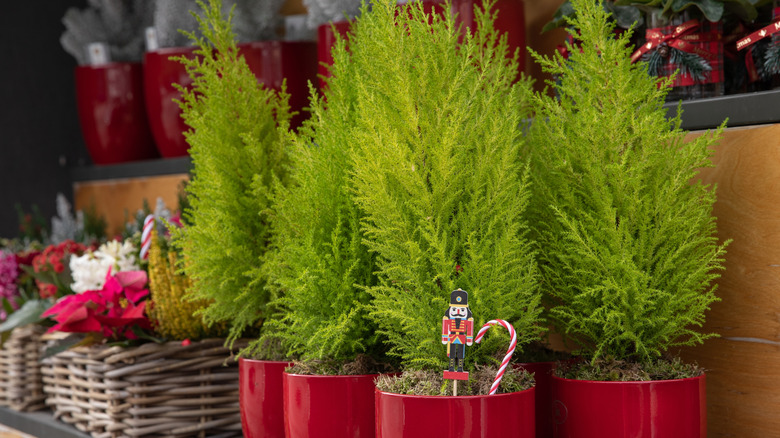
Lemon cypress is famous for its zesty, lemony fragrance and bright chartreuse foliage. Standard ‘Goldcrest’ can become quite tall over time, but ‘Goldcrest Wilma’ stays compact at around 3 feet, making it a superb houseplant choice.
- Light: Bright light and some direct sun keep the color vivid.
- Water: Consistent moisture; don’t let the potting mix go bone dry.
- Color cue: Foliage fading or browning signals insufficient light or irregular watering.
Rosemary “Christmas Tree” (Rosmarinus Officinalis)
With dense gray-green, needle-like leaves and a tidy, conical form, the rosemary “Christmas tree” doubles as a culinary herb. It looks like a miniature blue spruce and smells fresh and piney.
- Light: At least 4–6 hours of direct sun indoors or strong grow lights.
- Airflow: Good circulation helps prevent fungal disease.
- Water: Allow the top inch to dry; avoid sogginess around the roots.
Lavender Tree (Lavandula Angustifolia)
Lavender brings a calming aroma and silvery foliage, and it actually prefers slightly drier conditions—great news for busy indoor gardeners. Give it strong light to keep it compact and blooming.
- Light: Aim for 6–8 hours of direct sun or high-output grow lights.
- Water: Let the top 1–2 inches dry; excess moisture invites root issues.
- Potting: Use a well-draining, sandy mix to mimic its native habitat.
The 8 Must‑Know Tips To Keep Your Potted Christmas Tree Happy Indoors
- Choose A True Houseplant Candidate: Prioritize Norfolk Island pine, lemon cypress (‘Goldcrest’/‘Goldcrest Wilma’), rosemary, or lavender for long-term indoor success. Outdoor conifers like firs and spruces are short-term guests only.
- Match The Light To The Plant: Place sun lovers (rosemary, lavender, lemon cypress) in south or west windows. Give Norfolk Island pine bright, indirect light with a bit of gentle sun. Supplement with grow lights in winter.
- Water Consistently—Never On A Guess: Check soil with your finger. Water when the top 1–2 inches are dry (species-dependent), then drain thoroughly. Empty saucers after 10–15 minutes to avoid root rot.
- Protect From Dry Air And Heat Vents: Heating blasts desiccate foliage. Keep trees away from radiators and fireplaces, and consider a room humidifier for conifer-like species such as Norfolk. For more on why heat sources are harmful and what to do instead, see stop parking your Christmas tree by the fireplace.
- Use The Right Pot And Mix: A pot with drainage holes and a well-draining mix (add perlite for Norfolk and lemon cypress; add sand for lavender) prevents soggy roots.
- Feed Lightly, Seasonally: During active growth (spring/summer), use a diluted, balanced fertilizer monthly. Hold fertilizer in winter when growth slows.
- Prune With A Plan: Lightly shape to maintain a conical form. Pinch soft tips on rosemary and lavender; avoid hard pruning on Norfolk (it doesn’t backbud well).
- Rotate And Reassess Monthly: Turn the pot a quarter turn for even growth. Re-check light, drafts, and watering patterns every month, especially after the holiday décor comes down.
Setup, Placement, And Routine Care
Potting Mix & Containers
I like to start with a quality indoor potting mix and tweak it per plant. Good drainage is non-negotiable for all these varieties.
- Norfolk & Lemon Cypress: Potting mix + perlite for airflow and drainage.
- Rosemary: Potting mix + perlite; allow brief drying between waterings.
- Lavender: Potting mix + coarse sand for extra drainage.
- Container size: Choose a pot 1–2 inches wider than the root ball with drainage holes.
Light & Exposure
Most of these plants love bright light, and several need direct sun to maintain color and compact growth. If your windows are shaded in winter, supplement with LEDs.
- South/West windows: Ideal for rosemary, lavender, and lemon cypress.
- East/North windows: Often best for Norfolk Island pine plus a bit of added light. If you’re experimenting with other holiday or seasonal houseplants, see how to collect Christmas cactus varieties for inspiration on light placement and indoor display.
- Grow lights: Run 12–14 hours/day in winter for sun-demanding species.
Watering & Humidity
I resist the urge to water on a schedule. Instead, I test the soil and adapt to the season and container size.
- Even moisture: Norfolk and lemon cypress prefer consistently moist (not soggy) soil.
- Dry-down: Lavender and rosemary need partial drying between waterings.
- Humidity: Keep away from vents; use a humidifier or pebble tray for Norfolk during peak heating months.
Airflow & Temperature
Stagnant air encourages disease, especially on rosemary. Moderate, steady indoor temperatures are ideal for all.
- Air circulation: A small fan on low can improve airflow without chilling plants.
- Temperature: 60–75°F (16–24°C) suits most; avoid cold drafts and heat blasts.
- Placement: Give each plant a little space so foliage can dry after watering or misting.
Troubleshooting: Fixing Common Problems Fast
Needle Drop Or Browning
Browning tips or dropping foliage usually point to underwatering, low humidity, or heat stress. Lemon cypress fades quickly when thirsty; Norfolk sulks in dry air.
- Check moisture: Probe 2 inches down—if dry, water thoroughly. For more practical tips on keeping pot‑grown trees healthy indoors, see this complete guide to pot‑grown Christmas tree care.
- Improve humidity: Move away from vents; add a humidifier for Norfolk.
- Increase light: Weak light leads to stretched, pale growth—add a grow light.
Fungal Spots Or Mildew
Rosemary and lavender dislike soggy leaves and stale air. Mildew and leaf spots pop up fast in low-light corners.
- Airflow: Space plants and run a fan on low.
- Water smart: Water the soil, not the foliage; avoid late-evening splashing.
- Prune lightly: Remove congested tips to open the canopy.
Pests You Might See
Indoor evergreens can attract spider mites, aphids, or scale, especially in dry conditions. Catching issues early saves time and stress.
- Inspect weekly: Look under leaves and along stems.
- Shower rinse: A gentle lukewarm rinse knocks pests off foliage.
- Soap/oil: Use insecticidal soap or horticultural oil as labeled; repeat in 7–10 days.
Overwatering And Root Issues
Root rot shows up as wilting despite wet soil, sour smells, and yellowing. Lavender and rosemary are especially sensitive to excess moisture.
- Drainage first: Ensure the pot has holes and the saucer is emptied after watering.
- Repot if needed: Trim mushy roots and repot into a fresh, gritty mix.
- Water discipline: Let the top layer dry between waterings for Mediterranean herbs.
Smart Gardener’s Summary, Table, And Next Steps
The smart-gardening mindset is simple: pick the right plant for the right place, observe weekly, and adjust before problems snowball. Start modestly, learn your light and watering rhythm, and your “holiday” tree will look good on Labor Day, too. For another seasonal indoor project that depends on timing and light, check out timing pruning and bloom cycles for Christmas cactus.
| Plant | Light | Water | Key Watch-Out | Who It’s Best For |
|---|---|---|---|---|
| Norfolk Island Pine | Bright, indirect; gentle sun | Evenly moist, never bone dry | Dry air causes needle drop | Cozy corners, humid rooms |
| Lemon Cypress ‘Goldcrest/ Wilma’ | Bright light with direct sun | Consistent moisture | Fades/browns if too dry or dim | Sunny windowsills |
| Rosemary “Christmas Tree” | 4–6+ hrs direct sun or grow light | Let top inch dry | Fungal issues without airflow | Cooks and herb lovers |
| Lavender Tree | 6–8 hrs direct sun or strong LEDs | Dry slightly between waterings | Hates soggy soil | Bright, warm indoor spots |
One-Page Checklist You Can Screenshot
- 1. Pick the plant: Norfolk, lemon cypress (‘Goldcrest’/‘Wilma’), rosemary, or lavender.
- 2. Check the light: South/west = best for sun lovers; bright indirect for Norfolk.
- 3. Choose the pot: Drainage holes + saucer; 1–2″ wider than root ball.
- 4. Mix it right: Add perlite (Norfolk/cypress) or sand (lavender); free-draining.
- 5. Water smart: Probe soil; water thoroughly; empty the saucer.
- 6. Guard against heat blasts: No vents, radiators, or fireplaces nearby.
- 7. Feed lightly in season: Monthly, diluted, spring–summer; pause in winter.
- 8. Rotate and observe: Quarter-turn monthly; inspect for pests or stress.
If you found this helpful, I’d love to hear what you’re growing. Share your questions or tips in the comments on Plant Care Dairy—your experiences help other indoor gardeners pick the perfect tree and keep it thriving.
Disclaimer: The advice in this article is for general informational purposes. Always consider your local climate, indoor conditions, and specific plant tags or nursery guidance. When in doubt, consult a trusted local nursery or certified horticulturist for personalized recommendations.