

I used to think green light was practically useless for plants. You’ve probably heard it too—that red and blue light are the “real players” in photosynthesis, while green just bounces off leaves. But as I dug into the research, I realized the story isn’t that simple. Green light actually penetrates deeper into leaves, reaches lower canopy layers, and even influences how plants grow and use water.
In this article, I want to walk you through what the science really says about green light—what it can do, when it works, and why most growers overlook it. By the end, you’ll understand not just the mechanics, but the practical ways this often-ignored wavelength can improve plant health and yield. I promise you’ll see green light in a whole new way.
Why green light deserves a second look in plant growth
I have to admit—I used to dismiss green light when thinking about plant growth. Like many growers, I believed that red and blue light were the only ones that mattered. Red fuels flowering and fruiting, blue drives leaf development, and green? It was just… there. But the more I read, the more I realized that green light isn’t the “useless” wavelength we’ve all been told to ignore.
Here’s why I think it deserves a second look:
- Traditional focus on blue and red light: Most guides, textbooks, and even lighting companies emphasize blue (400–500 nm) and red (600–700 nm) wavelengths for photosynthesis. That’s because chlorophyll absorbs these colors most efficiently.
- The common misconception: Green light reflects off leaves, so it seems “wasted.” Even Michigan State University notes it’s the least efficiently absorbed. But here’s the twist—it’s not useless. Even a small fraction of green light actually penetrates deeper into leaves and contributes to photosynthesis.
- What you’ll learn in this article: I’ll break down how green light works, its benefits, when it matters for different plants, and practical tips to use it effectively in your garden or indoor setup.
By the end, I hope you’ll see green light not as an afterthought, but as a subtle tool that can improve canopy penetration, plant morphology, and overall efficiency.
Understanding green light – wavelengths, absorption and myths
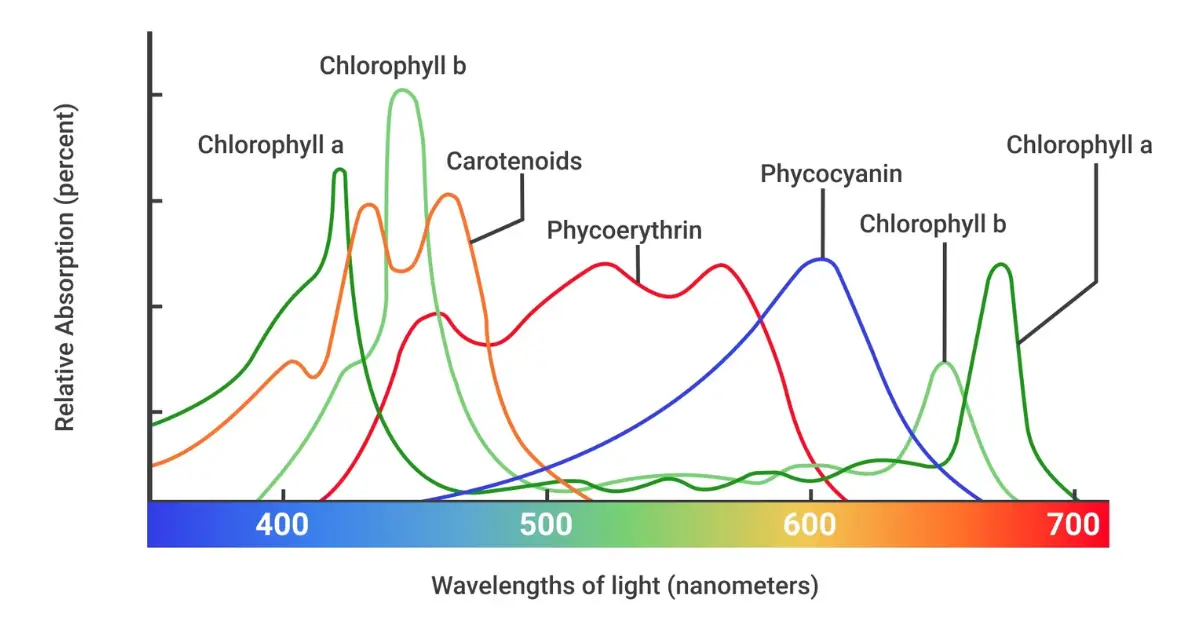
Before we dive into the effects, it’s important to understand what green light actually is and why it behaves differently from red and blue.
What exactly is “green light” in plant research (500–600 nm)
Green light occupies the middle of the visible spectrum, roughly 500–600 nanometers. It’s the wavelength most people perceive as green with their eyes.
- Absorption curves: Chlorophyll absorbs red and blue light strongly but reflects green, which is why leaves look green.
- Subtle contribution: Despite reflecting most green light, plants do absorb some of it, especially in deeper leaf layers. This can make a measurable difference when you look at the whole canopy, not just the top leaves.
Why plants have long been thought to ignore green light
For decades, researchers assumed green light was almost irrelevant because:
- Chlorophyll absorption bias: Chlorophyll a and b absorb mainly blue (400–500 nm) and red (600–700 nm).
- Reflection effect: Since green is reflected rather than absorbed in the upper leaves, it seemed wasted.
- Historical studies: Early experiments measured only top-leaf photosynthesis, missing the deeper, canopy-wide effects.
The emerging reality – green light is absorbed and has effects
Newer studies show that green light:
- Penetrates deeper: It can reach the lower leaves that red and blue light often miss.
- Influences whole-canopy growth: By reaching more layers, it helps the entire plant photosynthesize more efficiently.
- Affects morphology and water-use efficiency: Some research even links green light to subtle changes in leaf expansion, stomatal behavior, and plant structure.
So, the next time you see a plant under full-spectrum lighting, remember—it’s not just the flashy red and blue that matter. Green is quietly playing a role, and understanding that can help you grow healthier, more resilient plants.
How green light influences plant physiology
Once I understood that green light isn’t useless, I wanted to know exactly how it affects plant growth on a physiological level. And the results surprised me. Green light doesn’t just contribute a little photosynthesis—it interacts with the plant in ways that red and blue light can’t.
Photosynthesis and canopy penetration
Think about the way sunlight filters through a dense plant canopy. Red and blue light are absorbed quickly by the top leaves, leaving lower layers underlit. Green light, on the other hand:
- Penetrates deeper into leaf tissue, reaching chloroplasts in lower layers.
- Boosts photosynthesis where red and blue light fail.
- Helps the whole canopy work efficiently, not just the top leaves.
This means that if you only focus on red and blue LEDs, you might be leaving some growth potential untapped.
Effects on stomatal behavior, water-use efficiency, and shoot:root ratio
Green light also affects how plants manage water and structure themselves. According to research:
- Intrinsic water-use efficiency can increase by roughly 15% under green light.
- Stomatal conductance may decrease by around 15%, reducing water loss.
- The balance between shoots and roots can subtly shift, improving overall plant resilience.
These changes are small but meaningful, especially in controlled environments or drought-prone areas.
Green light as a signal – shade cues and morphology changes
Here’s another fascinating part: plants can actually “sense” green light. It acts as a signal indicating shade or low-light conditions.
- This triggers morphological adaptations—leaves might grow larger or reorient to capture more light.
- It complements red and blue light signals, helping the plant optimize energy use.
- It’s a reminder that green light isn’t just energy—it’s information for the plant.
Practical Implications For Growers, horticulture, and indoor farming
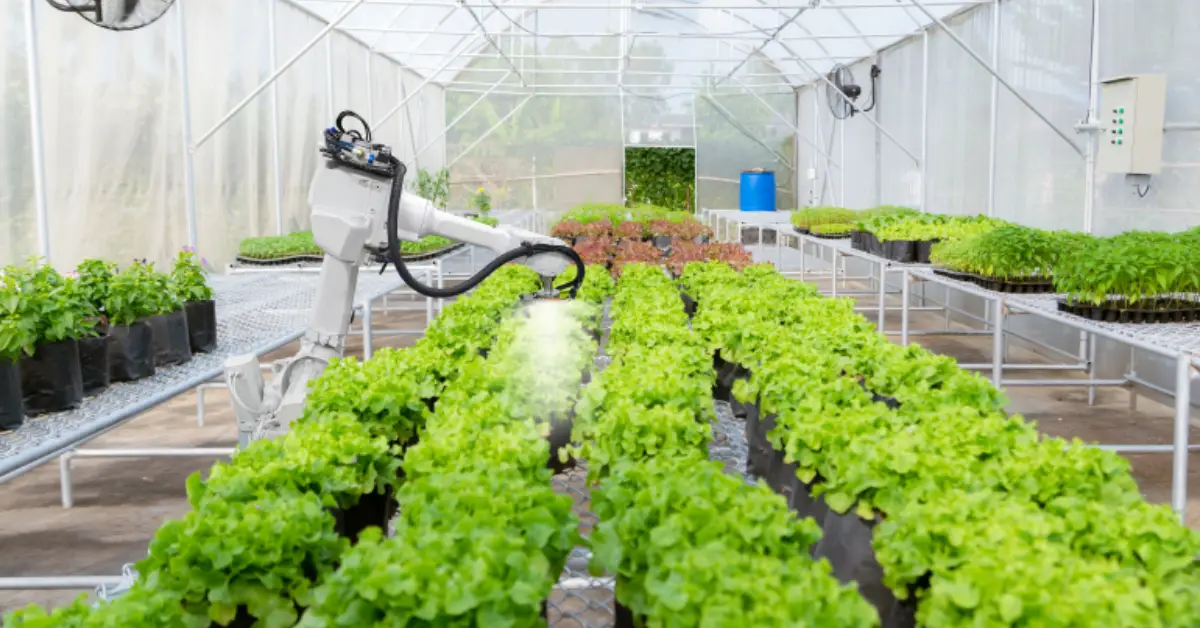
Knowing the science is one thing, but applying it is another. I’ve seen firsthand how growers can benefit by integrating green light thoughtfully.
Integrating green light into LED lighting strategies
Here’s what works in practice:
- Use green as part of a full spectrum, not alone.
- Include it to reach lower canopy leaves that red and blue can’t penetrate.
- Adjust the fraction depending on plant stage—more green during vegetative growth can improve uniformity.
Recent LED studies show that carefully tuned green wavelengths can enhance canopy efficiency without wasting energy.
Crop-specific recommendations (lettuce, herbs, vegetables)
Not all plants respond equally:
- Lettuce and microgreens: generally benefit from added green light, improving lower-leaf development.
- Tomato and basil: sometimes show neutral or slightly negative responses if green is overrepresented.
- Always test and adjust based on your crop type.
Environmental / stress-adaptation benefits
Green light isn’t just about growth—it helps plants cope with stress:
- Improves water-use efficiency, making plants more resilient under drought.
- Enhances low-light adaptation in dense canopies or indoor setups.
Mistakes to avoid & optimization tips
I’ve seen growers make simple mistakes that reduce green light’s effectiveness:
- Using too high a fraction of green—balance is key.
- Ignoring background light intensity—green is most effective under strong red/blue light.
- Applying the same spectrum for all growth stages—plants need different ratios at vegetative vs flowering stages.
Future outlook – greenhouse design, light film technologies, field application
Looking ahead, green light research is opening exciting possibilities:
- Tailored LED films and filters for green spectrum management.
- Optimizing greenhouse designs to maximize canopy penetration.
- Field applications where green light could improve yield quality and uniformity.
What You Should Remember – Take‑Aways For Growers and Researchers
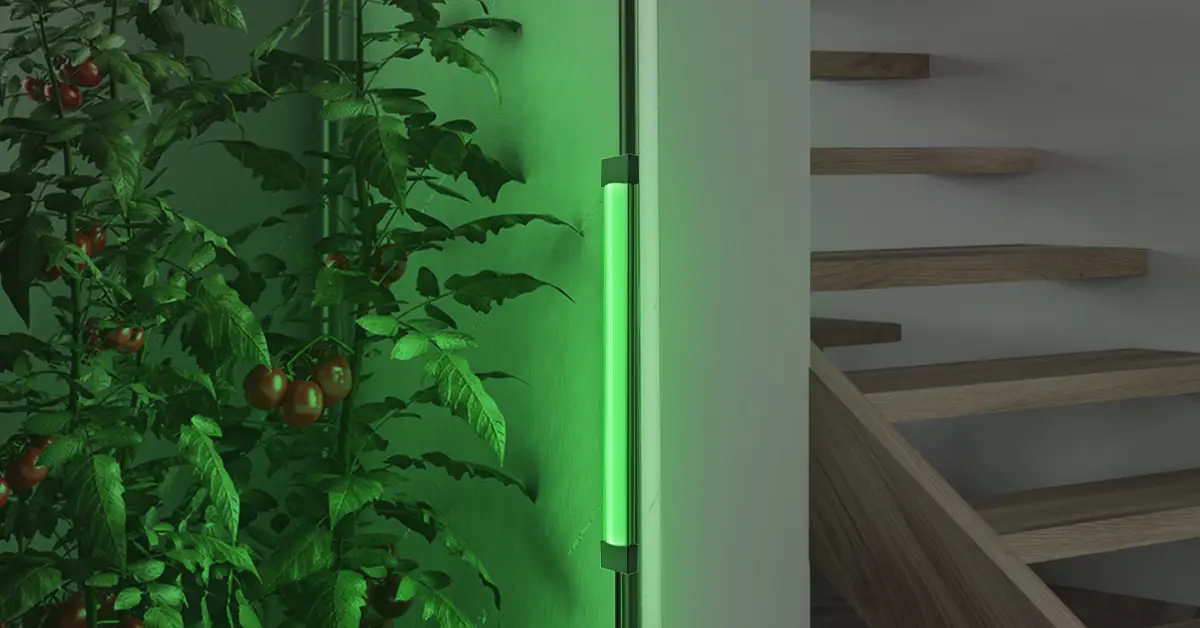
After diving into the research, I want to leave you with practical lessons that make a real difference in your growing practice:
- Green light isn’t useless: Even though it’s reflected more than red or blue, it still plays a role in photosynthesis and canopy penetration.
- Benefits are subtle and species-dependent: Lettuce and microgreens respond differently than tomato or basil, so pay attention to your crop.
- Use it as part of a full spectrum: Green light works best alongside red and blue LEDs—it shouldn’t replace them.
- Context matters: Crop type, growth stage, and canopy density all affect how plants respond to green light. Small adjustments can have a noticeable impact.
- Keep learning: Research is constantly updating our understanding of green light, and new insights can help optimize growth.
If there’s one thing I’d encourage you to do, it’s experiment carefully. Introduce green light gradually, watch how your plants respond, and adjust as needed. Over time, it can improve plant health, resilience, and even yield.
Final Thoughts
Before you rush to change your lighting setup, it’s important to keep some things in mind. Most studies on green light have been done in controlled, indoor conditions, so results may vary when you’re working in a greenhouse or outdoors. Every crop, canopy, and environment is slightly different, which means what works for one grower might not work exactly the same for you.
I always recommend testing and adapting rather than applying a fixed formula. Observe your plants, tweak your spectrum carefully, and take notes on how they respond. For high-stakes decisions, consulting lighting specialists or plant scientists can save you time and prevent costly mistakes.
I’d love to hear from you: Have you tried integrating green light into your setup? Share your experiences in the comments below—I read every single one! And if you want more practical tips, detailed guides, and research-backed strategies for growing healthy plants, check out Plant Care Dairy. Your next green-light experiment might just surprise you.
Disclaimer: The information in this article is based on current research and expert sources. Results may vary depending on plant species, growing conditions, and lighting setups. Always test changes carefully and consult specialists for high-stakes decisions.