

If you’ve ever wondered exactly when and how to prune an apple tree without hurting next year’s harvest, you’re in the right place. My goal here is to cut through the confusion and give you clear, actionable steps you can take this December to set your trees up for a healthier, more productive spring.
In the next few sections, you’ll learn why pruning during dormancy matters, the tools and techniques I rely on for clean, safe cuts, and a simple, nine-step pruning plan you can follow in an afternoon. I’ll also share quick troubleshooting tips and an easy checklist so you feel confident every time you step up to the tree.
I learned this the hard way when I pruned too early one November during a warm spell. The tree flushed tender new shoots that the next frosty night blackened like burnt matchsticks. Since then, I’ve committed to December pruning while the tree is fully dormant—and my apples have been sweeter, bigger, and far easier to pick.
Why December Pruning Matters
Dormancy Protects Energy Reserves
December pruning is ideal because your apple tree is dormant and not actively pushing growth. December pruning is ideal because your apple tree is dormant and not actively pushing growth—learn more about easy pruning techniques for apples from RHS. Removing branches now doesn’t siphon off precious carbohydrates needed for spring bloom and fruit set.
Think of dormancy as a protective pause. Cuts heal slowly over winter, then the tree closes wounds vigorously as sap starts moving in early spring.
Bare Branches Reveal Problems
Without leaves in the way, you can easily spot trouble. I look for discolored bark, cankers, brittle or broken wood, and insect galleries.
This is also the perfect time to evaluate structure—where branches cross, crowd, or rub—so you can thin with precision and purpose.
Airflow, Sunlight, And Fruit Quality
Opening the canopy improves airflow, which reduces disease pressure from fungal pathogens. Better light penetration also encourages fruitful spurs deeper in the tree.
As a rule of thumb, aim to let sunlight reach the center of the tree. You’ll get more even ripening and fewer shaded, underperforming branches.
Avoiding Premature Growth Spurts
Pruning too early in fall can stimulate new shoots that are vulnerable to frost. Those tender tips often die back, wasting energy the tree could use next spring.
Waiting until December helps you dodge that rebound flush. It’s a small timing tweak with a big payoff at harvest, similar to how to stop winter jade plant stress for indoor plants.
Get Set Up: Tools, Safety, And Clean Cuts
Must-Have Tools For Apple Trees
- Hand Pruners: For small twigs and one-year shoots up to about 1/2 inch.
- Loppers: For thicker limbs up to 1-2 inches, depending on the model.
- Pole Pruner: For higher cuts to keep your feet safely on the ground.
- Pruning Saw: For larger branches; a curved pull-stroke saw makes clean work.
- Gloves And Eye Protection: Thorny spurs and falling twigs happen fast.
- Disinfectant: 70% isopropyl alcohol or a 1:10 bleach solution for sterilizing blades.
Sharpen, Sterilize, And Stay Safe
- Sharpen first: Dull blades crush tissue and slow healing. I keep a pocket sharpener in my jacket.
- Sterilize often: Wipe tools between trees and after cutting diseased wood to prevent spread.
- Mind your stance: Keep feet stable and cut at a comfortable height to avoid overreaching.
- Plan your cuts: Before you snip, visualize the space you’re opening and the light you’re inviting in.
How To Make Smooth, Close Cuts
For most cuts, aim to remove the branch cleanly at the branch collar—the slightly swollen ring where branch meets trunk or a larger limb. Cuts at the collar seal the fastest.
If reducing the length of a branch, cut back to a healthy outward-facing bud or side branch, avoiding leaving long stubs unless you intentionally want to stimulate new shoots for training.
When To Leave A Stub Or The Branch Collar
Most of the time, you don’t leave stubs. But if you’re encouraging new replacement shoots on young trees, a short stub can prompt vigorous buds to break where you need them. Otherwise, stick with collar cuts for strong healing.
Remember: a visible collar is your friend. It’s the tree’s natural wound-sealing zone; these techniques are similar to keeping lucky bamboo healthy with pruning and propagation.
How To Prune Apple Trees In December: 9 Steps
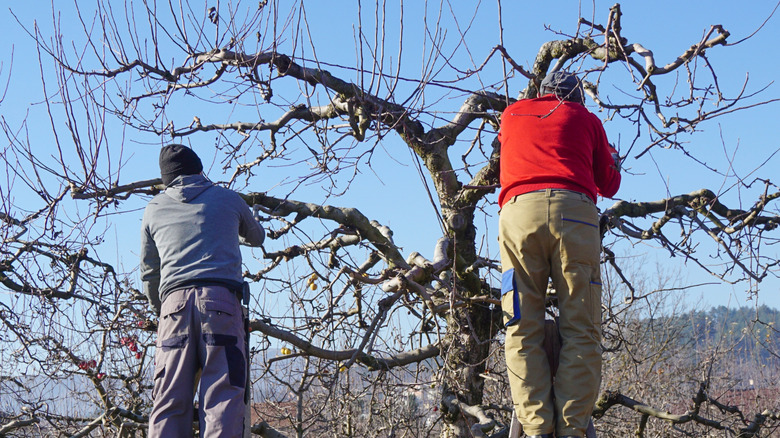
- Remove Dead And Broken Wood First: Start with the obvious. Dead or snapped limbs are energy sinks and disease gateways—take them out cleanly at the collar.
- Cut Out Diseased Branches And Take Notes: Remove infected wood well into healthy tissue. Note symptoms like cankers or oozing bark so you can identify the culprit and address it across your orchard.
- Eliminate Crossing And Rubbing Branches: Choose the stronger, better-placed limb and remove the other. Preventing wounds now saves you future disease trouble.
- Thin Crowded Interior Shoots: Open pathways for air and light. If the canopy looks like a thicket, remove small interior twigs that shade spurs.
- Favor Outward-Facing Structure: When shortening branches, cut to outward-facing buds or laterals to push growth away from the trunk and keep the center open.
- Shape The Upper Canopy Shorter Than The Lower: Maintain that Christmas-tree taper. Shorter top limbs prevent shading and promote uniform fruiting.
- Reduce Height Thoughtfully: Lower tall leaders by cutting back to well-placed side branches. Avoid harsh topping that triggers weak, vertical water sprouts.
- Renew Weak, Nonproductive Wood: On mature trees, remove spurs and branches that haven’t borne well in years to stimulate new, fruitful replacement growth.
- Make Smooth, Close Cuts—No Ragged Stubs: Cut just outside the branch collar. Only leave a small stub if you’re deliberately encouraging new shoots in a specific spot.
Troubleshooting And Common Mistakes
Signs You Cut Too Hard
- Excess water sprouts: A forest of straight, vertical shoots in spring usually means over-pruning: see what happens to a badly pruned apple tree for visual examples and tips.
- Sunscald on limbs: Over-thinning can expose bark to sudden sun; leave some shade on the southwest side in harsh climates.
- Weak fruiting next season: Heavy heading cuts on fruiting wood can delay production. Aim for balanced thinning cuts instead.
Dealing With Disease And Pests
- Disinfect blades: Wipe with alcohol between cuts on suspect limbs and between trees.
- Prune well into healthy wood: For cankers, cut 6–8 inches below visible symptoms.
- Dispose properly: Bag and trash diseased prunings—don’t compost unless you hot-compost reliably.
- Scout and act: Record symptoms now, then follow up with dormant oil or other recommended treatments per your local extension guidance.
Crossing And Crowding Branches
- Choose the keeper: Keep the branch with better angle, vigor, and placement. Remove the competitor at the collar—learn more about common pruning mistakes to avoid on apple trees.
- Space like spokes: Aim for evenly spaced branches radiating around the trunk with vertical separation between tiers.
- Mind the angle: Ideal scaffold angles are roughly 45–60 degrees off the trunk for strength and fruiting.
Recovering From Frost Damage
- Wait to assess: If tips blacken after an odd warm spell, wait until late winter to see what’s truly dead before cutting.
- Cut back to live wood: Prune to green, healthy tissue and rebuild structure gradually.
- Protect next time: Time your pruning to true dormancy and avoid stimulating tender growth ahead of a cold snap.
Aftercare And Planning Next Season
Dispose Of Prunings The Right Way
I chip healthy prunings for mulch and remove diseased wood from the property. Don’t leave infected material under the canopy where spores can overwinter.
Clean tools again when you’re done. A quick wipe and dry prevents rust and keeps edges sharp for the next session.
Train Young Trees Now
On younger apples, be gentle and intentional. Use light heading cuts to encourage well-spaced scaffolds and an open center or central leader, depending on your training system.
When I need new shoots at a specific spot, I’ll leave a very short stub on a young lateral to prompt bud break—then return next winter to refine.
When To Fertilize And Water
Hold off on fertilizing until early spring unless a soil test says otherwise. Overfeeding in winter isn’t helpful and can push soft growth too soon.
Water deeply during dry winters if the ground isn’t frozen. Hydrated roots support strong spring healing and bloom—similar to our 9 smart steps to prevent winter damage for bird of paradise.
Recordkeeping For Better Harvests
Jot down what you removed, where disease appeared, and your shaping choices. These notes are gold when you evaluate bloom, set, and yield next year.
I snap quick phone photos before and after. A visual record makes it easy to see how the tree responds to each season’s work.
Quick Reference: December Apple Pruning Checklist
One-Page Checklist
- Confirm dormancy: Leaves down, buds tight, no recent flush.
- Stage tools: Sharpen hand pruners, loppers, saw; pack disinfectant and PPE.
- Start with essentials: Remove dead, diseased, and damaged wood first.
- Open the canopy: Eliminate crossing and interior clutter for airflow and light.
- Shape top shorter than bottom: Maintain the Christmas-tree silhouette.
- Reduce height with purpose: Cut back to well-placed laterals, avoid topping.
- Renew tired wood: Remove weak, unproductive spurs and limbs.
- Finish with clean cuts: Cut at the branch collar; leave stubs only when training.
- Clean up and record: Dispose of diseased wood; note what you did for next year.
Summary Table
| Cut Type | Primary Purpose | Where To Cut | Quick Check |
|---|---|---|---|
| Dead/Damaged Removal | Prevent disease, redirect energy | At the branch collar | No ragged stubs; smooth finish |
| Disease Sanitation | Stop spread and reinfection | 6–8 inches into healthy wood | Tools disinfected between cuts |
| Thinning Cut | Improve airflow and light | Remove branch entirely at origin | Interior looks brighter, less cluttered |
| Heading Cut | Shorten and redirect growth | Back to an outward-facing bud or lateral | New growth faces away from trunk |
| Height Reduction | Safer harvest, less shade | Back to a strong lateral below the top | Top tiers shorter than lower limbs |
| Renewal Cut | Replace tired, unproductive wood | Remove old spur systems, keep vigorous shoots | Balance of old and new fruiting wood |
Conclusion And Next Steps
Pruning smart is about timing, intention, and restraint. When you work in December during dormancy, cut at the collar, and keep the top shorter than the bottom, you help your apple tree heal fast and channel energy into blossoms and fruit where it matters most.
If you found this guide helpful, I’d love to hear how your winter pruning goes. Share your questions and results in the comments at Plant Care Dairy—your fellow growers (and I) are happy to help.
Disclaimer: The information in this article is for general educational purposes and may not account for your local climate, cultivar, or tree health. Always follow safety best practices, consult your local extension service for region-specific guidance, and consider hiring a certified arborist for large or hazardous trees.