
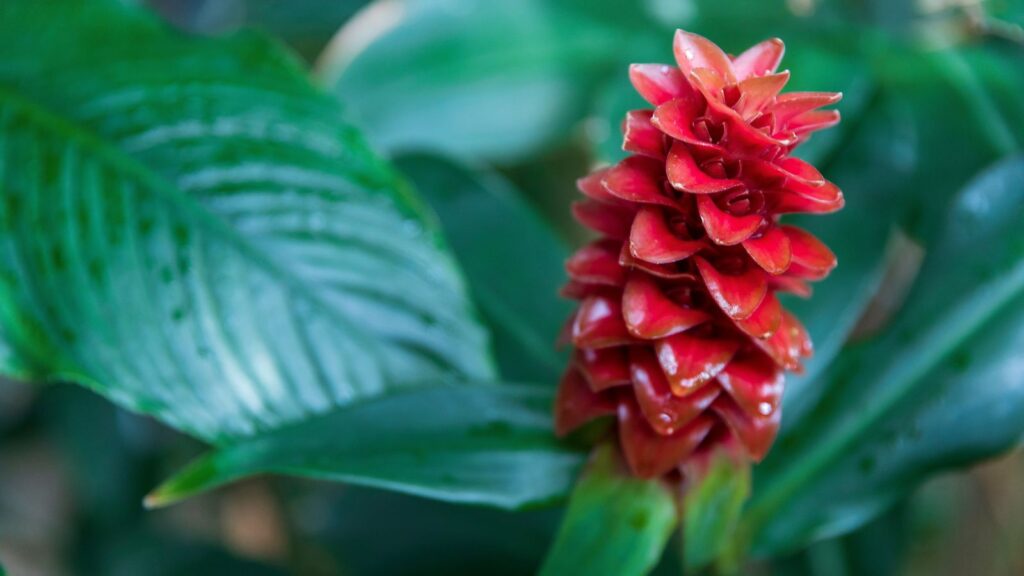
If you’ve ever wondered exactly how much light pine cone ginger (Zingiber zerumbet) needs, you’re not alone. My goal here is to cut through the confusion and give you clear, actionable guidance you can apply indoors or outdoors—no guesswork, just results.
By the end of this guide, you’ll know how to match the right light to the right setting (indoors, outdoors, or dormancy), when to adjust for heat or seasons, and how to avoid common lighting mistakes that stunt growth or scorch those lush leaves.
I’ll be honest: the first time I grew shampoo ginger, I put it in “bright sun” because it looked happiest there for a week. Then the leaf tips crisped, and growth stalled. After I moved it to partial shade with bright, indirect light, it bounced back, flushed new leaves, and—yes—rewarded me with a glowing red cone that oozed that signature shampoo-like gel. Lesson learned.
Understand Pine Cone Ginger Light in Nature
Native Habitat: Partial Shade and Dappled Sun
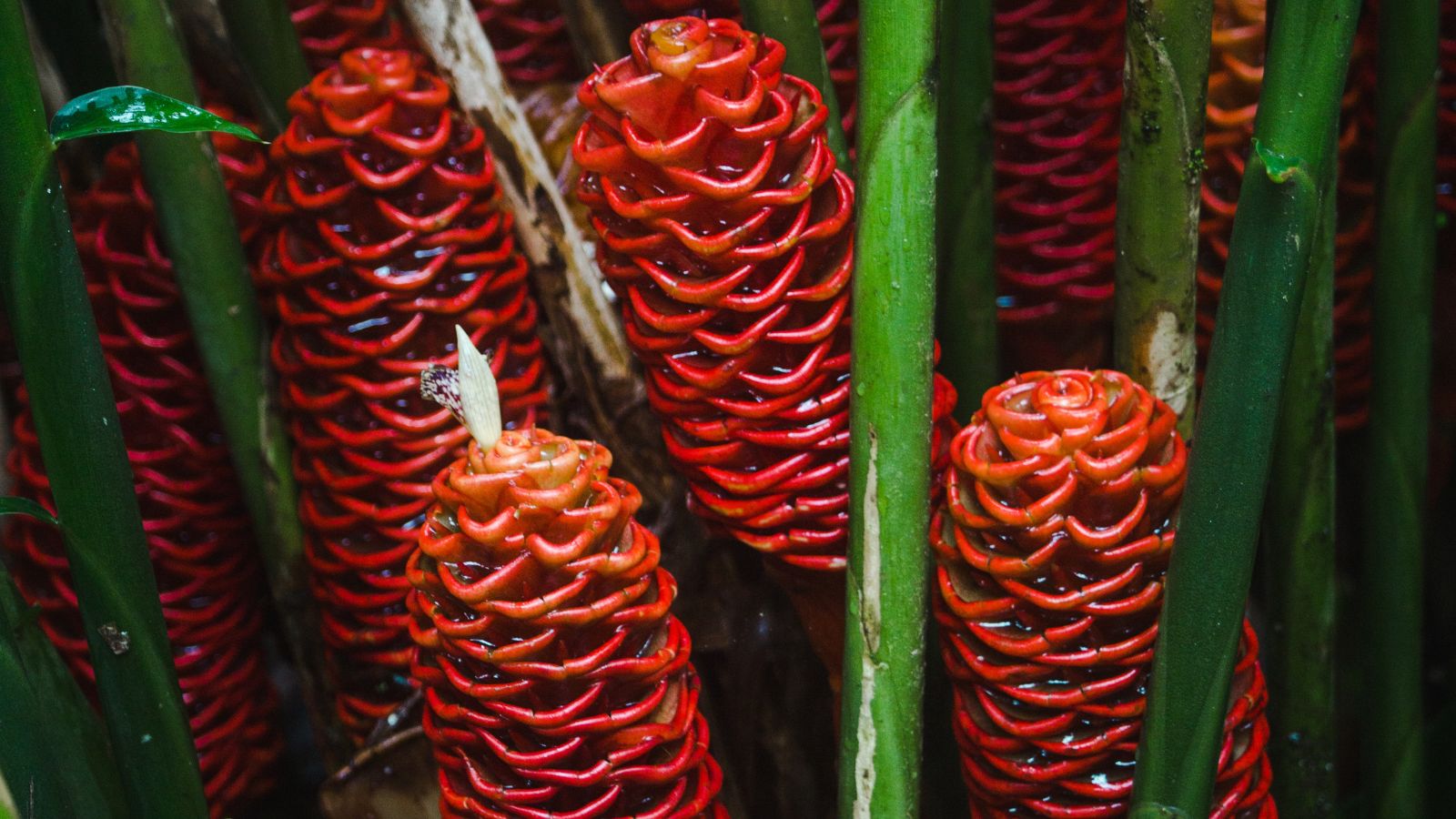
Pine cone ginger is native to the tropical forests of Asia, where it thrives in moist areas near waterfalls and streams. For practical insights on pine cone ginger light requirements in different settings, see Epic Gardening’s guide. In these sites, it grows under a protective canopy, receiving partial shade and dappled sunlight rather than blazing, direct rays all day.
Use this as your north star: mimic forest-edge light. That typically means about 4–6 hours of gentle, filtered sun or bright, indirect light throughout the day. For a broader look at flowering ginger light and care requirements, see The Spruce’s guide to flowering ginger plants.
Hardiness and Seasonal Rhythm
This perennial is hardy in USDA Zones 8–11. In Zone 8, it commonly dies back in colder weather, and anywhere a freeze hits, leaves will drop. The rhizome survives, though, and re-sprouts when conditions warm again.
Light still matters during these seasonal shifts: in spring, aim for gentle ramp-up rather than sudden high-intensity sun, especially after dormancy.
From Green Spikes to Red Cones (and That “Shampoo” Gel)
In summer, pine cone ginger produces green flower spikes with small white blooms. As the blooms fade, the spike transforms into a bright red inflorescence—that’s when the cone begins to secrete the shampoo-like substance people love.
Consistent, moderate light helps encourage this display. Too little light can delay or diminish cones; too much can scorch leaves and stress the plant.
Moisture, Shade, and Microclimates
Where water and shade meet, pine cone ginger is happiest. I like to place it where soil stays evenly moist and humidity remains higher—think near larger plants, water features, or shaded patios. Similar principles apply to other shade-tolerant indoor plants; see how to keep peperomia thriving in low-light spaces.
Remember: light and moisture go hand in hand. Drier air + intense sun equals higher stress; even moisture + partial shade equals lush foliage.
Indoor Lighting Made Easy
Bright, Indirect Light Is Your Best Friend
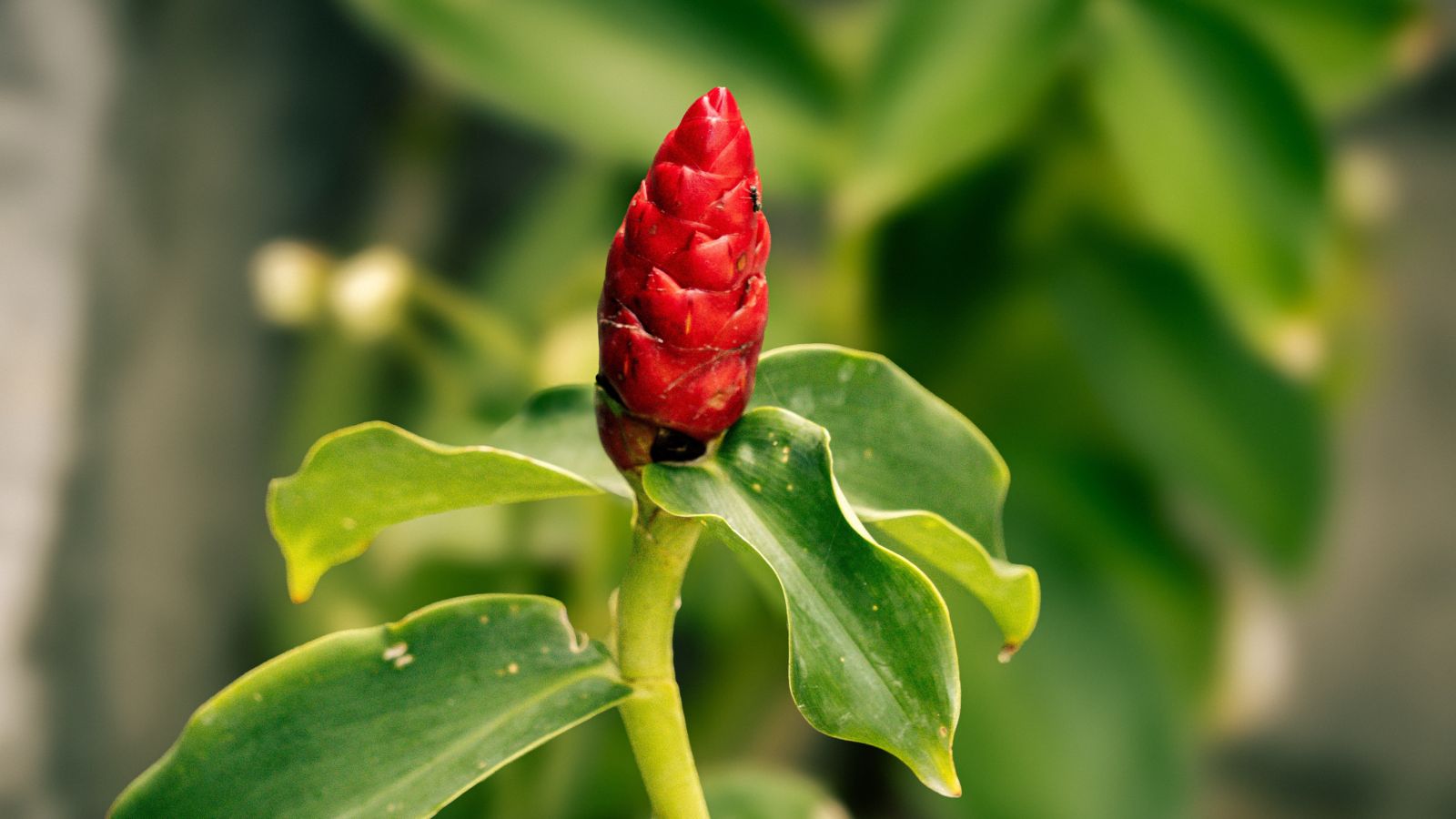
Indoors, I always treat pine cone ginger as a bright, indirect light plant. It can handle a touch of direct sun early or late in the day, but it thrives when you keep it just out of the sunbeams.
If the leaves look lime green and lean toward a window, that’s a hint it needs a brighter spot. If edges brown or curl, it may be getting too much direct sun or heat. If you’re curious about exactly how much light indoor plants need, including pine cone ginger, check our detailed guide on sunlight levels for indoor plants.
Window Placement and Sheer-Curtain Hacks
South- or west-facing windows can work beautifully if you offset the plant from the direct line of rays by a few feet. I’ll often pull mine 2–4 feet back or move it to the side of the sill.
No offset space? Hang a sheer curtain to diffuse the light. The result is a steady wash of brightness without the harsh peaks that cause leaf scorch.
Grow Lights: Positioning and Photoperiod
If sunlight is scarce, add a full-spectrum LED grow light. Keep pine cone ginger just off to the side of the fixture rather than directly under intense diodes—let your sun-loving plants take the center stage under the lamp.
Run lights for about 12–14 hours daily during active growth. Keep the leaf surface cool (no hot-to-the-touch leaves), and adjust the light height so the plant gets bright, indirect intensity. For a complete breakdown of grow light durations for different indoor plants, see our guide on grow light schedules.
Common Indoor Light Mistakes
- Overexposure: Direct midday sun through glass can be intense; expect crispy margins and faded leaf color.
- Underexposure: Deep corners can cause leggy, slow growth and delayed cone development.
- Hot glass proximity: Leaves pressed to a window can heat up fast. Keep foliage a bit back.
- No seasonal adjustment: As the sun angle changes, re-check the light footprint every few weeks.
Outdoor Lighting Without Guesswork

Partial Shade vs. Full Sun
Outdoors, I aim for bright light with partial shade, avoiding more than 4–6 hours of direct sun daily. In cooler climates, a bit of morning sun is fine; in hot climates, move it to shade or dappled light to prevent scorch.
Think of how a forest canopy filters light—the more intense your summer, the more your plant will appreciate that filter.
Use Microclimates: Trees, Walls, and Shade Cloth
Placing a pot under larger trees or near shaded walls or fences creates exactly the kind of gentle brightness pine cone ginger prefers.
If you don’t have natural shade, a temporary shade canopy or 30–40% shade cloth is a great fix during heat waves.
Potted vs. In-Ground Placement
Potted plants let you move with the seasons. I tuck containers nearer to structures (porches, pergolas) so they avoid the harshest rays.
In-ground, choose a site that gets bright ambient light with limited direct exposure. Avoid reflected heat from hardscapes if your summers are hot.
Temperature Triggers: Bring It In Below 50°F (10°C)
Once nights consistently dip below 50°F (10°C), bring container plants indoors and switch to bright, indirect light. This prevents cold stress and keeps foliage looking its best.
For in-ground plants in Zones 8–11, expect dieback with freezes. In colder zones, you’ll lift and store the rhizomes—more on that next.
Dormancy: Store and Restart the Right Way
When Leaves Die Back
As the season ends, leaves naturally yellow and die back, especially after a chill or freeze. That’s your cue to start dormancy prep.
Don’t panic—this cycle is normal. What matters is how you store the rhizomes so they can rest and rebound next season.
How to Lift and Store Rhizomes
- Wait for dieback: When the top growth fades, carefully lift the clump.
- Clean and dry: Brush off soil; avoid washing unless necessary. Let the rhizomes air-dry briefly.
- Pack to rest: Store in paper bags filled with dry peat, coco coir, or sawdust to buffer moisture.
- Cool and dark: Keep them in a dark, temperate spot with good air circulation.
Keep Light Away During Dormancy
This is easy to miss: prevent light from reaching stored rhizomes. Even modest light, paired with room temperatures, can nudge them back into growth too early.
Darkness reduces false starts, preserving energy for a strong spring push.
Waking Them Up
In spring, pot or replant the rhizomes and gradually introduce brighter, indirect light. I start them in softer light and then step up exposure as new shoots strengthen.
Once established, outdoor plants can return to the usual partial shade routine. For additional details on dormancy, rhizome care, and seasonal routines, see Greg App’s care guide for Zingiber zerumbet.
7 Bright Tips to Get Lighting Right
Your Lighting Playbook
- Mimic the Forest: Aim for partial shade or bright, indirect light—about 4–6 hours of gentle sun or steady ambient brightness.
- Prioritize Indoors = Indirect: Near south/west windows, offset the plant or use sheer curtains to diffuse harsh rays.
- Grow Lights, Off to the Side: Give pine cone ginger a bright edge position near LEDs; run 12–14 hours during active growth.
- Watch the Leaves: Crisp margins = too much direct sun/heat; stretchy, pale growth = not enough light.
- Move With the Weather: In hot regions, avoid midday sun. In cooler areas, morning sun + afternoon shade works well.
- Mind the Threshold: Bring potted plants indoors when nights stay below 50°F (10°C); switch to bright, indirect light.
- Dark Dormancy Matters: Store lifted rhizomes in darkness (paper bags with dry peat/coir/sawdust) to prevent premature sprouting.
Troubleshooting, Quick Reference, and Next Steps
Signs of Too Much Light
- Brown or crispy leaf edges: A classic sign of excess direct sun or heat through glass.
- Washed-out foliage: Leaves look dull or bleached; cones may stall.
- Leaf curl or droop midday: Especially during heat waves; provide shade or move the pot.
Signs of Too Little Light
- Leggy, stretching stems: Plant leans toward windows or lights.
- Slow growth and few cones: Energy is going into reaching for light, not into building strong rhizomes and inflorescences.
- Overly dark, soft leaves: A hint the plant is photosynthesizing below its comfort zone.
Quick Reference Table
| Setting | Recommended Light | Notes |
|---|---|---|
| Indoor, Active Growth | Bright, indirect light | Offset from south/west windows; use sheers; grow lights 12–14 hrs. |
| Outdoor, Mild Summers | Partial shade; up to 4–6 hrs gentle direct sun | Great with morning sun + afternoon shade; avoid reflected heat. |
| Outdoor, Hot Summers | Dappled or full-time bright shade | Use trees, structures, or 30–40% shade cloth; prevent leaf scorch. |
| Threshold Temperatures | Bring in below 50°F (10°C) | Shift to indoor bright, indirect light to avoid cold damage. |
| Dormancy (Stored Rhizomes) | Darkness | Paper bags + dry peat/coir/sawdust; avoid light to prevent early sprouting. |
Actionable Checklist and Smart-Gardening Mindset
- Target 4–6 hours of gentle light: Partial shade or bright, indirect light is the sweet spot.
- Indoors, diffuse: Offset from windows or add sheers; consider a side position near LEDs.
- Outdoors, use microclimates: Trees, walls, pergolas, or shade cloth are your friends.
- Respond to symptoms: Crispy tips = less direct sun; leggy growth = more ambient light.
- Mind the thermometer: Bring pots in below 50°F (10°C).
- Keep dormancy dark: Store rhizomes in paper bags with dry medium; exclude light.
- Be consistent year-round: Stable light routines promote steady foliage and better cones.
Smart gardening isn’t about perfection—it’s about observing, adjusting, and staying consistent. With pine cone ginger, a forest-inspired approach to light will keep leaves lush and cones glowing season after season.
If you have your own lighting tips or want feedback on a tricky spot in your home or garden, drop a comment—let’s troubleshoot together. For more practical plant guides, visit Plant Care Dairy and join the conversation.
Disclaimer: This article is for educational purposes only. Always consider your local climate, microclimate, and site conditions when applying plant-care advice. Pine cone ginger lighting needs can vary with season, variety, and placement. When in doubt, make incremental changes and observe your plant’s response over 1–2 weeks.