

The first time I saw a tree full of dark berries, I was convinced they were blackberries. They looked the same—shiny, deep purple, clustered together. But I later learned I had been looking at a mulberry tree, not a blackberry bush. And that’s where the confusion starts for so many people.
It’s an easy mistake to make. At a glance, mulberries and blackberries look alike, yet they come from completely different plants. Mulberries grow on tall trees, while blackberries sprout from thorny canes that spread like brambles across the ground or climb with support.
Why does this small detail matter? If you’re planning to grow them in your garden, or even just curious about the fruit you’re eating, knowing the difference can save you time, effort, and a lot of wrong assumptions. In this guide, I’ll walk you through exactly how blackberries grow, what sets them apart from tree-growing fruits, and how you can cultivate them successfully at home.
So let’s clear up the confusion once and for all: Do blackberries really grow on trees, or is it just another gardening myth?
Do Blackberries Grow on Trees? Clearing Up the Confusion
The first time I spotted a tree covered in dark purple berries, I thought I had discovered a massive blackberry tree. But here’s the thing—there’s no such thing as a blackberry tree. What I saw was a mulberry tree, which looks similar at first glance but is completely different.
This mix-up isn’t rare. Many people wonder the same thing because the fruits look so alike, and the phrase “blackberry tree” has floated around for years. That’s why this question keeps popping up in searches and conversations. So, let’s break it down together and clear up the confusion once and for all.
Quick Answer—Blackberries Grow on Canes, Not Trees

If you’re short on time, here’s the truth: blackberries grow on canes, not trees. They belong to the Rubus genus in the rose family, which means they spread on thorny, bramble-like stems instead of climbing into tall trunks.
I like to think of blackberry plants as tough survivors. They spread quickly, handle rough conditions, and reward you with fruit if you care for them properly. But unlike mulberries—which you’ll always find on trees—blackberries need careful management to stay productive.
Even research highlights how much care these plants actually require. One study published in HortTechnology looked at how different organic fertilizers affected blackberry growth and cost-effectiveness, showing that something as simple as choosing poultry litter over fish-based blends could save growers money while still supporting healthy plants. In other words, blackberries are very much managed like bramble crops—never like towering trees.
Blackberry Plant Characteristics
Blackberries are fascinating once you understand how they really grow. Let’s break down the essentials:
The Growth Cycle (Primocane & Floricane)
Blackberries don’t fruit immediately. They follow a two-year cycle:
- First year (Primocane): Canes grow tall and leafy, but no berries yet.
- Second year (Floricane): Those same canes flower, produce fruit, and then die back.
- After harvest: Old canes are cut, while new primocanes take their place.
This rhythm of growth and renewal keeps the plant going season after season.
Types of Blackberry Plants (Trailing, Erect, Semi-Erect)
Not all blackberries behave the same way. You’ll find three main habits:
- Trailing varieties – Long, vine-like canes that need trellising (e.g., ‘Marion’).
- Erect varieties – Upright, sturdy canes that are easier for home gardeners (e.g., ‘Navaho’).
- Semi-erect varieties – A mix of the two, doing best with a little support (e.g., ‘Triple Crown’).
Choosing the right type depends on your space, climate, and how much work you want to put in.
Thorny vs Thornless Varieties
If you’ve ever picked wild blackberries, you know how painful those thorns can be. Thankfully, breeders created thornless versions that are much easier to grow at home:
- Thorny: Traditional, hardy plants but tough on your hands.
- Thornless: Easier to handle, beginner-friendly, and still produce great fruit.
Both give you sweet, juicy harvests—it’s really about what works better for you. Those who have picked wild blackberries know how unforgiving the thorns can be. It’s a reminder that plants use defenses for survival—just like roses with their thorns.
So the next time someone mentions a “blackberry tree,” you’ll know the real story: blackberries grow on canes with their own unique cycles and varieties, never on tall trunks like mulberries.
The Science Behind Blackberry Growth
When you want to grow blackberries successfully, it helps to understand what they actually need. These plants are hardy, but like most fruits, they’ll only give you their best if the basics are right.
Soil, Sunlight & Climate Needs
Blackberries thrive when:
- Soil pH: Slightly acidic, between 5.5 and 6.5
- Sunlight: At least 6–8 hours daily
- Watering: Around 1–2 inches per week (moist but never waterlogged)
- Climate: Best in USDA Zones 4–10
Why this matters: acidic soil helps the plant absorb nutrients, sunlight builds sugars for sweeter fruit, and steady watering keeps canes strong without rotting the roots.
Pollination & Bee Role
Blackberries are self-fertile, but they still benefit from bees. When bees visit flowers, they boost pollination, leading to bigger, juicier berries. If you’ve ever noticed uneven fruit, that often means poor pollination. So, planting pollinator-friendly flowers nearby can make a real difference in your harvest.
Recent Research (Fertilisers, Fungi, Hydroponics)
Blackberry science has grown quickly in recent years:
- Fertilisers: Studies show organic options like poultry litter can be just as effective as costlier blends, helping growers reduce expenses.
- Fungi: Research published in HortScience found that blackberry plants treated with arbuscular mycorrhizal fungi grew faster and handled stress better by improving nutrient uptake.
- Hydroponics: Trials in controlled environments suggest blackberries can be grown off-season in greenhouses, offering stable yields even in less-than-ideal climates.
For you as a gardener, this means blackberries aren’t just backyard plants anymore—they’re becoming high-tech crops with proven science behind them.
The Confusion—Blackberries vs. Mulberries
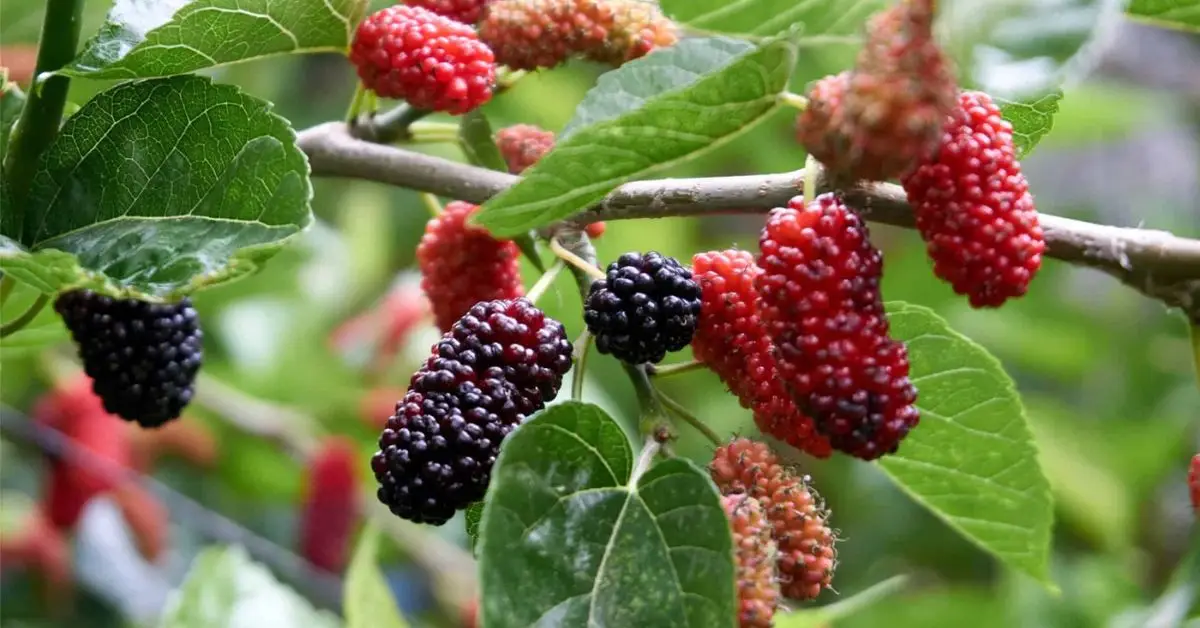
It’s no wonder people mix these fruits up. They look similar in color and shape, but they come from completely different plants.
Botanical Difference (Rubus vs Morus)
- Blackberries: Part of the Rubus genus, in the rose family (Rosaceae).
- Mulberries: Belong to the Morus genus, in the mulberry family (Moraceae).
Growth Style Difference (Shrub vs Tree)
- Blackberries: Grow on low, bramble-like canes.
- Mulberries: Grow on tall, deciduous trees.
Fruit Comparison (Aggregate Drupelets vs Multiple Fruit)
- Blackberries: Each fruit is made of tiny drupelets clustered around a soft core.
- Mulberries: Fruits are multiple berries fused together, forming a long, cylindrical shape.
Myth vs Truth Table
| Myth | Truth |
|---|---|
| Blackberries grow on trees | They grow on canes, like brambles |
| Mulberries and blackberries are the same | They’re from different plant families |
| Both fruits taste identical | Mulberries are often sweeter, blackberries more tart |
Knowing this distinction helps you avoid planting mistakes and makes foraging much safer.
Historical & Cultural Confusion Around Blackberries
Confusion between these fruits isn’t just modern—it stretches back centuries.
Folklore References
In European folklore, blackberry brambles were said to offer protection against evil spirits. Some tales even warned against picking blackberries after Michaelmas (late September), when the devil was believed to spoil them.
Global Naming Confusion
In some cultures and languages, the term “blackberry tree” actually refers to mulberries. That overlap in naming explains why people in different parts of the world still use the two terms interchangeably today.
These historical and cultural layers show that the mix-up isn’t only about looks—it’s also about language and tradition. And that’s exactly why the “blackberry tree” myth has lasted so long.
Nutritional Benefits of Blackberries vs Mulberries
I get asked often if mulberries and blackberries are “basically the same fruit.” The truth is—they’re both nutrient-packed, but with slightly different strengths. If you’re health-conscious, here’s how they stack up:
| Nutrient (per 100g) | Blackberries | Mulberries |
|---|---|---|
| Calories | ~43 | ~43 |
| Vitamin C | 21 mg (24% DV) | 36 mg (40% DV) |
| Fibre | 5.3 g | 1.7 g |
| Antioxidants | High (rich in anthocyanins) | Moderate (resveratrol + Vitamin C) |
| Sugar | ~4.9 g | ~8.1 g |
- If you’re after fibre and a lower sugar snack, blackberries win.
- If you want more Vitamin C, mulberries take the lead.
- Both are great for heart health and digestion. Interestingly, blackberries aren’t the only fruit that often gets misunderstood—strawberries also aren’t technically true berries, and their classification surprises many gardeners.
So, whether you’re eating fresh from the bush or tree, you’re making a smart choice either way.
How to Successfully Grow Blackberries at Home

Growing blackberries isn’t complicated once you understand the basics. Let’s go step by step:
Step 1: Selecting the Right Variety
- Thornless (e.g., ‘Triple Crown’): Easier to harvest, family-friendly.
- Trailing (e.g., ‘Marion’): Needs trellis, produces large fruit.
- Dwarf/Container-friendly (e.g., ‘Baby Cakes’): Perfect for patios or small gardens.
Step 2: Site Preparation
- Pick a sunny spot with 6–8 hours of direct light.
- Soil should be well-drained—add compost if it feels heavy.
- For trailing types, install a trellis early on.
Step 3: Planting & Watering
- Space plants 3–4 feet apart for airflow.
- Water 1–2 inches weekly (more in hot weather).
- Add mulch to retain moisture and suppress weeds.
Step 4: Pruning & Training Canes
- After fruiting, cut old floricanes to the base.
- Summer-prune primocanes to encourage branching.
- Tie canes gently to trellis for better airflow and easier picking.
Step 5: Pest & Disease Prevention
Common threats:
- Cane borers (cause wilted tips)
- Spider mites (webbing on leaves)
- Fungal blight (dark spots, cane dieback)
Organic fixes:
- Use neem oil sprays for pests.
- Keep spacing wide to reduce humidity.
- Prune regularly to avoid overcrowding. Blackberries, like many other plants, have natural defense mechanisms—those sharp thorns are one of them. In fact, if you’re curious, here are nine fascinating ways plants protect themselves from pests and predators.
With these steps, you’ll set yourself up for years of reliable harvests.
Harvesting & Using Blackberries
Once your canes are healthy, the fun part begins—picking and eating.
When Are Blackberries Ripe?
- Deep black, shiny, and plump.
- Easy to pull off with a gentle tug.
- If they’re still red or firm, give them more time.
How to Harvest Without Damage
- Use two fingers to roll the berry off gently.
- Don’t squeeze—blackberries bruise fast.
- Collect in shallow baskets so they don’t crush under their own weight.
Common Uses
Blackberries are versatile. You can:
- Eat them fresh with yogurt or cereal
- Make homemade jams and jellies
- Bake into cobblers, pies, or muffins
- Try them in wine or liqueur recipes
Personally, nothing beats a warm blackberry cobbler with a scoop of vanilla ice cream.
Common Misconceptions About Blackberries
Even with all this info, a few myths keep circling around:
“Blackberries grow on trees”
We’ve cleared this one—they grow on canes, not trees.
“Blackberries and Black Raspberries are the same”
They’re not. Black raspberries are hollow inside when picked, while blackberries keep their core.
“Wild and store-bought blackberries are identical”
Wild ones are usually smaller, more tart, and packed with antioxidants. Store-bought types are bred for size and sweetness.
Busting these myths helps you know what to expect whether you’re buying a carton or picking from a hedgerow.
Actionable Checklist for Gardeners & Foragers
If you just want the essentials in one place, here’s a quick checklist to keep handy:
- Choose the right variety: thornless for easy picking, trailing if you want bigger yields, dwarf if space is limited.
- Prepare the site: full sun, well-drained soil, and trellis support for sprawling types.
- Plant smart: give each plant 3–4 feet of space, water regularly, and mulch to keep roots healthy.
- Prune consistently: remove old floricanes after harvest, and trim primocanes to boost branching.
- Stay ahead of pests and disease: space plants properly, prune for airflow, and consider organic solutions like compost or organic fertilizers to keep the soil strong.
- Harvest and enjoy: pick when berries are fully black and soft, then use them fresh, in jam, or in baking.
This simple routine will keep you on track season after season, whether you’re tending a backyard patch or foraging in the wild.
Final Takeaways
So, do blackberries grow on trees? No—they grow on canes, not towering trunks. The confusion comes from their resemblance to mulberries, but once you know the differences, it’s easy to tell them apart.
If you’re growing your own, remember the basics: choose the right variety, give them sun and space, prune regularly, and keep the soil healthy. With a little care, you’ll enjoy baskets of sweet fruit every summer without the frustration of mistaken identity.
At the end of the day, it’s about confidence—whether you’re planting, picking, or just explaining to someone else why “blackberry trees” don’t exist. And now, you’ve got the clarity to do just that.
What about you—have you ever mistaken mulberries for blackberries? Or do you have a favorite variety you grow at home? Share your experiences in the comments below—I’d love to hear your story.
For more practical gardening tips, plant science insights, and seasonal care guides, visit Plant Care Dairy—your trusted resource for everything green and growing.
Disclaimer: This article is for informational purposes only and is not a substitute for professional gardening or agricultural advice. Always check local growing conditions and consult experts if you’re unsure about plant care or foraging safety.