

Winter watering confuses even seasoned gardeners. I’ve written this guide to cut through the noise and give you clear, actionable steps so your trees, shrubs, evergreens, and fall-planted bulbs roll into spring healthy instead of crispy and brown.
By the end, you’ll know exactly when to water, how much is enough, which plants to prioritize, and how to avoid icy mishaps. I’ll also share my quick soil check, a 7-point checklist you can follow in minutes, and a simple summary table so you can decide what to do at a glance.
Here’s a quick personal note: the first year I planted a row of foundation evergreens, I assumed “dormant” meant “hands off.” By March, the windburn was brutal and half the tips were brown. The next year, I watered deeply until the ground truly froze—and that spring I had lush, glossy growth. Lesson learned: winter water isn’t optional; it’s insurance.
Why Winter Watering Matters
New Roots Aren’t Ready Yet
Newly planted trees, shrubs, and perennials spend fall pushing roots into surrounding soil. Those roots are the plant’s lifeline. If you stop watering too early, the plant relies on limited reserves instead of absorbing moisture from the soil. For a deeper dive into why winter watering is essential and how to schedule it for various plant types, check out this comprehensive guide from All That Grows. That gap, especially in the first winter, is what causes most cold-season losses.
- Shallow root systems need support: Young plants don’t have wide, deep roots yet, so they can’t chase moisture pockets.
- Soil moisture drives root growth: Consistent, deep moisture encourages roots to anchor before freeze-up.
- Evergreens are especially vulnerable: They transpire through winter and lose water even when they “look” dormant.
Cold, Dry Air Causes Physiological Drought
Winter’s low humidity and wind pull moisture from foliage and stems. Meanwhile, cold or frozen soil limits water uptake. That mismatch creates physiological drought, which shows up as winter burn—browning tips and margins, especially on broadleaf and needled evergreens.
- Wind accelerates water loss: Expect more desiccation on exposed sites and hilltops.
- Frozen soil locks out water: Even if there’s moisture in the profile, roots can’t access it when the soil is frozen solid.
- Moisture now prevents damage later: Well-hydrated tissues resist winter burn and rebound faster in spring.
Moist Soil Insulates; Dry Soil Chills
Water in the soil fills air pockets and moderates temperature swings. Moist soil absorbs daytime warmth and releases it slowly overnight, while dry soil is airy and invites cold deeper around roots.
- Wet soil = better thermal mass: It blunts freeze–thaw cycles that can heave new plantings out of the ground.
- Dry soil = rapid chilling: Plants experience sharper swings, increasing stress and root damage.
- Even one deep soak helps: A targeted watering before a hard cold snap can make a measurable difference.
When And How Much To Water Before The Freeze
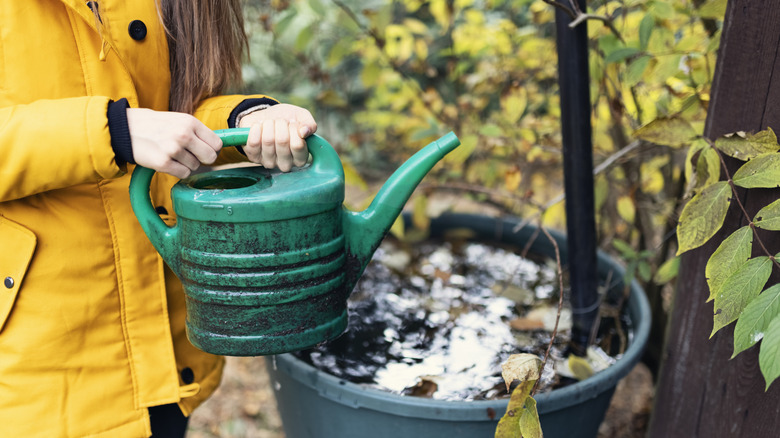
Time It For Late Morning On Above-Freezing Days
I aim to water on days when temps are above freezing for several hours, ideally in the late morning. That way, water penetrates instead of flashing to ice at the surface, and foliage has time to dry before evening cold.
- Late morning window: Water between 10 a.m. and 1 p.m. when possible.
- Watch the forecast: If a hard freeze arrives tonight, water earlier in the day to allow infiltration.
- Skip icy stretches: Avoid watering when the soil surface is already frozen hard or the path will ice over.
Deep Soaks Beat Frequent Sprinkles
Your goal is moisture in the root zone, not surface dampness. I prefer a slow trickle at the base for 5–10 minutes per plant, adjusting by size and soil type.
- Slow and steady: Use a soaker hose, tree bag, or partially open spigot for a gentle flow. If you struggle with knowing exactly how much water each plant needs, this guide on mastering the perfect watering schedule can help you take the guesswork out of it.
- Target the root ball: Focus on the planting area and 6–12 inches beyond the dripline for shrubs, farther for trees.
- Measure the soak: In loam, aim for moisture 6–8 inches deep; in sand, you may need longer; in clay, go slower to avoid runoff.
Prioritize Newly Planted Trees, Shrubs, Evergreens, And Bulbs
Not every plant needs the same attention. I triage my yard so the most vulnerable get water first.
- Top priority: Anything planted this fall (trees, shrubs, perennials, and bulbs).
- High priority: Evergreens planted within the last two years, especially conifers and broadleaf evergreens.
- Moderate priority: Established deciduous trees and shrubs in exposed, windy sites or sandy soil.
- Special cases: Container plants and raised beds, which dry and freeze faster.
The 7 Winter Watering Rules
Quick Read: Your 7-Point Winter Watering Checklist
I keep this list on my phone and run through it before each cold snap. It’s simple, fast, and keeps me consistent. For a broader perspective on watering techniques throughout the year, these 10 golden rules from Gardena offer practical tips applicable to both indoor and outdoor plants.
- Water Until The Ground Actually Freezes: Continue deep-watering new plantings weekly (or as needed) until the soil is frozen solid and stays that way.
- Choose Late Morning On Mild Days: Water when temps are above freezing for several hours so water can infiltrate and foliage can dry.
- Go Deep, Not Often: Deliver a slow trickle for 5–10 minutes per plant (more for trees), targeting the root ball and surrounding soil.
- Check The Soil, Not The Calendar: Probe 2–4 inches down; if it’s dry and unfrozen, water. If it’s moist or frozen hard, wait.
- Prioritize Evergreens And Newbies: Focus on first-year plantings, evergreens, bulbs, and anything in wind-exposed or sandy spots.
- Avoid Runoff And Ice: Don’t flood slopes or paved edges; reduce flow on clay soils and stop if water pools.
- Shut Down Safely After: Disconnect hoses, drain lines, insulate spigots, and store soaker hoses to prevent burst damage.
How To Check Soil Moisture Quickly
I use both a simple finger test and a basic screwdriver. Both beat guessing by the calendar.
- Finger test: Push your finger 2–3 inches into the soil. If it’s dry and the soil is workable, water. Recognizing early signs of underwatering can save your plants; this guide shows symptoms to watch for and corrective steps to revive stressed plants.
- Screwdriver test: A standard screwdriver should slide in easily through moist soil. If it resists and soil crumbles out dry, it’s time to water.
- Handful squeeze: In garden beds, grab a handful from a small test hole. If it barely holds together, it’s dry; if it forms a tacky ball, skip watering.
Signs You Should Skip Watering Today
Overwatering is rare in winter, but timing mistakes happen. Avoiding winter watering mistakes is easier when you know the common pitfalls—this article covers frequent errors gardeners make and how to prevent them.
Here’s when I hold off.
- Frozen surface crust: If you can’t push in a screwdriver, wait for a thaw.
- Standing water or pooling: Especially on clay or compacted sites—switch to lighter, longer, slower soaks next time.
- Heavy rain or snow forecast within 24 hours: Let the weather do the work unless plants are extremely exposed to wind.
Troubleshooting And Safety In Cold Weather
Prevent Ice And Slippery Patches
Safety first. I make a quick route plan before I turn on the spigot so water doesn’t run onto walkways and freeze overnight.
- Redirect runoff: Keep soaker hoses away from pathways and driveways. Build a small soil berm if needed.
- Use mulch wisely: A 2–3 inch layer around plants (not touching trunks) holds moisture and reduces splash-ice.
- Don’t glaze bark: Avoid spraying trunks and evergreen foliage late in the day; excess surface water can freeze and cause damage.
Protect Hoses, Spigots, And Backflow Preventers
Even one night of freezing water inside a line can crack fittings. After each watering session, I winterize the gear—takes two minutes and saves a headache.
- Disconnect and drain: Lift hoses from low points so water runs out; store coiled and dry.
- Insulate spigots: Use foam covers or wrapped towels plus plastic if a hard freeze is coming.
- Blow out soaker hoses: A quick pass with low-pressure air removes trapped water.
Avoid Overwatering Clay And Low Spots
Clay soils can hold water against roots and create puddles that turn to ice. I lighten the flow and extend the duration in these spots.
- Go lower flow, longer time: Let the water soak rather than run.
- Check drainage: If water lingers 30 minutes after you finish, you used too much or the soil is saturated.
- Build a donut berm: A shallow ring around the root zone helps direct water where it’s needed without runoff.
Regional And Plant-Specific Nuance
Arid And Windy Zones Need Extra Attention
If you garden where winter air is very dry or winds are frequent, assume higher water loss. I plan more frequent checks in these conditions.
- Windbreaks help: Burlap screens or temporary fencing reduce desiccation on exposed sites.
- Sandy soils dry fast: Expect to water more often but for shorter periods to match infiltration rates.
- Monitor evergreens weekly: Needle tip fade and dull sheen can signal desiccation.
Evergreens Vs. Deciduous: Who Needs It Most?
Evergreens keep losing moisture through winter, while deciduous plants drop leaves and reduce loss. That’s why I focus winter watering on pines, spruces, firs, hollies, boxwoods, and other broadleaf evergreens.
- Broadleaf evergreens: Boxwood, holly, rhododendron, laurel—high risk of winter burn; prioritize deep watering and wind protection.
- Needled evergreens: Pine, spruce, fir—moderate risk; maintain regular deep soaks until freeze.
- Deciduous trees and shrubs: Lower winter water loss; still water in late fall, especially first-year plantings.
Container Plants And Raised Beds Freeze Faster
Above-ground soil loses heat quickly. I treat containers and raised beds like high-risk zones and adjust accordingly. Indoor container gardeners may also find this detailed guide on winter care for indoor plants helpful to prevent stress from dry winter air.
- Before hard freezes: Water containers thoroughly, then move them to sheltered, unheated spaces if possible.
- Elevate and insulate: Use pot feet, wrap with insulating fabric, and cluster pots for shared warmth.
- Check more often: Wind exposure dries containers rapidly—even in cold weather.
Wrap-Up, Summary Table, And Next Steps
Smart Gardening Mindset
Winter watering isn’t about flooding soil; it’s about timing and depth. I’ve learned that a few well-timed soaks before the ground freezes prevent physiological drought, reduce winter burn, and set the stage for strong spring growth.
- Think stewardship, not survival mode: Strategic watering now builds resilience for spring.
- Use the forecast as your guide: Time waterings ahead of cold snaps and thaws, not by the calendar alone.
- Prioritize the vulnerable: New plantings, evergreens, containers, and windy sites always come first.
At-A-Glance Winter Watering Guide
| Condition | Action | Notes |
|---|---|---|
| Soil Unfrozen, Dry 2–4 Inches Down | Deep-water for 5–10 minutes per plant | Extend time for large trees; reduce flow on clay |
| Late Morning, Above-Freezing Forecast | Water today | Allows infiltration and foliage dry-down |
| Hard Freeze Tonight | Water earlier in day or postpone | Prevent surface ice and runoff |
| New Evergreens (Year 1–2) | Prioritize weekly checks and deep soaks | High risk of winter burn from desiccation |
| Deciduous, Established | Water only if extended dry spell | Lower winter water loss without leaves |
| Containers/Raised Beds | Water thoroughly; add insulation | Freeze faster; check more frequently |
Your Next Three Moves
- Run the 7-point checklist: Walk your yard, check soil at each new planting, and water any sites that are dry and unfrozen.
- Prep gear for freeze-ups: After watering, drain hoses and insulate spigots so you’re ready for the next mild window.
- Winterize the rest of the landscape: Top up mulch, secure windbreaks for evergreens, and review your lawn winterizing plan before deeper cold arrives.
If this guide helped, I’d love to hear what you’re trying this week. Share your wins and questions with the community at Plant Care Dairy—drop a comment and tell us how your winter watering is going.
Disclaimer: This article provides general gardening information and is not a substitute for local guidance. Always consider your climate zone, soil type, site conditions, and municipal water rules. Use caution around ice hazards and plumbing; consult a local extension service or licensed professional for region-specific advice.