

I used to snip and hope with my split-leaf philodendron, convinced that any green bit in water would magically sprout roots. After a few mushy cuttings and a very stubborn woody stem, I realized success comes from matching the right method to the right plant stage.
This guide cuts through the confusion and gives you actionable, step-by-step direction for stem cuttings, air layering, and division. You’ll learn how to choose the best technique for your plant’s maturity, what to prepare ahead of time, and how to keep new starts thriving.
Know Your Split-Leaf Philodendron (Why It Matters Before You Propagate)
Meet The Plant
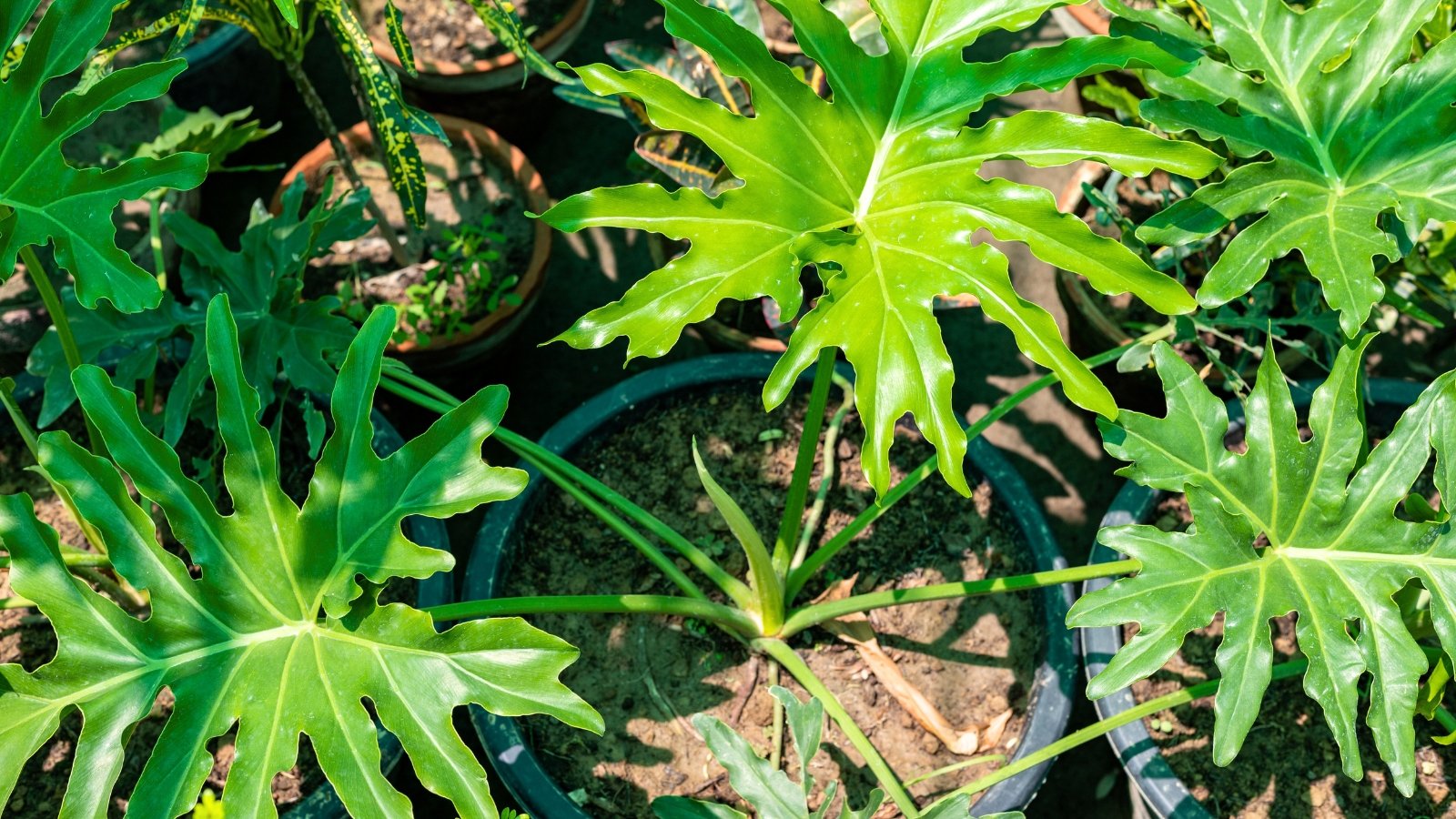
Split-leaf philodendron (Philodendron bipinnatifidum) is a dramatic, self-heading aroid native to the subtropical and tropical regions of South America. For a deeper dive into general care and growth tips, check out The Spruce’s guide on growing philodendrons. Outdoors in warm climates, it can reach impressive heights and spread; indoors, it becomes a bold, sculptural houseplant.
The enormous, deeply lobed leaves with wavy, cut edges are what give it the “split-leaf” name. Those leaves can grow to several feet long and form a striking canopy when the plant is happy.
Monstera Lookalike? Know The Difference
It’s often mistaken for Monstera deliciosa, but this species is a true philodendron and self-heading, not a vining plant. Learn more about its botanical classification on Britannica’s Philodendron entry. That growth habit matters for propagation because nodes sit down on a thick, woody stem rather than along a vine.
Knowing where the nodes live—and how woody the stem is—tells you which propagation method will be easiest and most reliable.
When Bigger Is Better (And When It’s Not)
As plants mature, stems become thicker and woodier. Young, green, flexible stems usually root fastest from cuttings. Older, thicker stems respond better to air layering or division to minimize stress and boost success.
I use a simple rule: soft stems = cuttings, woody stems = air layer or divide.
How Method Matches Maturity
- Young Plants: Choose stem cuttings for a high success rate and faster rooting.
- Large, Woody Plants: Opt for air layering so the cutting stays nourished while rooting forms.
- Clumping, Multi-Stem Plants: Use division for the quickest route to a fully rooted plantlet.
Choose Your Method: Cuttings, Air Layering, Or Division
1. Stem Cuttings: Best For Young, Flexible Stems
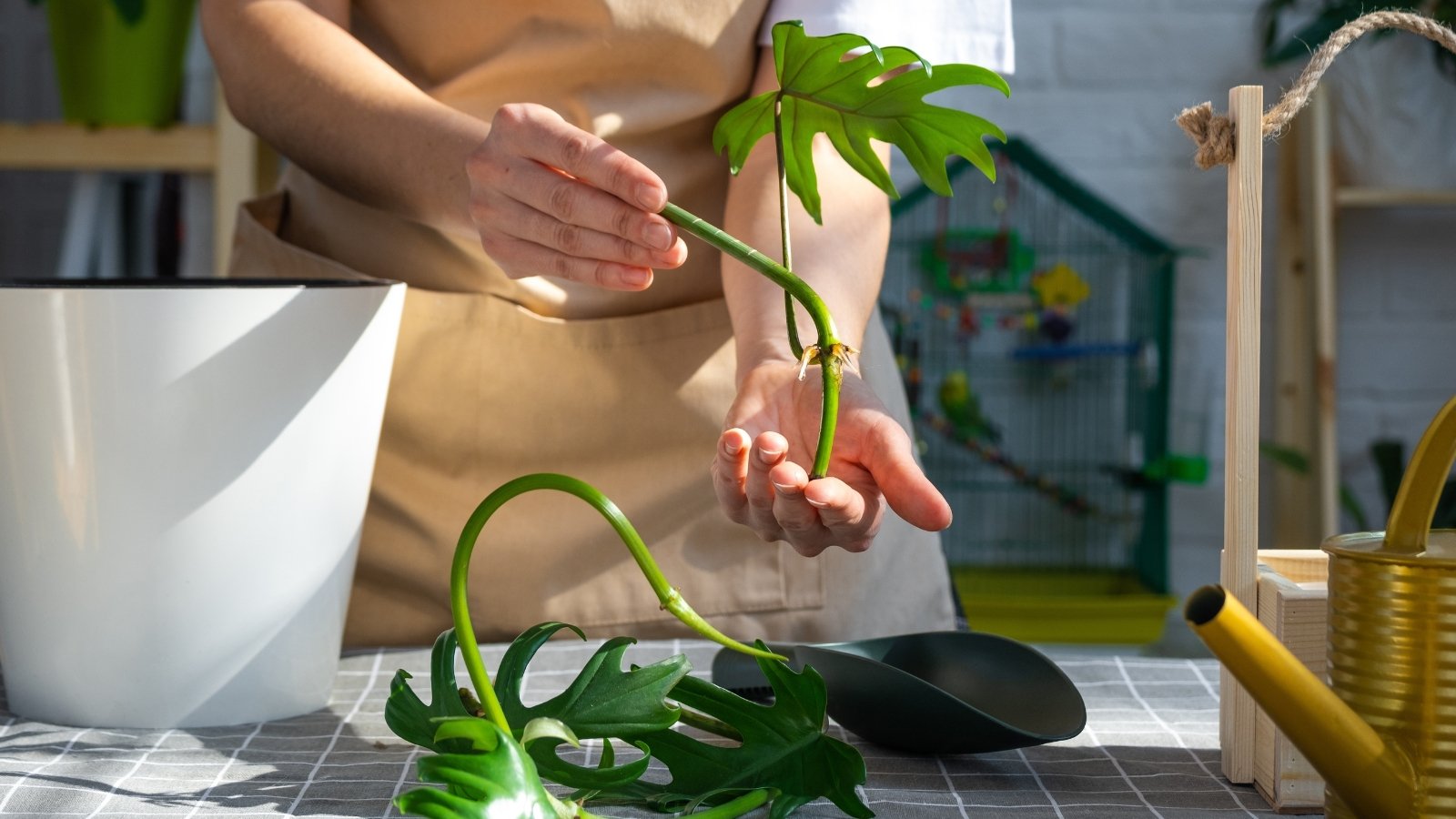
Cuttings are the classic approach when stems are still green and pliable. Your mission is to include node tissue in the cutting—without a node, new roots will not appear.
- High success on juveniles: Young growth responds quickly to clean cuts and consistent humidity.
- Water or soil: Both methods work; water lets you see roots forming, while soil is transplant-ready.
2. Air Layering: Smart For Woody Giants
When stems turn thick and woody, rooting a detached cutting can be slow or unreliable. Air layering keeps the stem attached to the parent while roots form, lowering stress and increasing success.
- Great for mature plants: Especially when nodes are embedded in thick stem tissue.
- Lower risk: The plant continues feeding the layered section until you separate it.
3. Division: Fastest For Multi-Stem Clumps
Big, clumping plants often produce offshoots or multiple crowns. Separating these yields an instantly rooted plantlet and resets crowding.
- Quick results: Each division already has roots and a growing point.
- Best timing: Spring or summer when the plant is actively growing.
Timing And Tools
- Ideal season: Late spring through summer for fastest recovery and growth. For a detailed overview of philodendron care, see SD State University Extension’s guide.
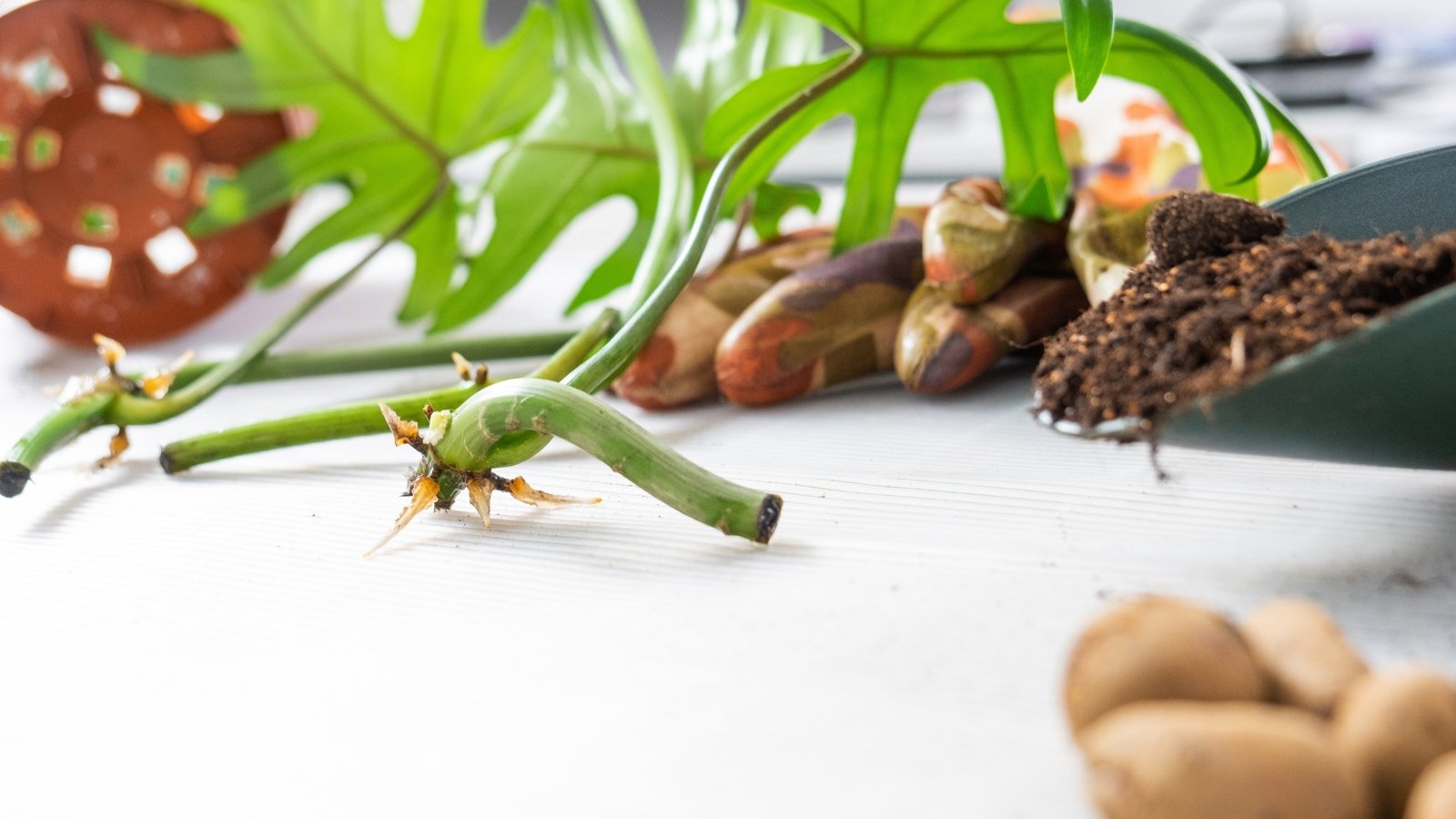
- Must-have tools: Clean, sharp pruning knife or shears; alcohol for sterilizing; rooting hormone; sphagnum moss; breathable ties or plastic wrap; airy potting mix for aroids.
- Environment: Warmth (70–80°F/21–27°C), bright indirect light, and moderate-to-high humidity.
Whether you’re propagating a philodendron or experimenting with other indoor growing techniques, understanding the basics of controlled environments can help—check out our guide on how to grow hydroponic lettuce at home for tips on managing light, humidity, and water systems indoors.
Propagating By Stem Cuttings: Step-By-Step
Pick A Healthy Stem

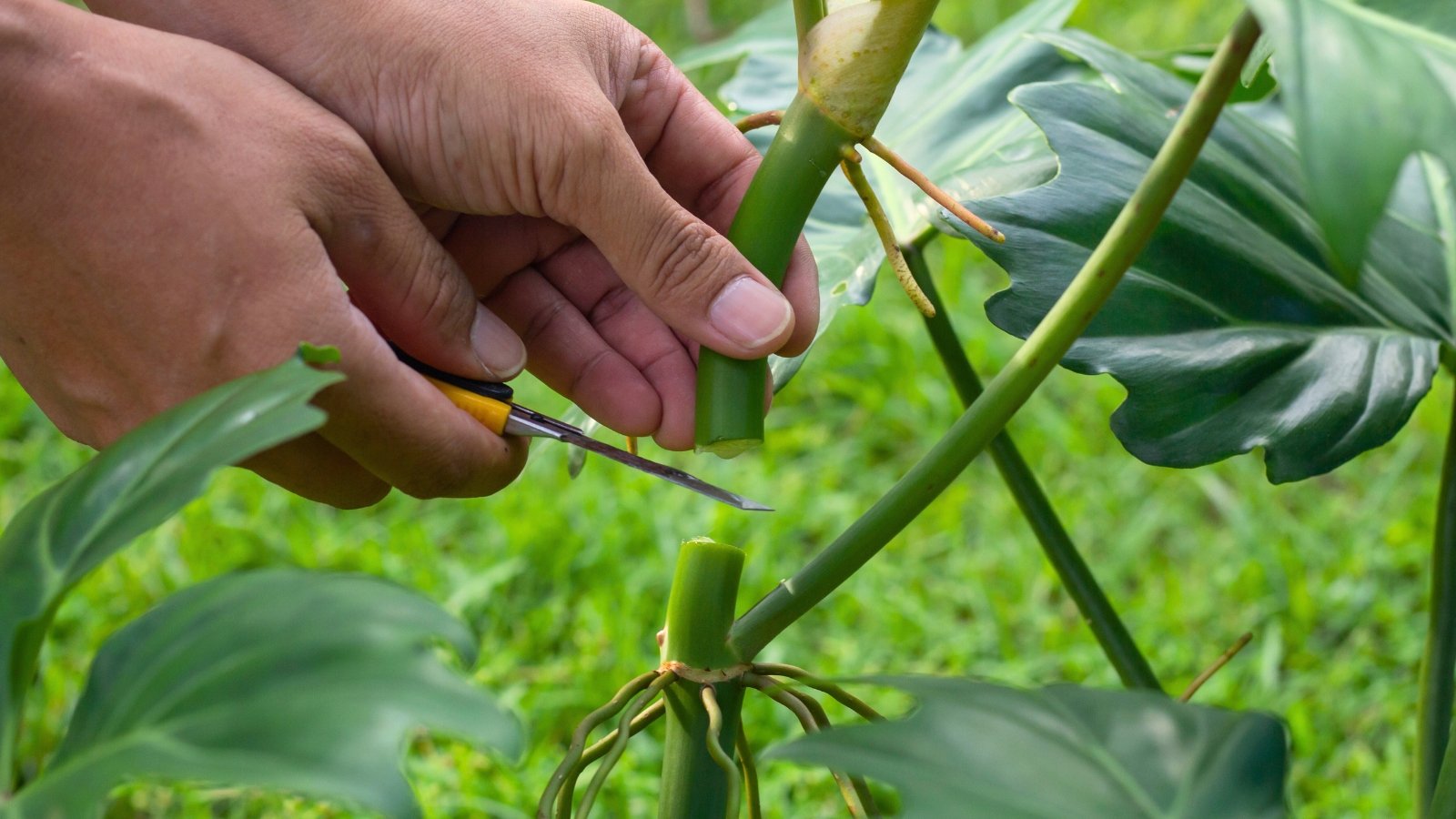
Choose a vigorous, unblemished stem with at least one visible node. On this self-heading plant, nodes sit down on the main stem where leaves emerge.
If you don’t include node tissue, the cutting won’t root—so aim carefully for that swelling where leaf or aerial root originates.
Make The Cut

Sanitize your blade. Make a clean, angled cut that captures part of the node without removing excessive tissue from the parent. On thicker stems, you may need to cut slightly into the main stem to access that node.
- Sterilize first: Wipe blades with alcohol between cuts to prevent disease.
- Mind the sap: Allow the cut to air-dry for 10–20 minutes before rooting to reduce rot risk.
Root In Water

Place the node under water and keep leaves above the waterline. Refresh water every few days to limit bacteria and fungi.
- Light: Bright, indirect light encourages strong root growth without leaf scorch.
- Patience pays: Expect roots in 3–6 weeks; wait until they’re a few inches long before potting.
Root In Soil Or Moss

Dust the cut end with rooting hormone, then set it into a light, airy mix (peat/coir + perlite) or damp sphagnum moss. Maintain even moisture—never soggy—and steady warmth.
- Hands-off approach: Resist tugging; disturbing cuttings delays rooting.
- Typical timeline: Roots often appear in 3–6 weeks under warm, humid conditions.
Transplant And Aftercare
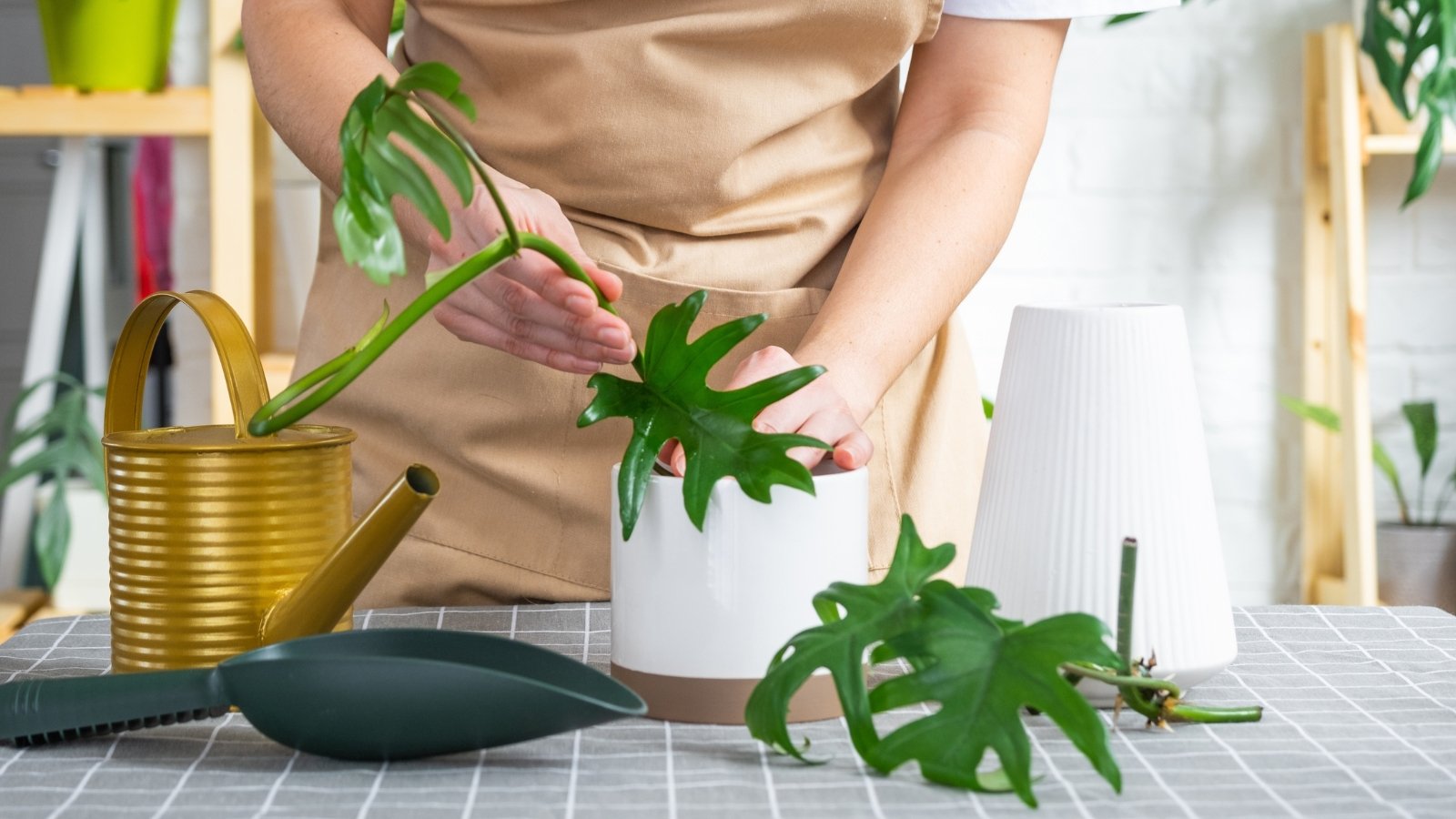
For water-rooted cuttings, pot up once roots are sturdy and a few inches long. Use a well-draining aroid mix and keep humidity high during the first two weeks.
- Light: Bright, indirect light until new growth begins to push.
- Moisture: Keep soil lightly moist; never waterlog a fresh transplant.
Air Layering For Mature Plants: A Gentle, Reliable Approach

Pick A Healthy Stem
Select a strong stem about 1/2–1 inch thick, ideally just above a node or aerial root. That’s where new roots will emerge.
- Vital rule: Without node tissue, roots won’t form—always layer at or just above a node.
- Positioning: Choose a section you can easily monitor and keep evenly moist.
Make A Cut
With a sterile blade, make a 1-inch diagonal cut into the stem from the node upward, about one-third of the way through. Insert a small spacer (toothpick or plastic) to keep the cut open.
- Clean and precise: Avoid jagged wounds; neat cuts heal and root better.
- Hormone boost: Dust the cut with rooting hormone to jump-start root formation.
Wrap The Layer
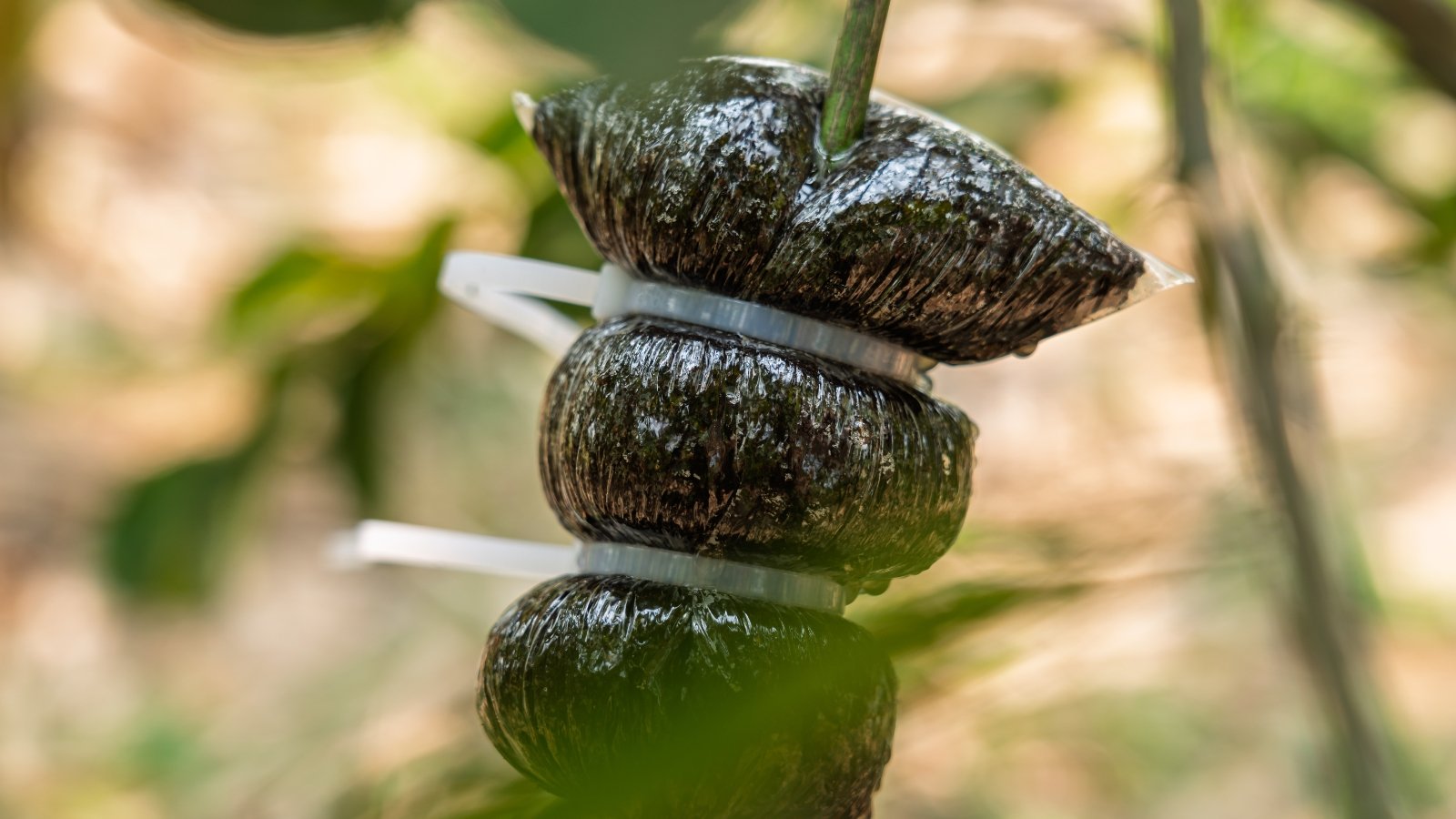
Pack the wound with damp (not dripping) sphagnum or peat moss. Wrap with a propagation shell or plastic and secure both ends to hold moisture.
- Moist like a sponge: Too wet invites rot; too dry stalls rooting.
- Label the date: Expect visible roots in 4–8 weeks in warm, bright conditions.
Check In
Every 3–4 days, ensure the moss remains evenly moist. A quick mist through a small opening is often enough.
- Signs of progress: Moss bulges slightly and whitish roots begin pressing against the wrap.
- If it dries out: Re-moisten immediately; dryness can abort early root initials.
Transplant And Aftercare
When you see strong roots through the moss, cut below the rooted section and pot into a well-draining aroid mix. Keep humidity high and light bright-but-indirect until you see new growth.
- Stability first: Stake the new plant if the rooted section is top-heavy.
- Go gentle: No heavy feeding until you see fresh leaves.
Divide And Conquer: Propagation By Division

Divide The Plant

Plan to divide in spring or summer while growth is active. Water the plant the day before to reduce stress. Gently remove it from the pot and loosen the soil to expose crowns and roots.
- Look for natural separations: Identify distinct crowns with their own stems and leaves.
- Work patiently: Shaking away excess soil reveals where roots can be teased apart.
Separate Carefully
Each division needs at least one growing point and some roots. Use your hands to pull apart sections; if roots are tightly woven, make clean, sterilized cuts between them.
- Trim trouble spots: Remove any dark, mushy, or desiccated roots.
- Keep roots intact: The more root mass you preserve, the quicker the recovery.
Repot And Reset
Pot divisions into fresh, well-draining aroid mix at the same depth as before. Water thoroughly, then place in warm, humid, bright-indirect light.
- Moist, not soggy: Maintain even moisture while the plant re-establishes.
- Feed lightly later: Wait for new growth, then begin a dilute fertilizer routine.
Aftercare, Troubleshooting, And Timeline

Light, Humidity, And Water
Newly propagated philodendrons thrive with bright, indirect light, steady warmth, and moderate-to-high humidity. Avoid intense midday sun while roots are still delicate. For philodendron cuttings, bright indirect light is ideal—but for more insight into light requirements for indoor plants, including low, medium, and bright conditions, read our guide on how much sunlight indoor plants really need.
- Ideal temps: 70–80°F (21–27°C) for rooting and early establishment.
- Humidity aim: 50–70%; use a pebble tray or humidifier to stabilize the microclimate.
- Water rhythm: Keep the medium lightly moist; allow the top inch to dry slightly between waterings after establishment.
Maintaining steady moisture, light, and humidity is key for new starts—if you want more examples of plants that thrive indoors year-round, see our step-by-step guide on how to grow arugula indoors all year.
Common Problems And Fixes
- Cutting turns mushy: Too wet or stagnant conditions. Refresh water more often, improve aeration, and let cut ends callus before rooting.
- No roots after weeks: Insufficient node tissue or low light. Re-cut to include a node and increase indirect light exposure.
- Leaf scorch or curl: Light is too intense or humidity too low. Pull back from windows and boost humidity.
- Wilting after potting: Transplant shock. Increase humidity, reduce direct sun, and avoid fertilizing until growth resumes.
When To Pot Up And Feed
- Water-rooted cuttings: Pot up when roots are firm and 2–4 inches long.
- Layered plants: Separate once you see vigorous roots pressing against the wrap.
- Divisions: Repot immediately after separation; keep evenly moist for 2–3 weeks.
- Fertilizer: Start at half-strength only after new growth appears.
Quick Reference: Checklist And Summary
I like to end every propagation project with a quick run-through. Use this to keep your process simple, repeatable, and stress-free.
| Plant Maturity | Best Method | Rooting Window | Key Tips |
|---|---|---|---|
| Young, Flexible Stems | Stem Cuttings (Water or Soil) | 3–6 Weeks | Include node tissue; bright indirect light; steady warmth and humidity. |
| Woody, Mature Stems | Air Layering | 4–8 Weeks | Cut 1/3 into stem at a node; wrap damp moss; keep evenly moist. |
| Clumping, Multi-Stem Plants | Division | Immediate | Each division needs roots and a growing point; repot at same depth. |
- Prep smart: Sterilize tools, stage your materials, and set up a warm, bright, humid workspace.
- Match method: Cuttings for soft stems, air layer for woody stems, divide for multi-crown clumps.
- Moisture control: Damp, not drenched—sphagnum and airy mixes prevent rot.
- Hands off: Minimize handling until roots are clearly established.
- Ease into feeding: Wait for new growth, then feed lightly.
Smart gardening is about choosing the simplest effective method and creating conditions that make success repeatable. Once you align method with maturity and keep warmth, light, and humidity on point, propagation becomes reliable—and honestly, pretty fun.
Have a question or a tip of your own? Share it in the comments and tell us how your propagation went. For more practical, step-by-step plant wisdom, visit Plant Care Dairy.
Disclaimer: This article is for educational purposes only. Always sanitize tools and handle sharp blades with care. Philodendrons are toxic if ingested—keep plants and cuttings away from pets and children. Local regulations may apply to plant propagation and trade; check your area’s guidelines. Your results may vary based on environment and plant health.