

When my Monstera first started curling, I panicked. Was it dying? Was I overwatering, underwatering, or burning it with light? I’ve been there—staring at a leaf that won’t relax and wondering what I messed up.
Here’s the truth: curling is your plant talking. Sometimes it’s normal (a new leaf unfurling). Sometimes it’s stress—dry soil, low humidity, too much sun, a pest nibble, or a salty fertilizer mix. The good news? You can read the signs fast and fix them even faster.
In this guide, I’ll help you decode what the curl is telling you and show you quick, no-drama steps that work. We’ll start with a 60-second check, separate “emergency fixes” from “long-term care,” and keep it simple—so you don’t bounce between tabs guessing.
I’ll also point out one key mistake I see everywhere: people treat every curl the same. We won’t. You’ll learn how to spot normal unfurling vs. stress curl at a glance, and what to do next so leaves recover and new growth comes in clean.
If you’ve been asking “why are my Monstera leaves curling,” you’re in the right place. Let’s fix it—quickly, and for good.
Before we dive in, tell me: are your curled leaves crispy at the edges, or soft and a bit yellow? That one clue changes the first step.
Spotting the Curl: When It’s a Warning Sign vs. Normal Growth
The first time I noticed my Monstera’s leaves curling, I jumped to the worst conclusion — that I had somehow failed my plant. Later, I realised something important: not every curl is a cry for help. In fact, some curling is completely natural.
When a new leaf emerges, it usually looks tightly rolled, almost like a green tube. Over the next few days, that leaf slowly unfurls until it’s flat and glossy. That’s part of normal growth. If you see curling only on fresh leaves and they are opening at a steady pace, you don’t need to worry. That curl is simply the plant’s way of protecting delicate new tissue until it’s ready to face the world.
Stress curl, on the other hand, has a very different look. It shows up on older, already-open leaves. Instead of a smooth roll, the leaf edges might fold inwards unevenly, the tips may crisp up, or the whole leaf can take on a claw-like shape. This isn’t growth — it’s the plant telling you it’s under pressure from something in its environment.
Here’s the simple test I use:
- If the curl is only on brand-new leaves and they straighten out within a week, it’s natural.
- If the curl is on mature leaves and comes with yellowing, browning, or limp patches, it’s stress.
Knowing the difference matters because it stops you from panicking over normal growth, but also pushes you to act quickly when the plant really is in trouble. Many Monstera owners get stuck because they treat all curls the same. Once you can separate “natural curl” from “stress curl,” you’ll already be ahead of most guides out there.
Top Causes Behind Curling Leaves (And How to Diagnose Them)
I like to think of leaf curl as a language. Your Monstera is speaking, and once you learn to match symptoms with causes, the fixes become obvious. Let’s go through the main culprits one by one, with signs to watch for and simple steps you can take.
Underwatering & Dry Soil

If you’ve ever let your Monstera go too long between drinks, you’ve probably seen this. The leaves curl inward to conserve whatever water is left inside. Alongside the curl, you’ll notice:
- Dry, crispy brown tips or edges
- Soil pulling away from the sides of the pot
- The pot feeling unusually light when you pick it up
The solution is simple but has to be done right. A light splash on top won’t cut it. You need to give the plant a deep soak, watering slowly until liquid drains out of the holes at the bottom. This rehydrates the root ball evenly, which is the only way to stop that curling caused by drought stress.
Overwatering & Root Stress
The opposite problem happens when you’re a little too generous with the watering can. If the roots sit in soggy soil for days, they can’t breathe. The leaves respond by curling, but this time you’ll usually see yellowing along with it.
Signs include:
- Leaves that feel soft, limp, or mushy
- Yellow patches spreading from the bottom leaves upwards
- Soil that still feels wet several days after watering
The best prevention is balance. Use a pot with proper drainage and never let the plant sit in water. I also recommend testing the soil before you water. Even a basic moisture meter (a tip widely shared by growers on Epic Gardening) can save you from drowning your Monstera. Let the top inch or two of soil dry before the next drink, and you’ll avoid root stress.
Low Humidity
Monsteras are tropical by nature. Indoors, especially in winter with heating on, the air can drop far below what they’re used to. If humidity dips under 50%, you’ll often see leaves curling inward at the edges.
The telltale signs are:
- Curling focused along the sides of the leaf
- Brown, papery tips forming in dry spots
To fix it, you don’t always need to buy expensive gadgets. A simple pebble tray under the pot can help, or you can group plants together to create a humid microclimate. That said, if your indoor air stays very dry, a small humidifier is worth the investment.
Light Stress (Too Much or Too Little)
Light can be tricky with Monsteras. Too much sun, especially in a hot south-facing window, scorches leaves and makes them curl up as a defense. Too little light, on the other hand, leads to weak, stretched growth where leaves curl simply because they don’t have the energy to expand properly.
If you see curling with faded or burnt spots, you’ve got too much light. If you see curling with thin, pale leaves, it’s not enough.
The sweet spot is bright, indirect light. East-facing windows are excellent, or you can filter south light with a sheer curtain. It’s about mimicking that dappled jungle light where Monsteras naturally thrive.
Pest Infestation (Spider Mites, Thrips)
Curling plus tiny dots, sticky residue, or fine webbing usually means pests are feeding on your plant. They suck sap out of the leaves, and the plant responds by curling up defensively.
If you catch it early, it’s manageable.
- Wipe the leaves down with a damp cloth
- Spray with a diluted neem oil solution
- For heavier infestations, use insecticidal soap weekly until you see fresh, healthy growth
Pest problems can look scary, but they rarely mean the end of your plant if you act quickly. Dealing with pests indoors can feel overwhelming, but the same principles apply as with outdoor weeds — prevention and consistency are key, just like when you’re tackling dandelions in your garden.
Fertilizer Burn or Nutrient Deficiency
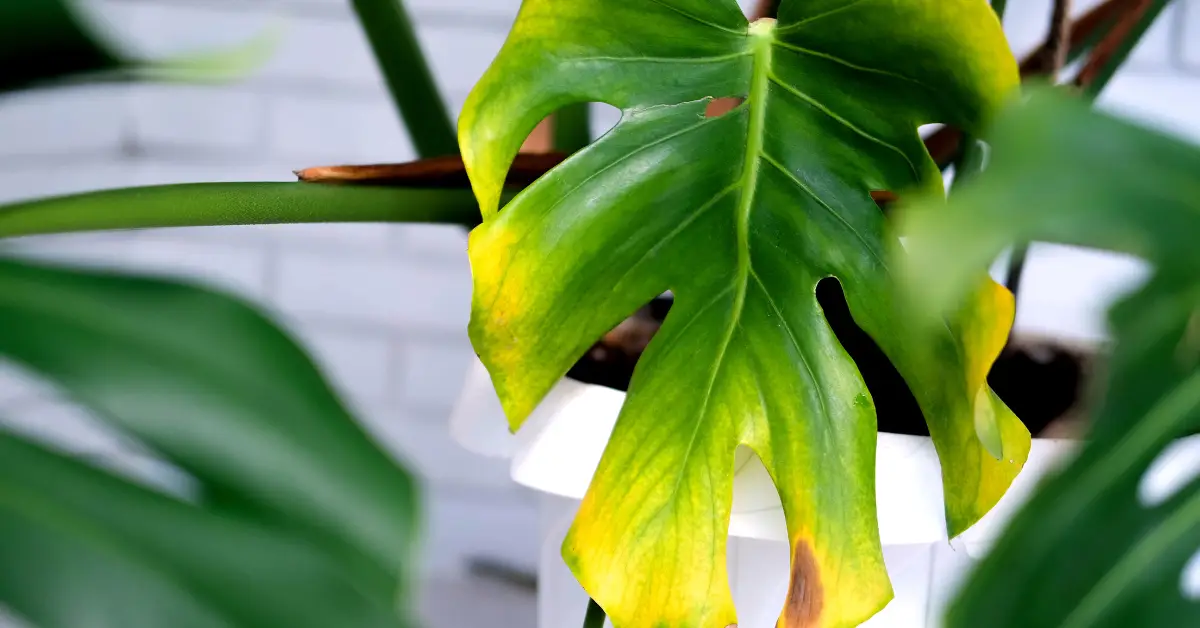
Sometimes the problem isn’t water or light at all, but food. Monsteras need balanced nutrition, but too much fertilizer leads to salt build-up in the soil. That shows up as curling with crisp, brown edges. On the flip side, if you’re not feeding at all, the plant may develop small, pale leaves that curl because they’re weak.
What I do is flush the soil every couple of months with plain water to wash out salts. Then I feed with a balanced liquid fertilizer at half strength every 4–6 weeks during the active growing season. It’s enough to keep growth steady without stressing the plant.
Some plant owners even try quick tricks like adding sugar water for extra energy, but as we’ve explained in how sugar water affects your plants, this can do more harm than good if used the wrong way.
Quick Fixes You Can Try Today
When you see your Monstera curling, it’s easy to panic and start changing everything at once. The truth is, a few small adjustments often make a big difference. Here’s how I break it down into 5-minute fixes and long-term care so you can act quickly and still set your plant up for recovery.
5-Minute Fixes:
- Rehydrate properly: If the soil feels bone dry, give your Monstera a deep soak until water drains from the bottom.
- Misting boost: A light mist on the leaves can offer temporary relief in very dry air.
- Adjust light placement: Move your plant a few feet back if it’s in harsh sun, or closer to a brighter spot if it’s hidden in the shade.
- Wipe away pests: Use a damp cloth to remove dust or small pests hiding under leaves. And while quick hacks often circulate online, like watering with ice cubes, you should be cautious — we’ve already broken down why ice cubes can actually hurt indoor plants.
Long-Term Care Adjustments:
- Set a watering rhythm: Water only when the top inch of soil is dry — too frequent or too rare both cause curling.
- Regular pest control: A weekly neem oil spray keeps spider mites and thrips from coming back.
- Soil refresh: If the soil smells sour or stays soggy, repot with fresh, well-draining mix.
- Fertilizer balance: Feed with a half-strength liquid fertilizer during the growing season, not every time you water.
Think of the quick fixes as “first aid” — they stabilize your plant. The long-term care steps make sure you don’t face the same curling leaves again.
The Prevention Blueprint (Keep Your Monstera Stress-Free)
The best way to stop curling is to create conditions where your Monstera doesn’t have to struggle in the first place. I like to treat this as a weekly check-in with my plant.
Weekly Routine:
- Stick your finger an inch into the soil — if it feels dry, water. If it feels moist, wait.
- Look at the leaves closely for curling, spots, or pests.
- Check light exposure throughout the day. A spot that looks perfect at 9 a.m. may be too harsh at noon.
Ideal Growing Conditions:
- Temperature: 18–27°C (65–80°F) is the comfort zone.
- Humidity: Around 60% keeps leaves flat and healthy.
- Light: Bright, indirect light works best. Direct afternoon sun can burn; dark corners stunt growth.
Tools That Make It Easier:
- Hygrometer to measure humidity so you know when to add a humidifier.
- Self-watering spikes if you travel often and don’t want the soil drying out completely.
- Moisture meter to avoid guessing when to water (you can find guides on proper use at sites like The Spruce.
By making these small checks part of your routine, you stop problems before they start. Curling leaves then become the rare exception instead of the norm.
When to Worry: Curling + Yellowing + Mushy Roots

Most curling is reversible, but there are times when it’s more than just a light or watering issue. If your Monstera’s curling is paired with yellowing leaves, mushy stems, or a sour smell from the soil, you may be dealing with root rot. This usually happens after weeks of overwatering or poor drainage.
Here’s what to look for:
- Leaves curling and turning yellow at the same time
- Stems or roots feeling soft, mushy, or dark brown
- Soil that stays wet and smells foul
At this point, quick fixes won’t cut it. You need to act fast:
- Take the plant out of its pot and inspect the roots.
- Trim away any black or mushy roots with clean scissors. Healthy roots are white or light tan.
- Repot in fresh, well-draining soil and a container with proper drainage holes.
- Hold off on watering for a few days to let the plant settle.
If pests are the issue and you’ve already tried wiping, neem oil, and insecticidal soap with no improvement, it may be time to isolate the plant and consider a stronger treatment.
The bottom line: when curling comes with yellowing and mushy roots, treat it as a red flag. Acting early is the only way to give your Monstera a fair chance at recovery.
Monstera Curling Troubleshooting Checklist (Printable Guide)
Sometimes you just need a quick reference guide instead of scrolling through explanations. Here’s a simple table I use that matches the symptom → likely cause → quick fix. Save it, print it, or keep it on your phone — it’s the fastest way to troubleshoot when you’re in a hurry.
| Symptom | Likely Cause | Quick Fix |
|---|---|---|
| Crisp curl, dry edges | Underwatering | Deep soak until water drains out |
| Curl + yellow leaves | Overwatering / root stress | Let soil dry, repot if roots are mushy |
| Edges curling inward | Low humidity | Pebble tray, group plants, or humidifier |
| Curl with scorched patches | Too much direct light | Move to bright, indirect light |
| Curl + pale weak growth | Too little light | Shift closer to a window or add grow light |
| Curl + tiny spots/webbing | Spider mites or thrips | Neem oil or insecticidal soap |
| Curl with brown, salty edges | Fertilizer burn | Flush soil, resume with half-strength feed |
This quick-glance table makes it easy to check symptoms without second-guessing yourself. Many plant care blogs scatter this info across long paragraphs, but keeping it in one spot means you’ll actually use it.
Final Takeaway: Curling Isn’t the End for Your Monstera
When you see curled leaves, it’s easy to assume your Monstera is on its way out — but that’s rarely the case. Curling is simply plant communication. It’s your Monstera’s way of saying, “something isn’t right, please adjust.” Most of the time, once you identify the root cause — whether it’s water, light, humidity, or pests — the plant bounces back with fresh, healthy leaves.
The key is not to panic. Take the symptoms as clues, make small but consistent changes, and give your Monstera time to recover. Plants are more resilient than we give them credit for, and with the right care, those dramatic green leaves will flatten out and thrive again.
So next time you notice curling, see it as an invitation to check in with your plant — not a death sentence.
What about you? Have you dealt with curled Monstera leaves before, and what worked for you? Share your experience in the comments below — your tip could help another plant parent. And if you want more hands-on guides like this, explore more practical care tips on Plant Care Dairy.
Disclaimer: The information in this article is for general educational purposes only and should not replace professional plant care advice. Always observe your plant’s unique conditions before making changes.